
Forget the golf weekend. This is Scotland at its most raw — a week of minke whales, remote pubs, storm-lashed islands, and the best gin you’ve never heard of.
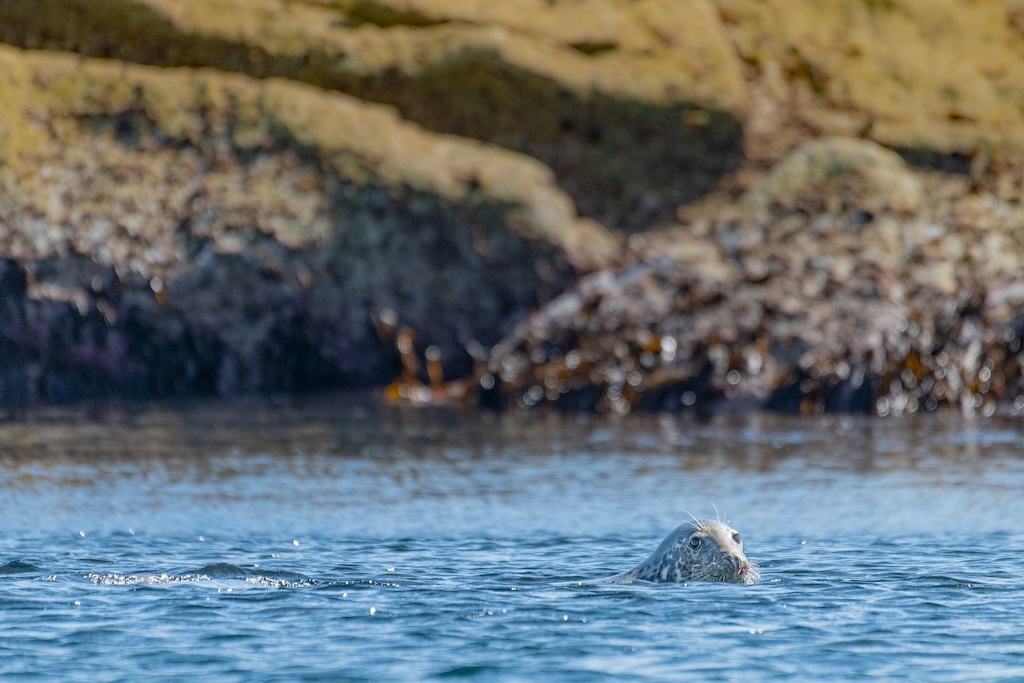
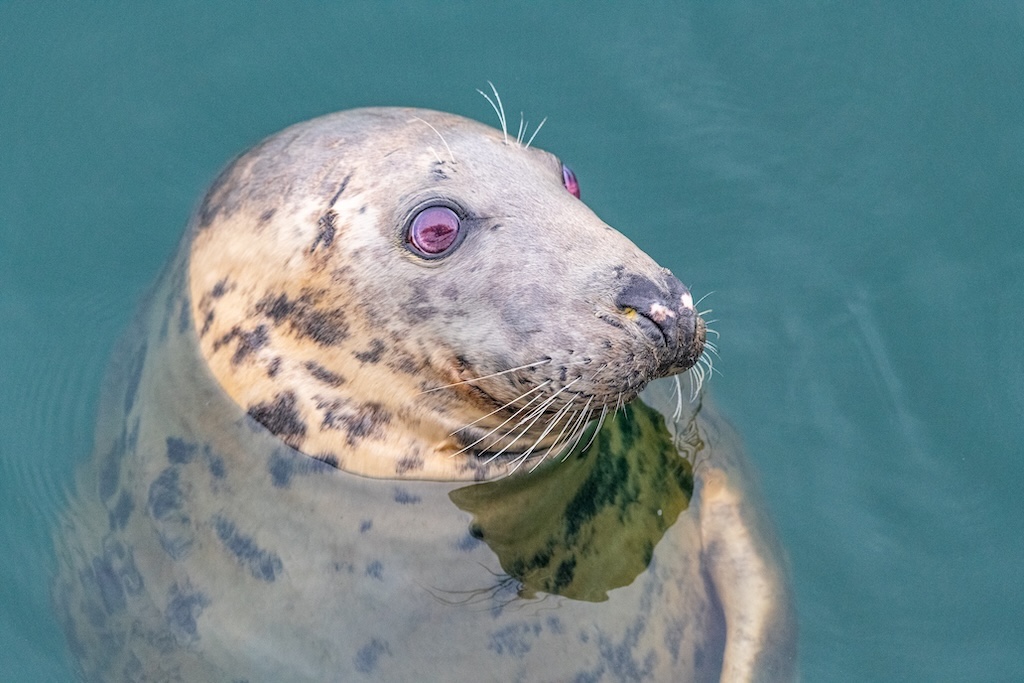
There’s a moment, somewhere off the coast of the Outer Hebrides, when you realise how thoroughly landlocked your life has become. I’m standing on the fly deck of the Lucy Mary — a 23-metre motor yacht cutting through waters the colour of a Caribbean screensaver — being watched by a dozen grey seals. They rise from the surface like slow-motion periscopes, whiskers twitching, expressions permanently unimpressed, then slip back under without ceremony. These are the Monach Islands. Canada is next, more or less.
This is Scotland on its own terms: elemental, theatrical, and completely indifferent to your plans.
The Plan
The idea was straightforward enough: cruise the Outer Hebrides aboard one of Hebrides Cruises’ small expedition yachts, culminating in a landing at St Kilda, the remote volcanic archipelago 65 kilometres beyond the Western Isles. In practice, at the tail end of summer, any itinerary out here is less a schedule and more a working hypothesis. Storm Betty had other ideas.
The Lucy Mary is a classic motor yacht of contemporary design (she used to belong to a Lebanese sheikh), carrying eight guests in three ensuite cabins and a master suite, fitted with custom mahogany, leather lounges, original artwork, and a rear deck built for alfresco dining and sunset drams. Skipper Rob — ex-RAF, former deep-sea oil diver, scallop diver, and salmon farm maintenance diver, now master of all he surveys in these waters — watches the horizon with the studied nonchalance of a man who has seen far worse. The tightness around his eyes when the Met Office updates come through, however, tells a different story.
St Kilda will have to wait.
The Route
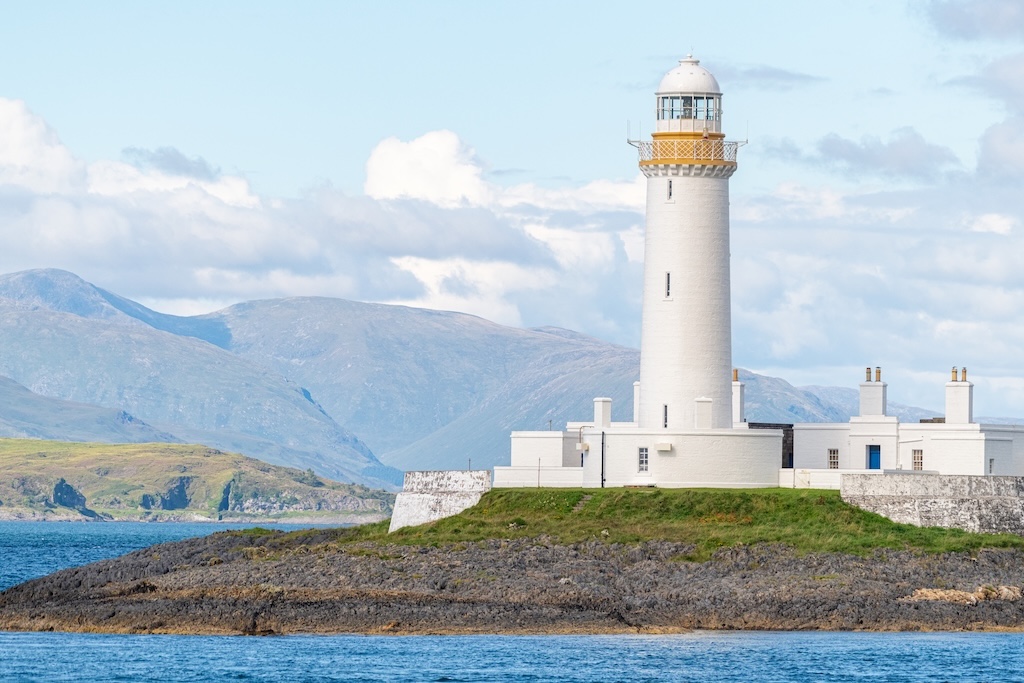
We depart Oban — a compact west-coast port straight from central casting — in brilliant sunshine, slipping past the ivy-smothered ruins of Dunollie Castle and into the Sound of Mull. Porpoises surface and vanish. The flanks of Mull blaze with autumnal colour. It’s exactly the kind of thing that makes that long-haul flight all the more worthwhile.
Crossing the Minch the following day, the wildlife picks up dramatically: gannets wheeling overhead, seals bobbing like curious buoys, and a pod of rare white-beaked dolphins alongside the hull. By afternoon, clouds are stacking on the horizon in great dark cathedrals.
In Castlebay — the main settlement on Barra — we anchor a short distance from Kisimul Castle, a medieval fortress currently leased to Historic Scotland by the Clan MacNeil chief for the annual sum of one pound sterling and a bottle of whisky. Abby, the yacht’s steward, serves gin and tonics on the transom deck. Outside, storm petrels and white-tailed sea eagles circle the thermals. Change is coming.
Into the Storm
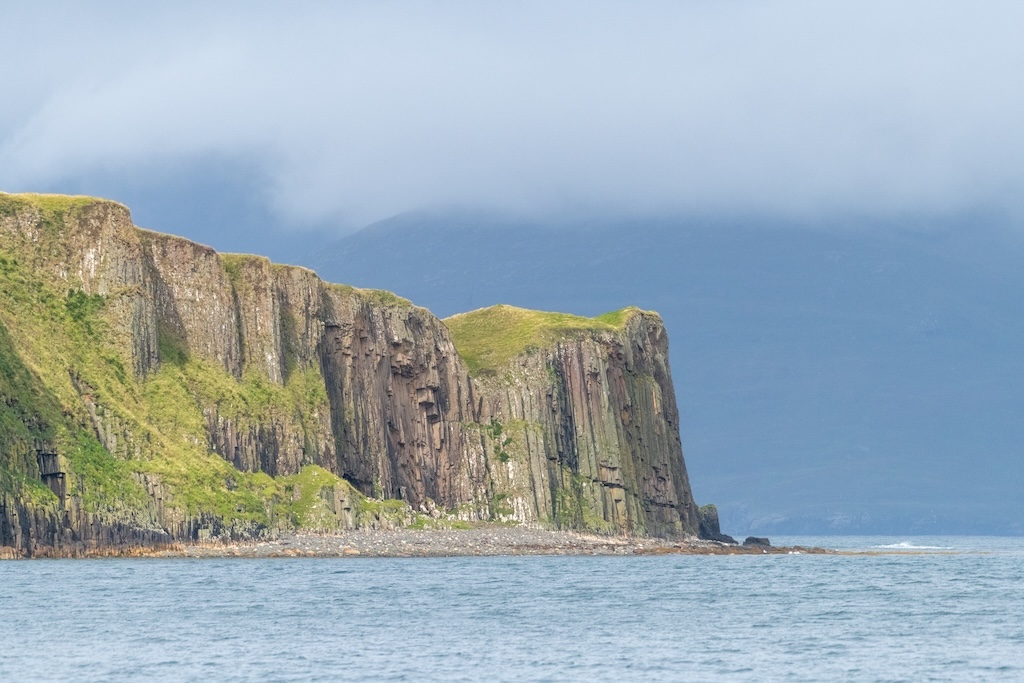
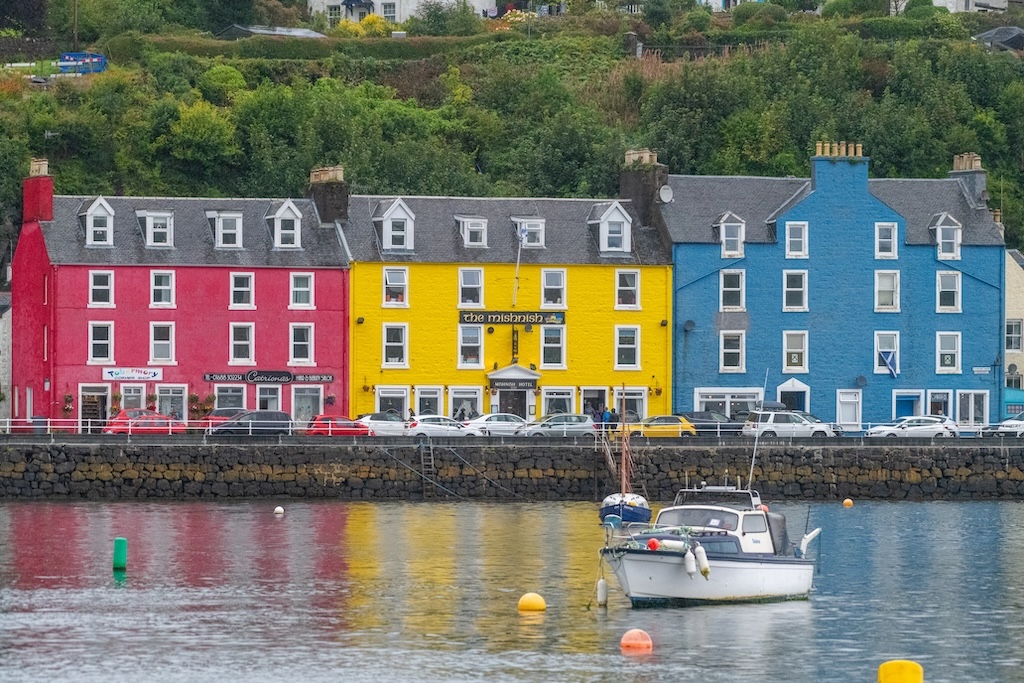
Rob reroutes south through the Sound of Harris to Tarbert on the Isle of Harris, and if Storm Betty is going to strand you somewhere, this is the place. The Isle of Harris Distillery is a seriously impressive operation: contemporary, architecturally striking, and producing what is quietly one of Scotland’s finest gins, made with locally harvested sugar kelp in the London Dry style. Buy a bottle (I brought two).
When the storm fully arrives, we batten down the hatches in the sheltered Inner Sound between Skye and Raasay. Perry, the chef, serves salmon wellington with roast pumpkin as the gusts scream across the deck. Through the portholes, an ambitious camper on a nearby hillside is frantically re-pegging his tent. The contrast is not lost on anyone aboard.
After the Storm
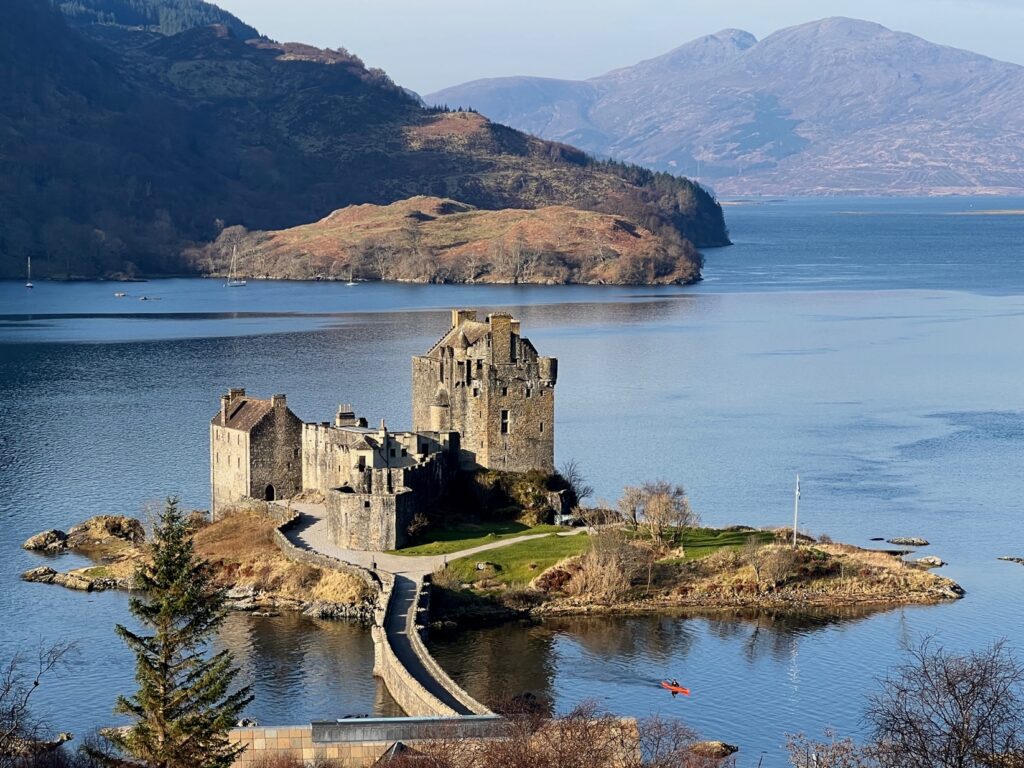
The weather breaks, and what follows is something close to perfection. We anchor near Eilean Donan Castle (above) in the Kyle of Lochalsh — the 13th-century fortress most men of a certain age know from Highlander — before Rob threads the Lucy Mary through the notorious Kyle Rhea tidal channel with the timing precision his Navy background implies.
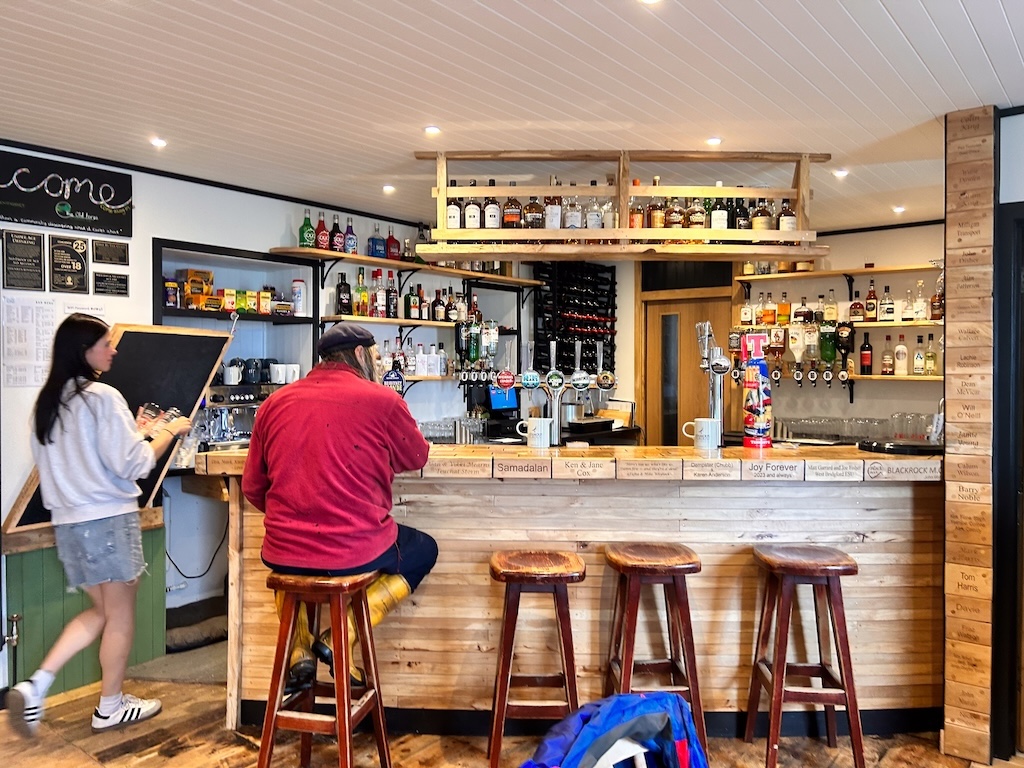
Then comes the highlight nobody expected: a detour into Loch Beag to land at Kinloch Hourn, home to the Old Forge— officially the most remote pub on the British mainland. Unreachable by road, the only alternatives to arriving by sea are a 25-kilometre mountain slog or accepting that you simply don’t deserve a pint. The limited-edition ale waiting at the end is, frankly, among the most satisfying drinks of my life.
We anchor that evening in Loch Nevis, off the estate of theatrical impresario Sir Cameron Mackintosh — the man behind Phantom of the Opera and Miss Saigon — where reintroduced white-tailed eagles call to each other across pine-forested hillsides.
The Final Run
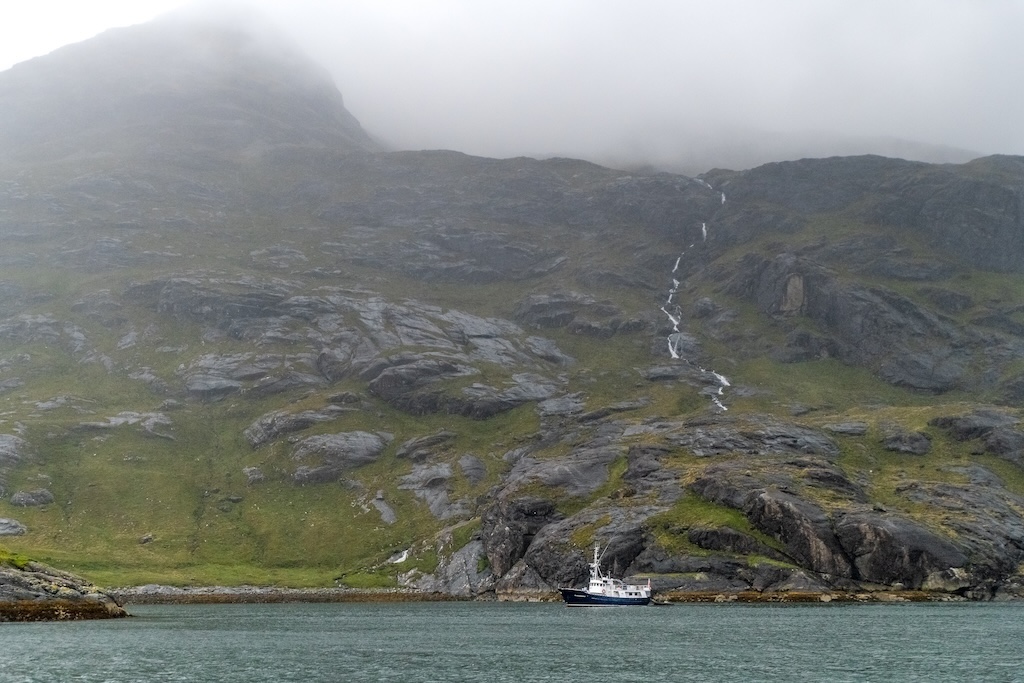
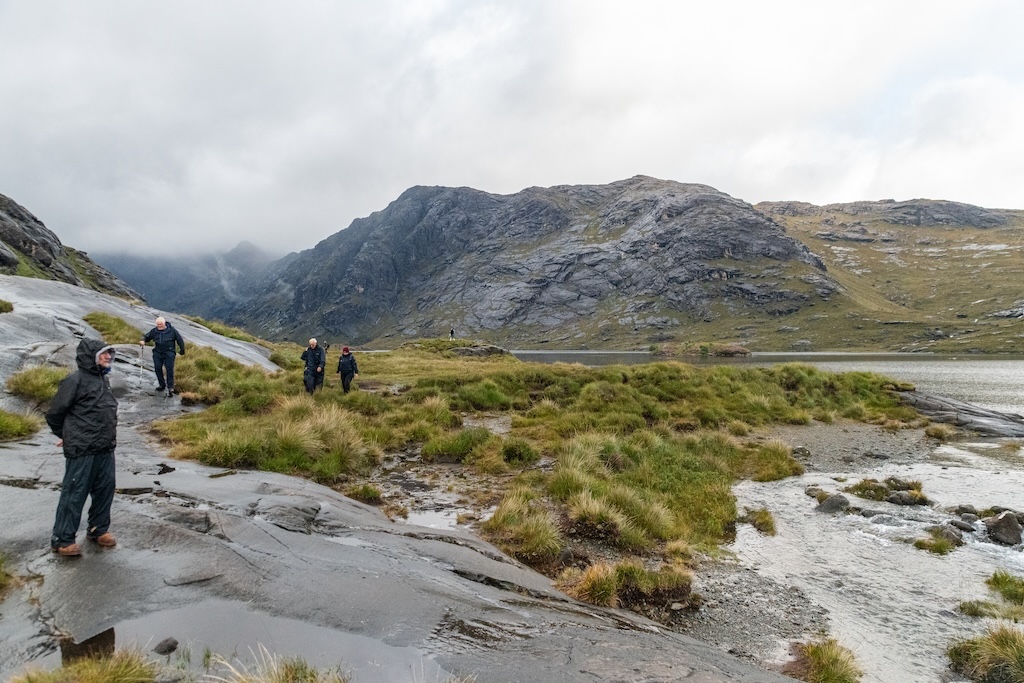
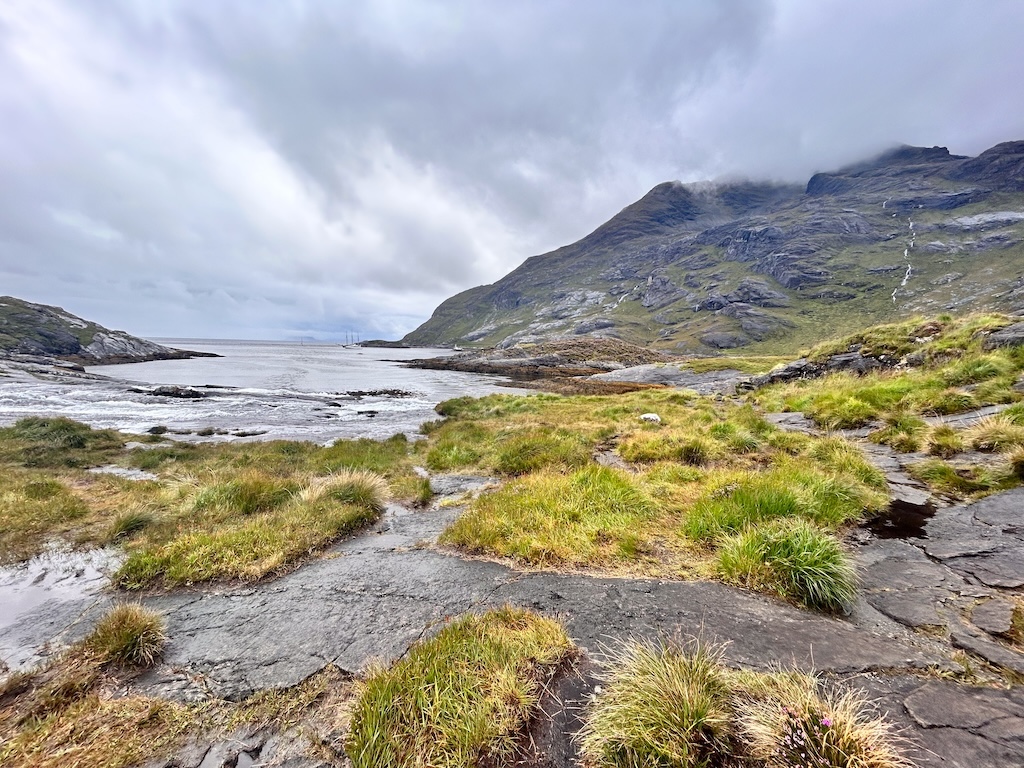
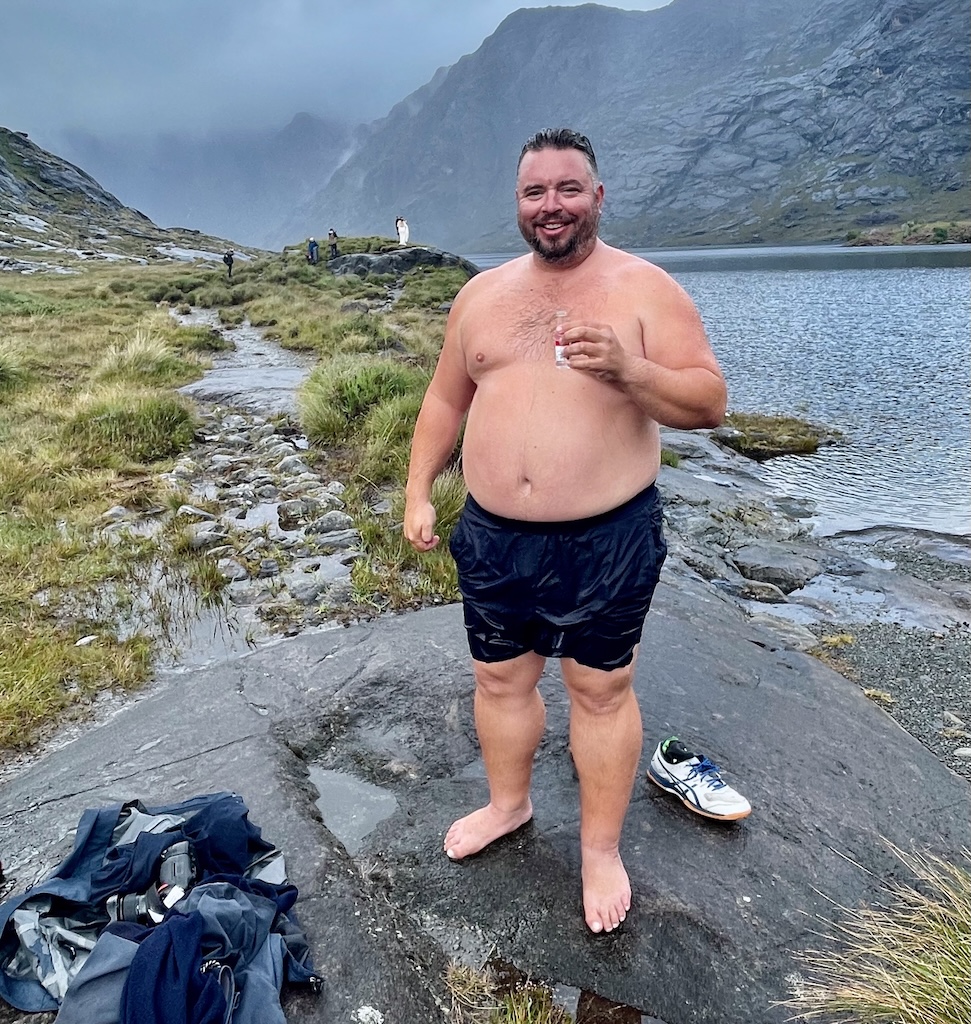
Our last full day finds us at Loch Coruisk, tucked beneath the jagged Black Cuillin ridge. Waterfalls throw rainbows above a glassy loch and juvenile seals lounge on the rocks. I swim — briefly, inadvisably — in the crystalline (and oh-so-icy) shallows. It feels entirely correct.
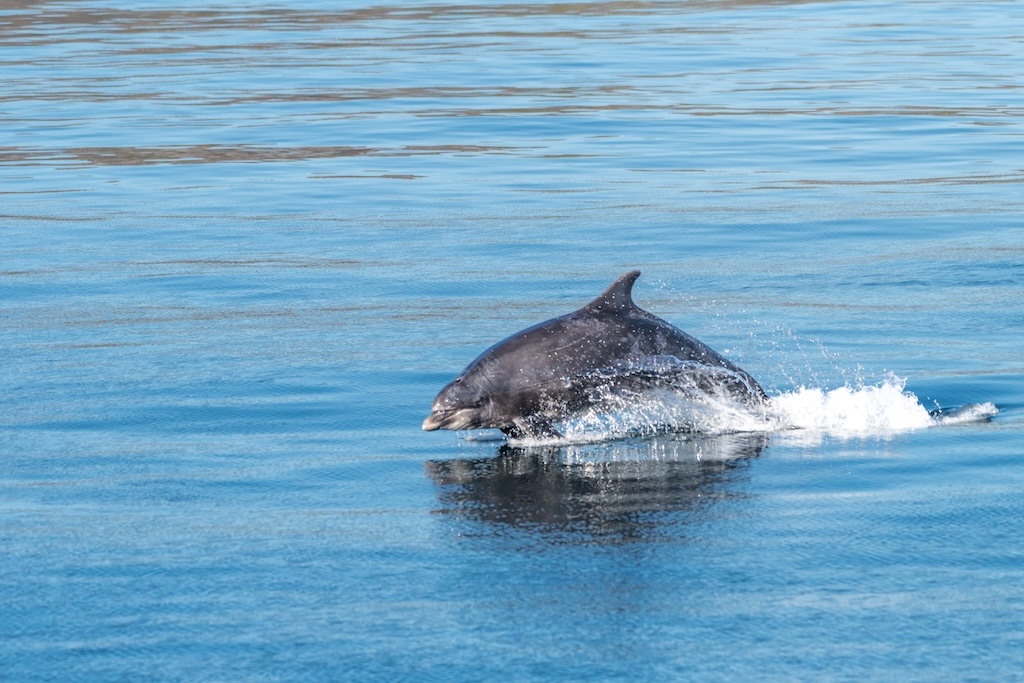
We run south toward Oban through the Sound of Mull, passing the ruins of Ardtornish Castle, as dolphins escort us home. The Lucy Mary’s mahogany bar is stocked. The whisky is open. Nobody is in any rush.
The Verdict
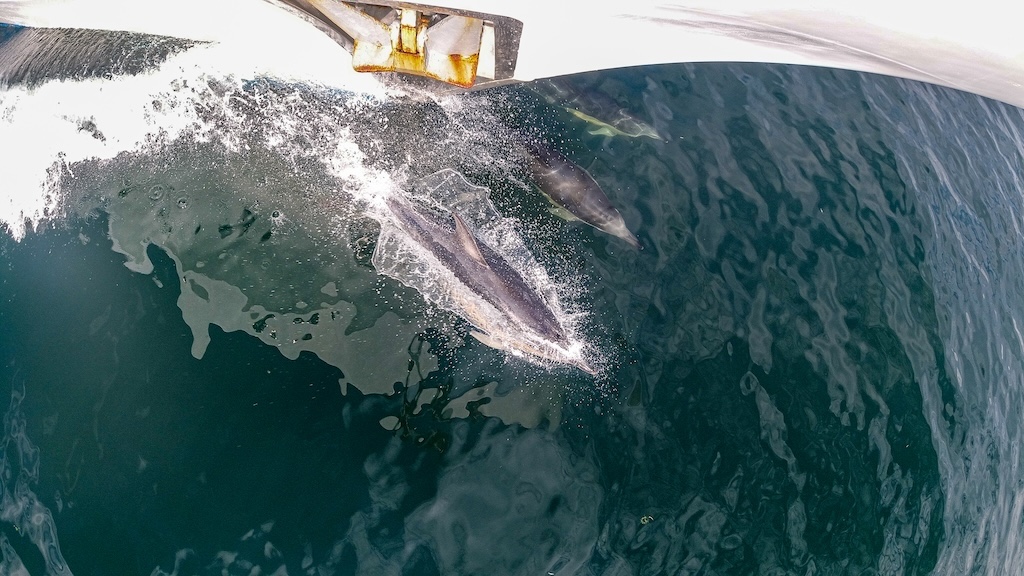
This is not a cruise in the conventional sense. There’s no queues, no set itinerary, no bingo sessions. What there is, is one of the world’s most dramatic coastlines, an exceptional crew, food that punches well above its weight, spectacular and frequent wildlife encounters, and a freedom of movement that belongs to another era of travel entirely.
Here’s What You Need to Know
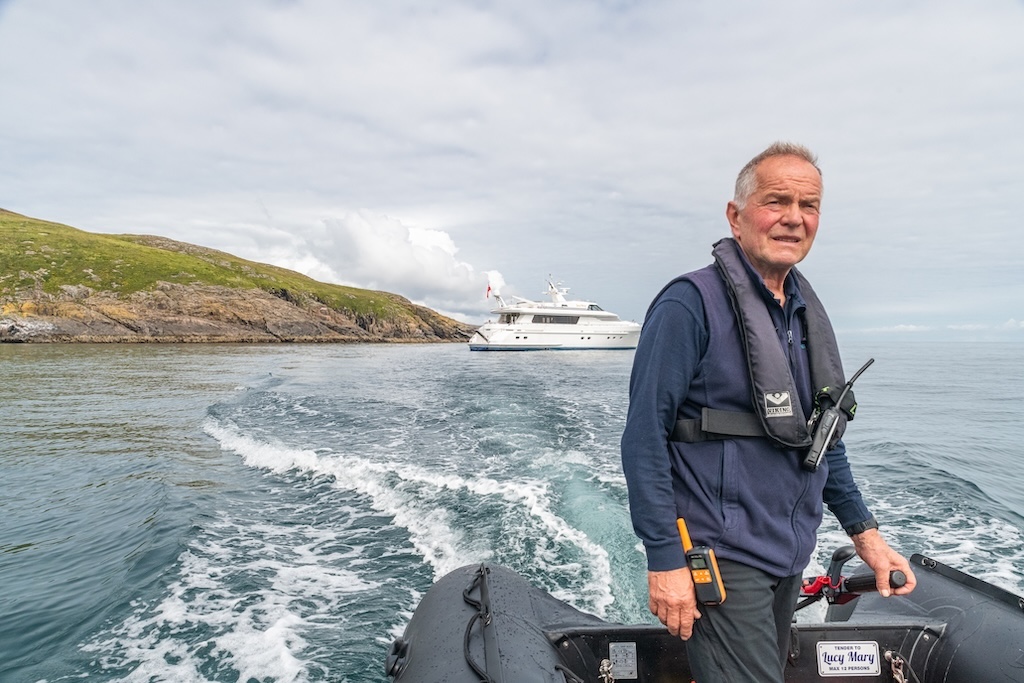
If exploring the castles, boutique distilleries and remote wind-swept islands of western Scotland tickles your fancy, here are a few things you should be aware of.
How much does a Hebrides cruise cost?
Depends how much comfort you need to negotiate a Force 6. Small-ship expeditions like those of Hebrides Cruises run from roughly £2,700 to £3,800 (US$3,638 to $5,120) for a week-to-ten-day itinerary, all-inclusive — that means great meals, wine with dinner, the lot. Flights aren’t included, but frankly neither is the whisky you’ll be buying in Tarbert, so budget accordingly. Compare that to a week on a floating shopping mall with a rock-climbing wall, and it starts to look less like an expense and more like a rescue.
Am I going to get seasick?
Possibly. The Minch has opinions, and it will share them. Bring the tablets, take them before you need them rather than after, and accept that a boat this size moves with the sea rather than pretending it isn’t there. The good news: once you’re anchored in a sheltered loch with a dram in hand, you’ll forget it ever happened. That’s the whole trick of small-ship cruising; the discomfort is brief, the payoff is not.
What’s the best time of year to go?
April to October, if you want the islands open and the wildlife performing on schedule. Late summer brings the drama — think Storm Betty — along with the whales, dolphins, and gannets working overtime before autumn. If you’d rather have the Hebrides to yourself under genuinely filthy dark skies, November to March is its own reward, but pack for weather that means it.
Will I actually land on St Kilda?
No promises, and anyone who makes you one is lying. It’s 65 kilometres of open Atlantic beyond the Western Isles, and the weather gets the final vote — not the skipper, not the operator, not you. That’s not a flaw in the itinerary; it is the itinerary. A good skipper reroutes, finds you the Old Forge or Loch Coruisk instead, and you go home with a story that doesn’t need St Kilda to be worth telling.
How many days should I actually book?
A week is the minimum for the islands to start making sense. Ten to eleven days gives your skipper the room to dodge weather and still land you somewhere worth remembering. Anything shorter and you’re just doing a very expensive ferry crossing.
Do I need sailing experience or a rugged constitution?
No experience is required, that’s what the crew is for. What you do need is the ability to get in and out of a tender without drama, and to handle a wet, uneven landing stage without needing a hand held. It’s more about reasonable fitness than heroics.
How is this different from a normal cruise?
Don’t expect a casino, a buffet, or choreographed evening entertainment. What you get instead is intimacy, a crew who know these waters personally, wildlife encounters that would cost a fortune on an organised safari elsewhere, and the freedom to change plans when the Atlantic insists on it. One of these is a cruise. The other is an actual expedition.
What should I pack?
Things are very casual on the Lucy Mary, but I’d recommend proper waterproofs, warm layers regardless of season, and boots that don’t mind rock and rope. Bring a camera because the landscapes are out of this world, a windbreaker (which you’ll wear every day), your swimwear if (like me) you love an icy dip to start the day (above) and many of the sensible elements you’d take on any adventure. Just be sure to leave room in the bag as you’re coming home with at least one bottle of sugar kelp gin, and that’s non-negotiable.
Hebrides Cruises’ 2027 calendar is now available and booking up fast. Go.