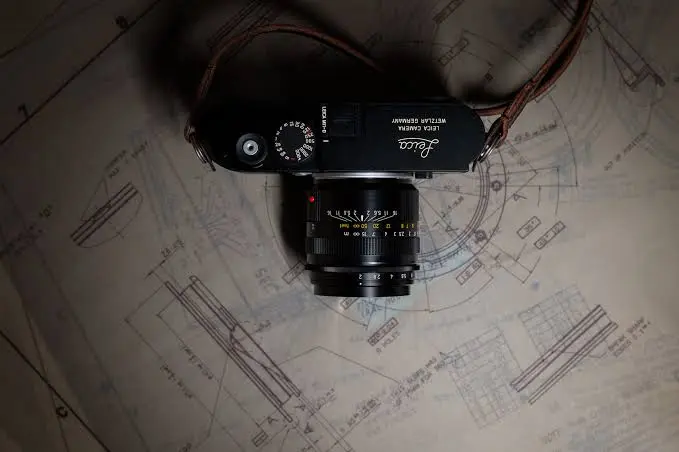

Leica has resurrected one of the most secretive lenses it ever built, a US Navy reconnaissance tool, as a 660-piece limited edition for collectors who like their gear with a backstory.
Some lenses come with a spec sheet. This one comes with a dossier.
In the late 1960s, at Ernst Leitz Canada in Midland, Ontario, optical designer Dr Walter Mandler took on a commission from the US Navy. The Naval Intelligence Service wanted a lens that looked completely unremarkable but resolved detail far beyond anything on the market. Mandler’s answer was the Elcan 66 mm f/2, built around a focal length that was anything but random. Sixty-six millimetres was the precise point where resolution, contrast and compact size met.
Only 200 were ever made. Many were paired with the Leica KE-7A, a military version of the M4, to form discreet kits for photography where every detail counted. Historical accounts suggest the kits also served Western allies during the Cold War. The best detail: each set shipped with a manual explaining how to destroy the camera and lens if the user was captured. Few lenses can say they came with a self-destruct protocol.
Today, the Elcan is one of the rarest lenses in the Leica M universe. Now, for the first time, the 66 mm focal length is available to the rest of us.
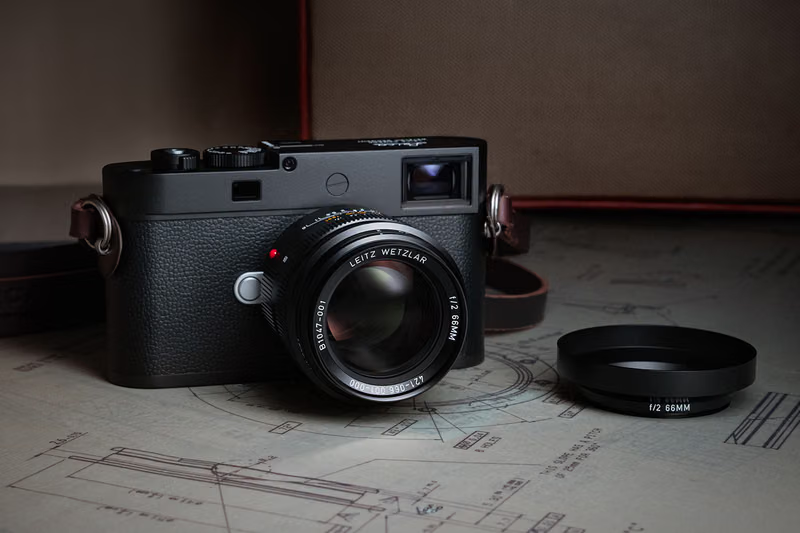
The new Summicron-M 66 f/2 joins Leica’s Classic Line, a family of lenses built for character as much as clinical sharpness. The optics follow Mandler’s original design, refined to modern standards, as is the lens body. Leica has also kept the quirks that set the Elcan apart. The aperture ring turns the opposite way to every other M-lens, the distance scale follows military layout, and the engravings use a finer typeface that nods to the original and marks the lens out from the rest of the current range.

The front ring is where collectors will linger. It carries the lens’s limited-edition serial number, the optical calculation number B1047 and a 12-digit internal material number, mirroring the original’s Navy order number in the same spot. “Leitz Wetzlar” replaces the old “Elcan” branding.
On the street, it makes a compelling case. At 66 mm it sits between the classic 50 mm and a dedicated portrait lens, giving a natural perspective with just enough compression to flatter faces and tidy backgrounds. Wide open at f/2, expect soft bokeh paired with punchy contrast, the signature Classic Line look. Stop down and its intelligence-service roots show, with fine detail rendered with real precision.
For the ultimate bragging rights, serial number 001 goes under the hammer at the Leitz Photographica Auction in Wetzlar this November.