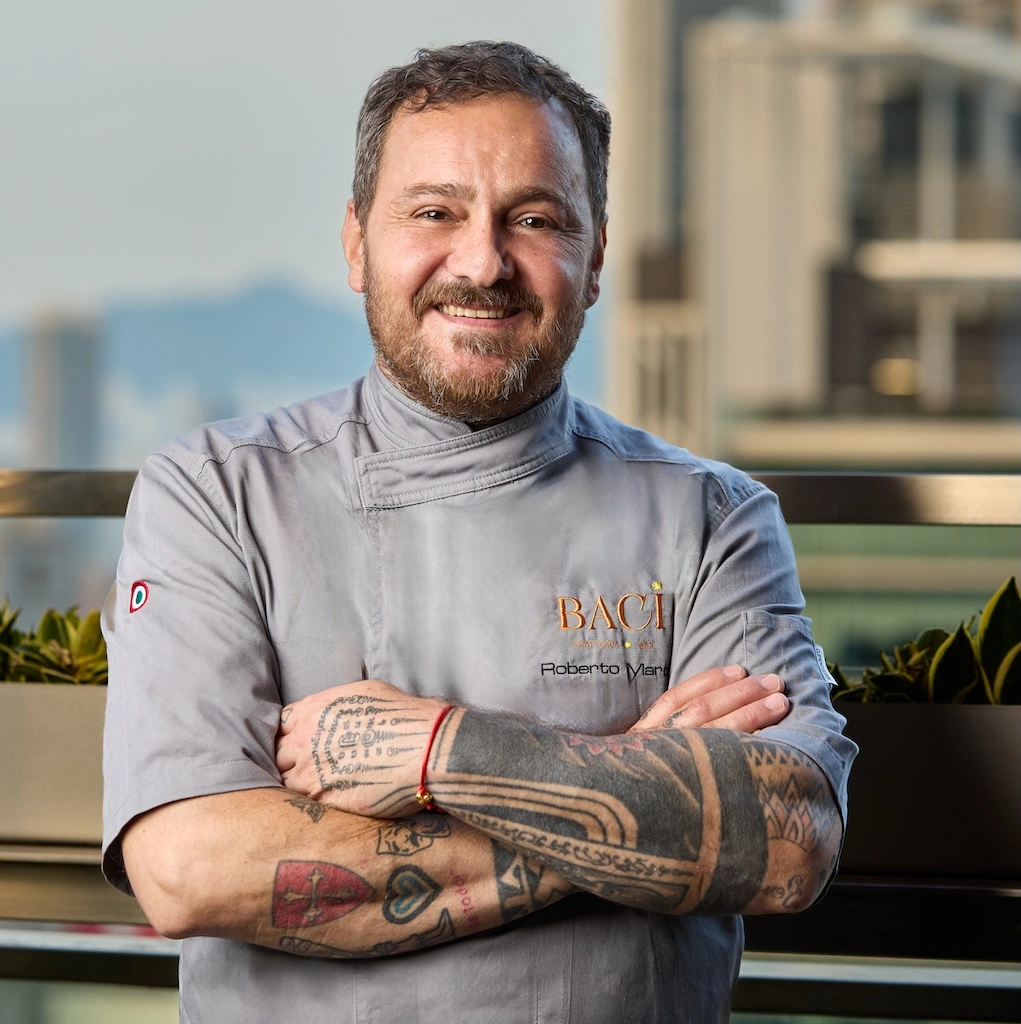

From the army to Tuscan dining rooms, BACI’s Roberto Marchi took the scenic route to pizza. He talks dough, humidity and his new Roman-style baciata.
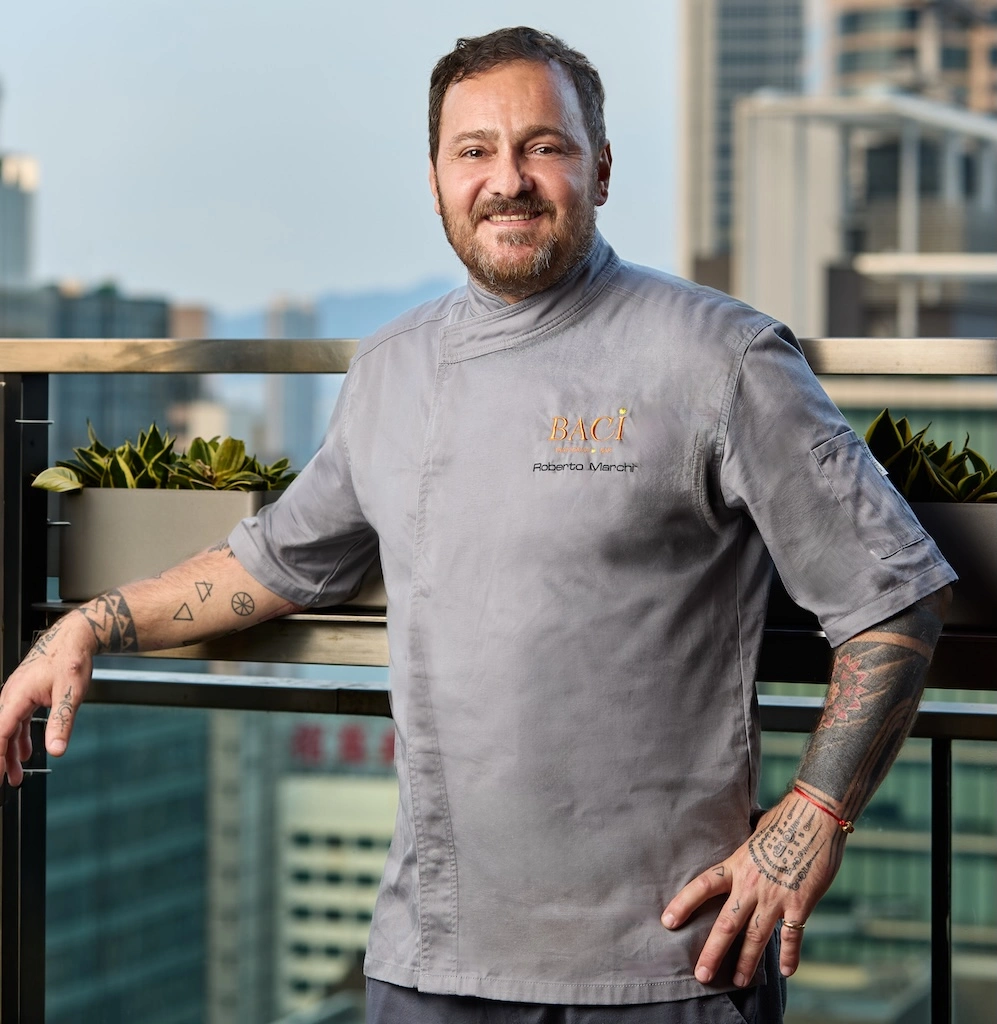
Few pizzaioli have reached the oven by a more winding route than BACI Hong Kong chef Roberto Marchi. He was born in Pisa into a close Tuscan family where the table was the centre of everything. A restless student who found his first real direction in the army, Marchi’s travels took him to Scotland and to the Tuscan coast, where he became a maître d’ at some of its finest hotels, including the Plaza e de Russie in Viareggio. There he worked alongside Michelin-starred chef Luca Landi.
Pizza finally claimed him in London, where he watched the pizzaioli at work from the dining room floor. He moved into the kitchen in Liguria, then followed his curiosity to Thailand (haven’t we all?), where a meeting with Caputo Cup champion Davide Civitiello sent him back to Italy to train in the Neapolitan tradition.
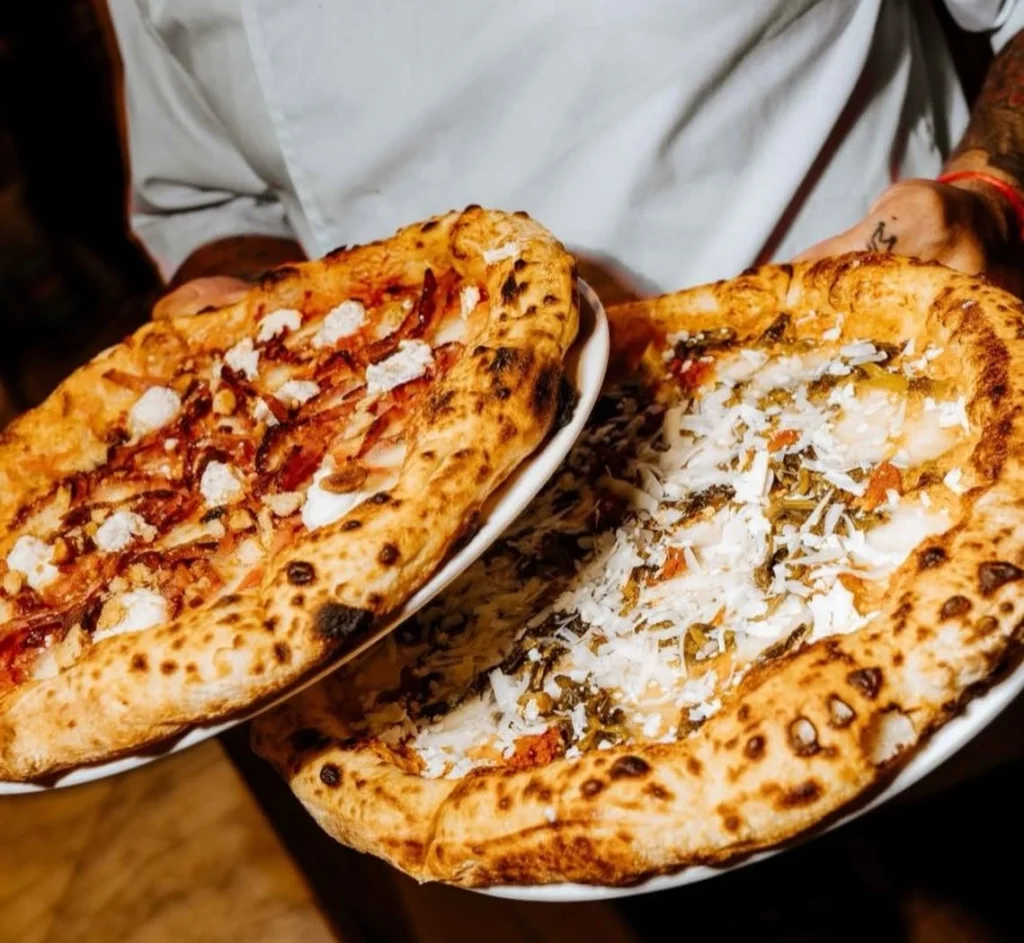
Roberto has been in Hong Kong since 2020 and leads the pizza programme at BACI Trattoria · Bar in Lan Kwai Fong, a regular in 50 Top Pizza’s Asia-Pacific ranking. His “South of Asia” pizza won the Best Toppings award for 2025/2026. We sat down with him to talk dough, discipline and the search for the perfect crust.
Tell us what first drew you to pizza, and how that journey shaped the light, high-hydration dough you now make at BACI?
Funnily enough, I came to pizza through the dining room. I spent years working front of house across Tuscany, Sardinia, Scotland and London, so I was always close to the guests, and there’s nothing quite like watching someone enjoy a really good pizza. That joy is what finally pulled me behind the oven on the Ligurian coast. The moment I put my hands in the dough, that was it, I was hooked. That obsession took me all the way through Southeast Asia and then back to Italy to train under Davide Civitiello. The biggest lesson he taught me? Pizza isn’t a fixed formula. It’s intuition. You have to read how the flour reacts to its environment, and you have to truly master your oven.

At BACI, we work with high hydration, so the crust bakes up airy and crisp on the outside, and remarkably light and easy to digest. People often ask me about fermentation times, but honestly, 24 hours or 48 hours both work beautifully. What really matters is how well you manage the dough and how well you know your oven.
What’s the current state of the pizza scene in Hong Kong, and how has it evolved since you arrived in 2020?
It’s grown enormously! Since I arrived in 2020, new pizzerias keep opening all over the city, and the standard just keeps rising. However, what excites me most is the diners. People in Hong Kong have really educated themselves about what goes into a great pizza, and it’s not just about the toppings anymore. They understand fermentation, flour quality and technique, and they can taste the difference between a heavy, rushed dough and a truly artisanal one.
With several Hong Kong pizzerias recognised by 50 Top Pizza Asia-Pacific year after year, and BACI on the list for five years running, I think it’s clear the city has become a serious destination for world-class pizza.
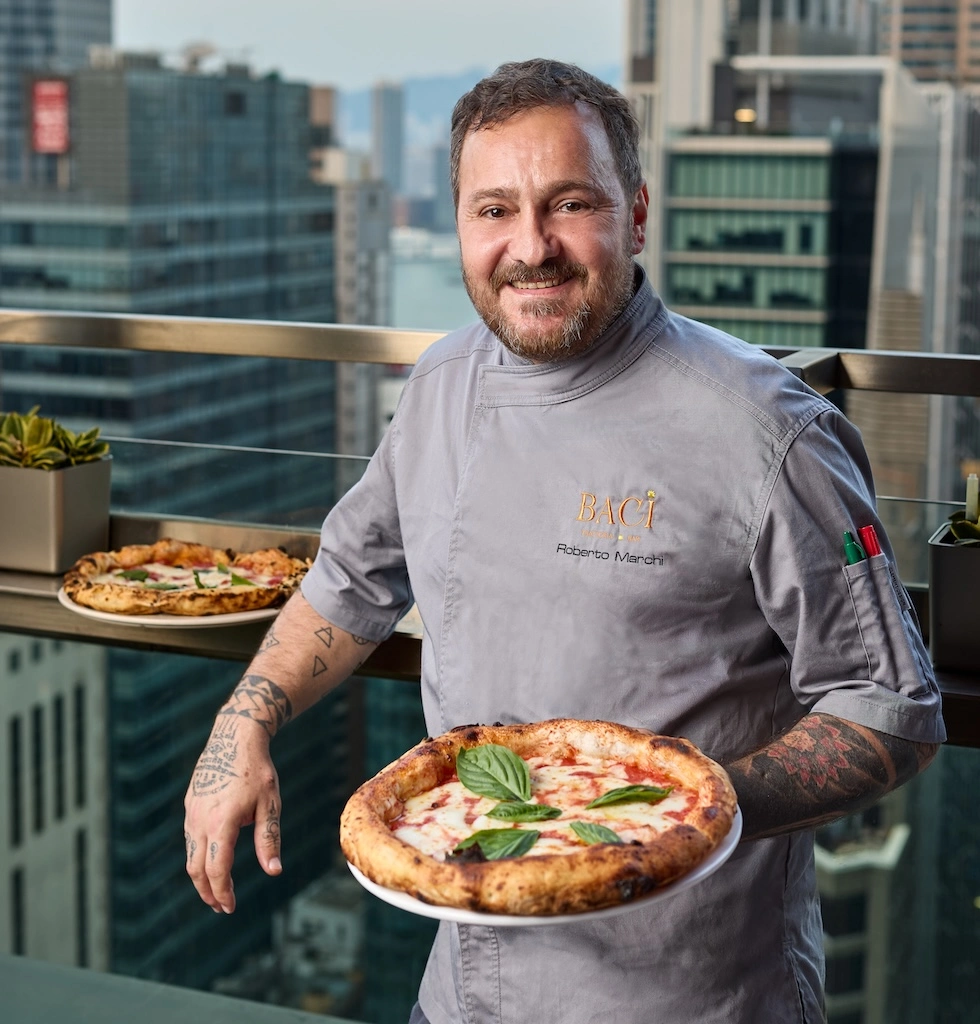
Your dough is adjusted for Hong Kong’s climate. What are the biggest technical challenges of making truly authentic Neapolitan-style pizza in this city’s humidity?
Dough is alive, and in Hong Kong the dough has a mind of its own! The humidity and temperature swings here can completely change how it behaves between morning and night. They affect how much water the flour absorbs, how quickly it ferments and how elastic it becomes. That’s why I use Molino Paolo Mariani’s Volare Forte flour, which has a strong, clean protein structure that holds up really well to high hydration. By adjusting the water temperature and the amount of yeast, we keep the dough consistent year-round.
However, in this humidity, the oven is your best friend. Knowing how to manage the heat, the deck temperature and the baking time is what lets you dry out the excess moisture properly, so you get that light, airy, perfectly baked crust every single time.
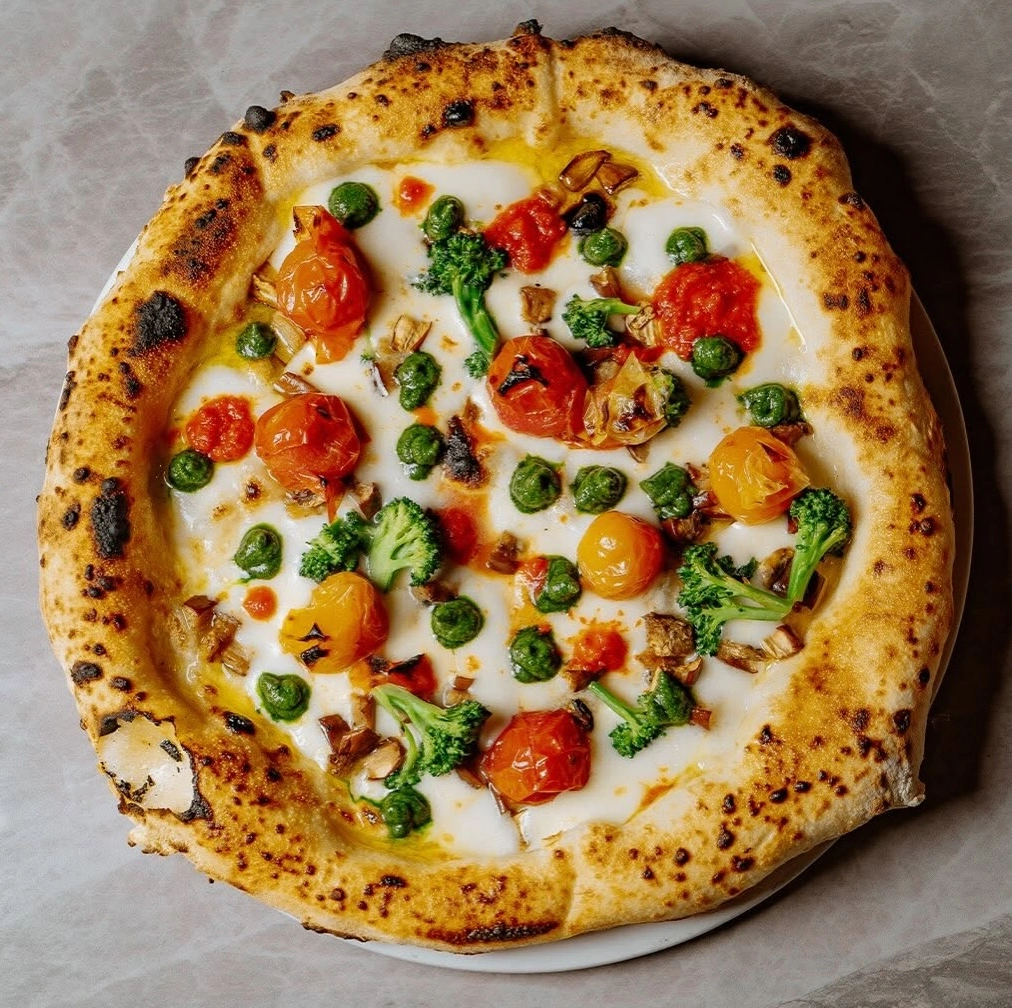
This autumn you’re introducing Pizza Baciata, the crisp, double-layered “kissed” pizza of Rome and Lazio that sits somewhere between a calzone and a classic pizza. What’s the story behind this Roman street-food classic, and why did you decide now was the right moment to bring it to Hong Kong?
Pizza baciata literally means “kissed pizza”. You take two thin layers of dough, brush them with olive oil and fold them together so they bake into a crisp, golden pocket. Then you split it open and stuff it with fresh ingredients. In Rome and Lazio, it’s the ultimate street-food comfort. Hong Kong diners love bold textures and food that’s fun to share and get hands-on with, and Lan Kwai Fong has such a vibrant street-level energy. It felt like exactly the right moment to bring in something deeply rooted in Italian tradition that still feels completely fresh and fun for the neighbourhood.

You’ve created six savoury baciate as well as a sweet Bacio Goloso with Nutella, banana and pistachio cream. How do you balance traditional Roman technique with playful, contemporary twists?
My rule is simple: never compromise on the foundation. The dough, the fermentation and the baking stay 100% faithful to Italian craft. Once you’ve got that crisp, airy, solid base, you’ve earned the freedom to play.
That’s when I can have fun with contrasts, like rich, creamy mortadella or spicy Calabrian flavours lifted with bright citrus zest, or finishing on something nostalgic and indulgent like the Bacio Goloso. People come to Lan Kwai Fong to celebrate, socialise and have a good time, so the food should feel generous and exciting. It just should never lose its soul.
What’s missing from the HK dining scene?
More casual, unpretentious neighbourhood spots, where real craftsmanship is something you can enjoy every day. Hong Kong does fine dining and high-energy nightlife better than almost anywhere in the world. What I’d love to see is more relaxed, craft-driven places where you can just drop in for one great bite and a glass of wine. Places like that always add so much warmth to a city.
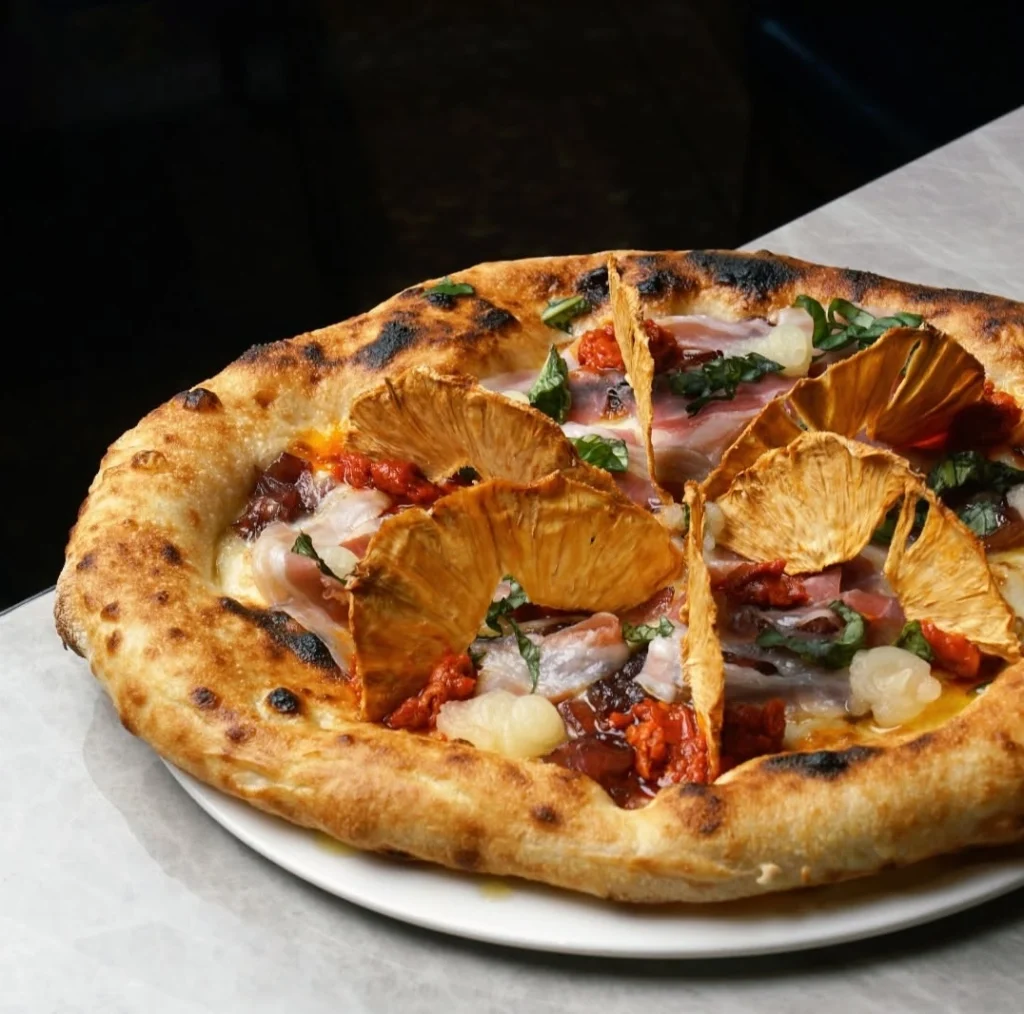
The great pineapple-on-pizza debate never dies. As an Italian pizzaiolo, what’s your honest take?
Canned pineapple thrown onto a standard pizza? For a traditional Italian pizzaiolo, that’s a hard no! But treat pineapple like any other serious ingredient, and it’s a completely different story. Roast it, dehydrate it into crispy chips or turn it into a bright gel to balance rich, spicy fats, and it actually works brilliantly. We proved it with our “South of Asia” pizza, which pairs crispy pineapple and pineapple gel with ’nduja cream, habanero and fior di latte. Cook with technique, respect the balance, and nothing is off-limits.
After a long service in Lan Kwai Fong, what late-night spots do you escape to?
After a busy night working in front of a 400°C hot oven, you want something comforting, quick and full of flavour to unwind. I love slipping just down the road to the new Tsui Wah on Wellington Street for classic cha chaan teng comfort food or a bowl of wonton or beef brisket noodles at Mak’s Noodle or Kau Kee if I manage to finish work early. When I’m craving proper late-night dim sum, I head over to Sun Hing in Kennedy Town. And of course, nothing beats dropping by a fellow chef’s kitchen around Soho and LKF after service to unwind over a cold beer and catch up.
Your “South of Asia” pizza won the Best Toppings award. How do you approach creating signature pizzas that feel both Italian and relevant to Hong Kong diners without losing authenticity?
“South of Asia” came from my travels across Southeast Asia and my life here in Hong Kong, where sweet, spicy, smoky and tangy flavours all live happily together. I didn’t want to just force fusion toppings onto a pizza. Instead, I asked myself how Italian ingredients, like Agerola fior di latte, caramelised red onions, rolled bacon and Calabrian ’nduja, could naturally echo those vibrant Asian flavours. Winning the Best Toppings award from 50 Top Pizza proved something I truly believe: when every element is made from scratch with Italian technique, a cross-cultural story feels completely authentic.

Looking ahead, what’s the next chapter you hope to write for pizza at BACI?
Standing still isn’t an option for us! My team and I are always bouncing ideas around and experimenting with new concepts. In fact, at the end of November, I’m hosting a special four-hands test menu with Chef Justin Chan, dedicated entirely to hairy crab. Going forward, I want to do more creative collaborations like this, explore more regional Italian bread and street-food traditions like pizza baciata, and keep mentoring the next generation of pizzaioli in our kitchen. But above all, I want BACI to stay a place where people come together, share great food and feel the warmth of true Italian hospitality, every single day.