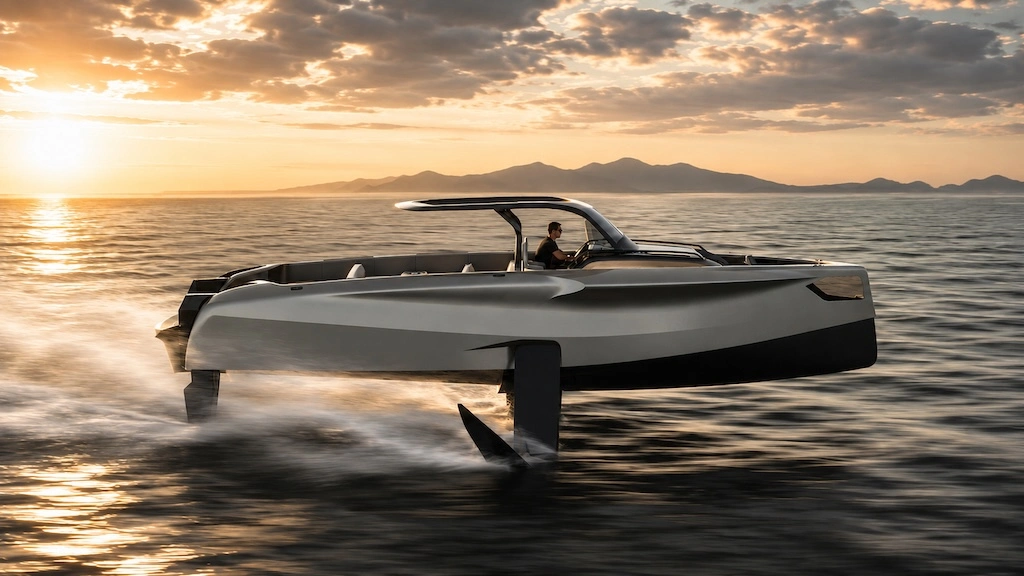

Foiler has unveiled the Shadow, its 13.5-metre luxury foiling yacht, which rises two metres clear of the water.
In case you were wondering (or if you missed those old Macau ferries that seemed to glide rather than sail their way across the Pearl River Delta), foiling is back in a big way, and a new arrival from UAE-based Foiler Yachts just took things to a seductive new level.
The Shadow follows in the footsteps of the brand’s ground-breaking Spirit flying yacht, combining hydrofoil cruising with a cabin you’d actually want to spend the day in. First deliveries are expected towards the end of 2027.
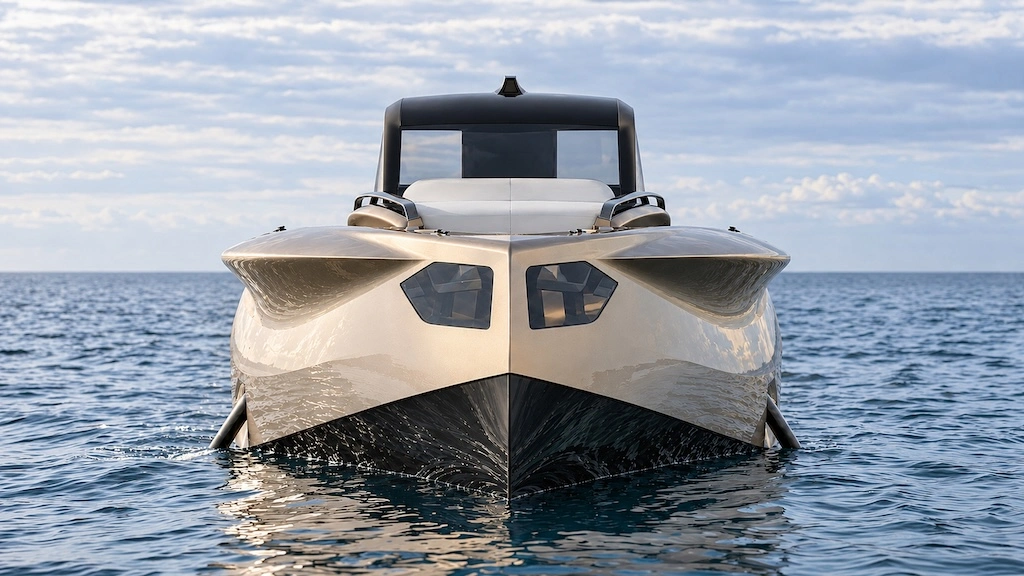
The pitch is simple: once you’re up on the foils, the bumpy part of boating disappears. Wings under the water lift the hull out of the sea and cut drag (and fuel consumption). The ride is smoother, quieter and more efficient than a conventional powerboat thumping through chop. With its wings deployed, Shadow spans 13.3 metres, which makes it almost exactly as wide as it is long.
From the Racecourse to the Sundeck
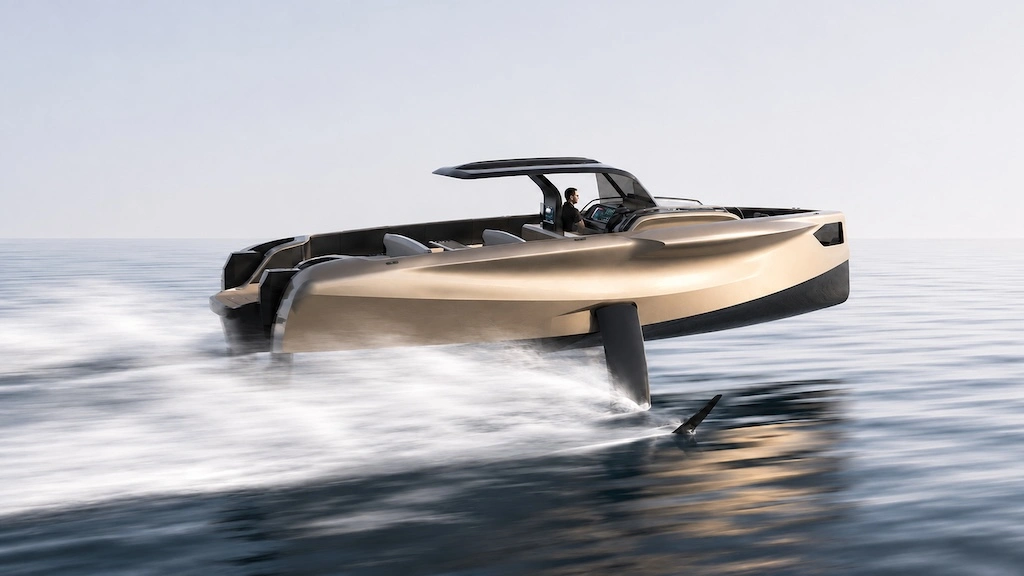
For most of the past decade, foiling belonged to America’s Cup hulls and SailGP catamarans. With Shadow, Foiler is taking the technology from the world of racing and into a leisurely afternoon near you. While Spirit proved the concept, Shadow is all about making it pleasant to stay aboard, from breakfast to sundowners.
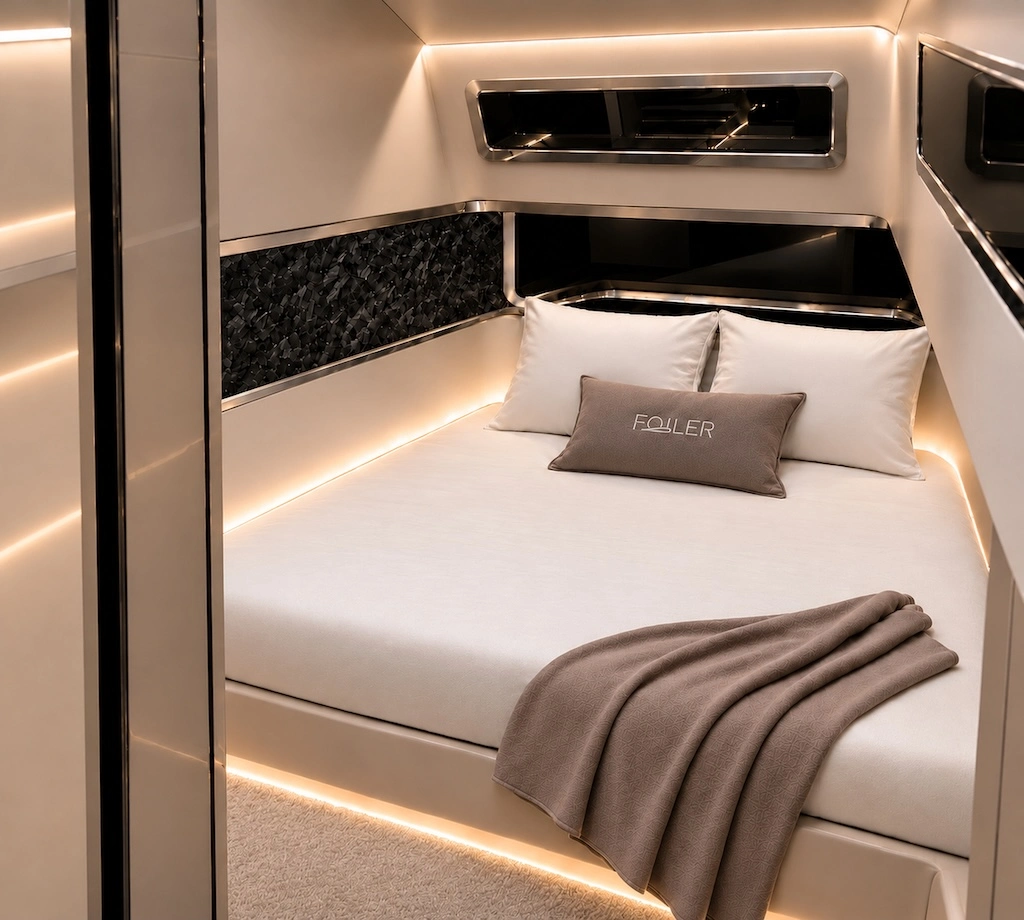
Inside, large glazed panels let light deep into the cabin and frame wide views of the sea. Designer Timur Bozca of BOZCA treated the deck, superstructure and interior as one continuous shape, with the windscreen frame sweeping back into the canopy, and handholds recessed into the gunwale instead of bolted on, delivering a smooth, modern design.
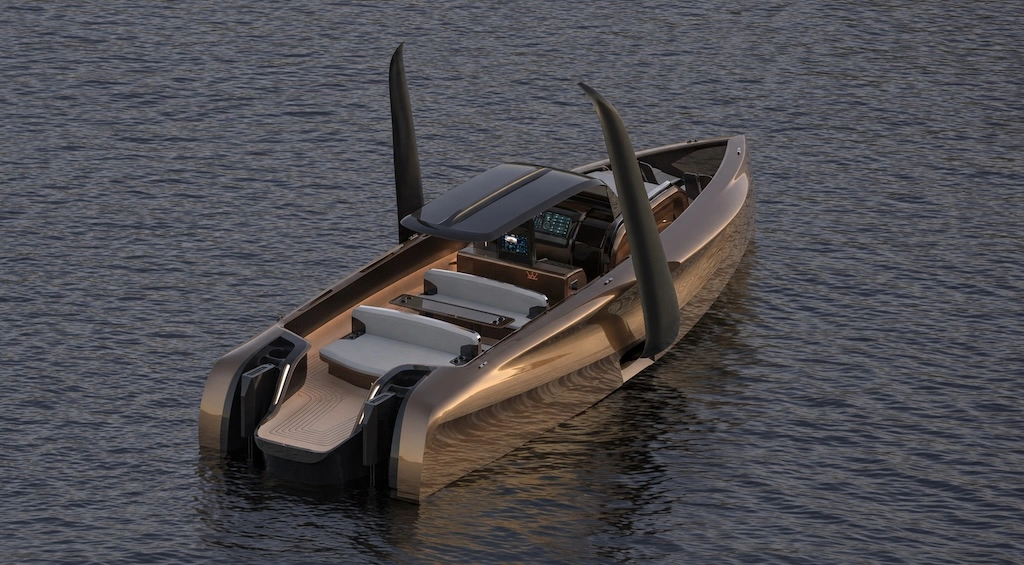
“I shaped neighbouring surfaces to catch the sun at different angles,” says Bozca. “That gives Shadow a sense of movement even at anchor.”
ENATA builds the yacht in the UAE, drawing on its marine and aerospace experience. The hull uses pre-preg carbon fibre and 3D-printed titanium parts, while a sophisticated management system called Wingman runs everything from a single interface, so flying the boat doesn’t require an engineering degree.
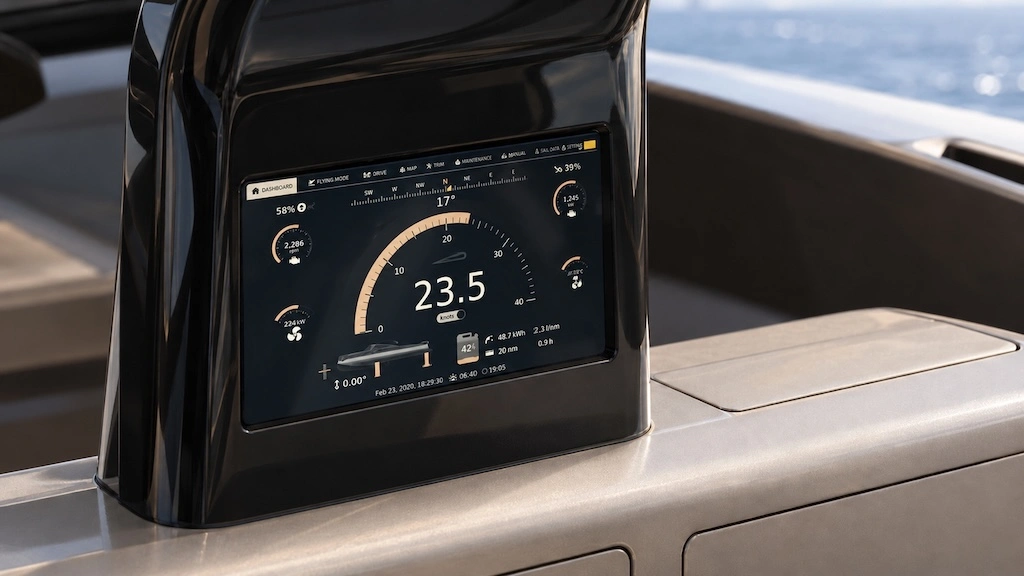
The headline numbers: three 600hp V12 turbo-diesels, a 45-knot top speed (around 83km/h), 25–30 knots at cruise and a 300-nautical-mile range. It holds CE Category B certification, which rates it for offshore conditions up to Force 8 winds, for when you’re feeling particularly adventurious, while a draught of 0.7 to 0.9 metres means it can also slip into shallow coves.
Why It Matters in Asia
Shadow suits Hong Kong’s choppy harbour and constant ferry wake. At cruising speed, a lunch run from Central to Macau would take well under 90 minutes, and you’d arrive with your drink still upright. Sai Kung’s outer islands, Phang Nga Bay and Singapore’s neighbouring Riau islands all look like natural territory for it.
Just be sure to wave at the Cotai Ferry as you cruise past.