

A castle-town ryokan that serves Italian, spins vinyl and pours Nagano wine after your soak. KAI Matsumoto has reopened, and it makes a very good case for leaving Friday afternoon.
Here’s a sentence nobody expected to write about a Japanese ryokan: the best part of dinner is the burrata. After a year behind hoardings, KAI Matsumoto has reopened after a complete renovation. It has made the boldest move a ryokan can make. It kept the hot springs and dropped the kaiseki.
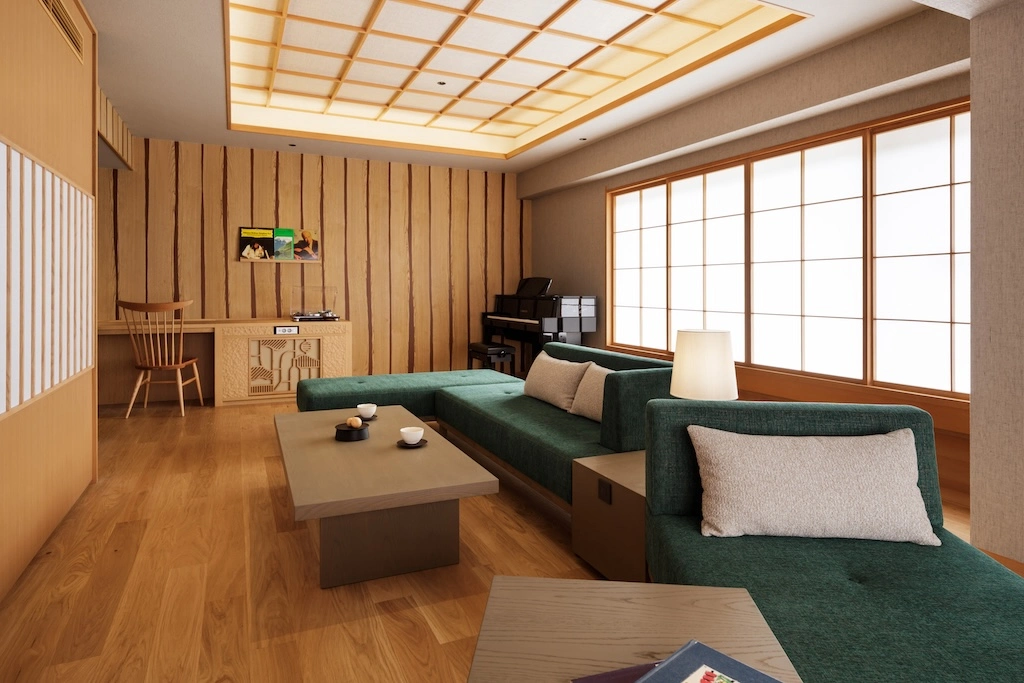
Every other onsen inn in Japan follows the same evening ritual. You soak, put on a yukata, then sit through 12 courses of exquisitely arranged things you can’t quite identify. KAI Matsumoto keeps the soak and the yukata. Dinner is now a full Italian course paired with Shinshu wines, and it’s the first time the KAI brand has done anything like it. Strange on paper, but it makes sense once the first glass is poured.
Why Matsumoto, Why Now
Matsumoto is the Japan weekend that frequent visitors save for their fifth trip. It has a black-lacquered castle, one of Japan’s original surviving keeps and a National Treasure. It has the Northern Alps on the horizon, a serious classical music pedigree and a wine region that cool-climate drinkers have started to whisper about. The town is also a working guitar town, with its workshops still producing a large share of Japan’s guitars, and the hotel leans into that history.
The ryokan sits in Asama Onsen, a 1,300-year-old hot spring district about 15 minutes by car from JR Matsumoto Station. Historically, this was the oku-zashiki, the castle town’s inner sanctum, reserved for the lords of Matsumoto Castle and their samurai. The lord’s own palace bath drew on these springs. You are, in other words, bathing above your station.
Dinner in a Yukata, Italian Style
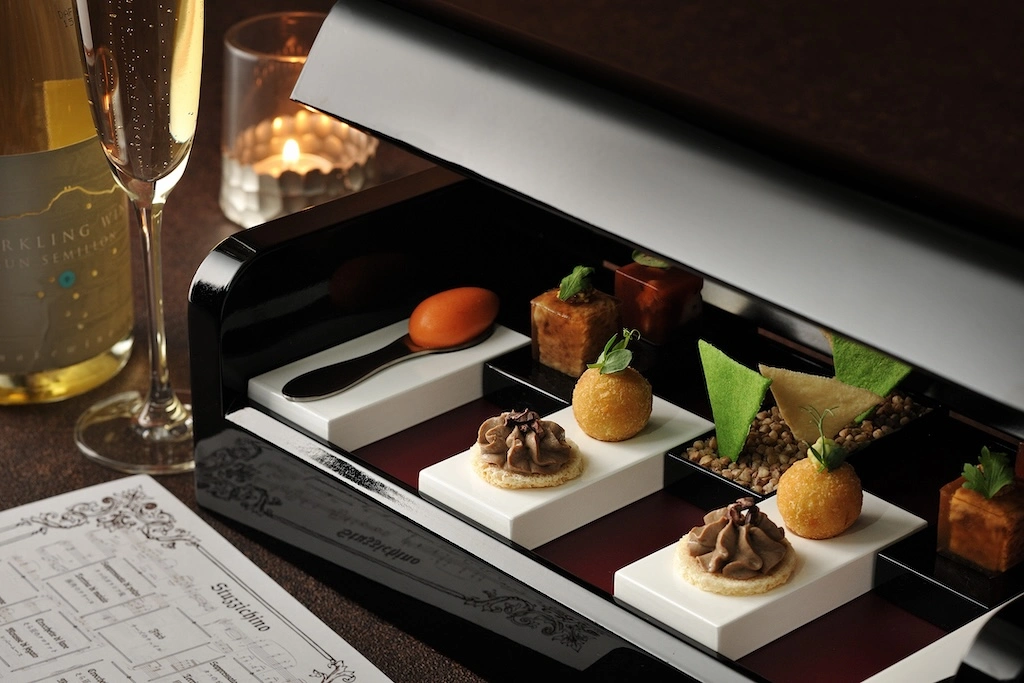
The evening opens with six stuzzichini, Italian canapés, laid out on a custom platter shaped like a piano. It’s a little theatrical. They know, and it works anyway. Alongside comes a glass of SanSan Winery‘s Brut Blanc, a local sparkling wine made using the traditional Champagne method, with a fine bead and crisp acidity that suits mountain air.
From there, the courses build around Shinshu produce and the region’s wines. The best thing about the format is that it’s relaxed. You’re post-bath, in a yukata, drinking good Nagano wine with Italian food. Nobody is explaining which garnish symbolises autumn. Vegetarians get a dedicated Italian course rather than a sad side plate.
The Lobby Is the Main Act
The reworked lobby is the room you’ll photograph. A ten-metre ceiling rises over displays of guitars, luthiers’ tools and raw timber. Each day the staff run the Sonority Concert. They walk you through how Matsumoto’s guitars are still built, demonstrate how different woods change the tone, then play a short concert that shows off the room’s acoustics.
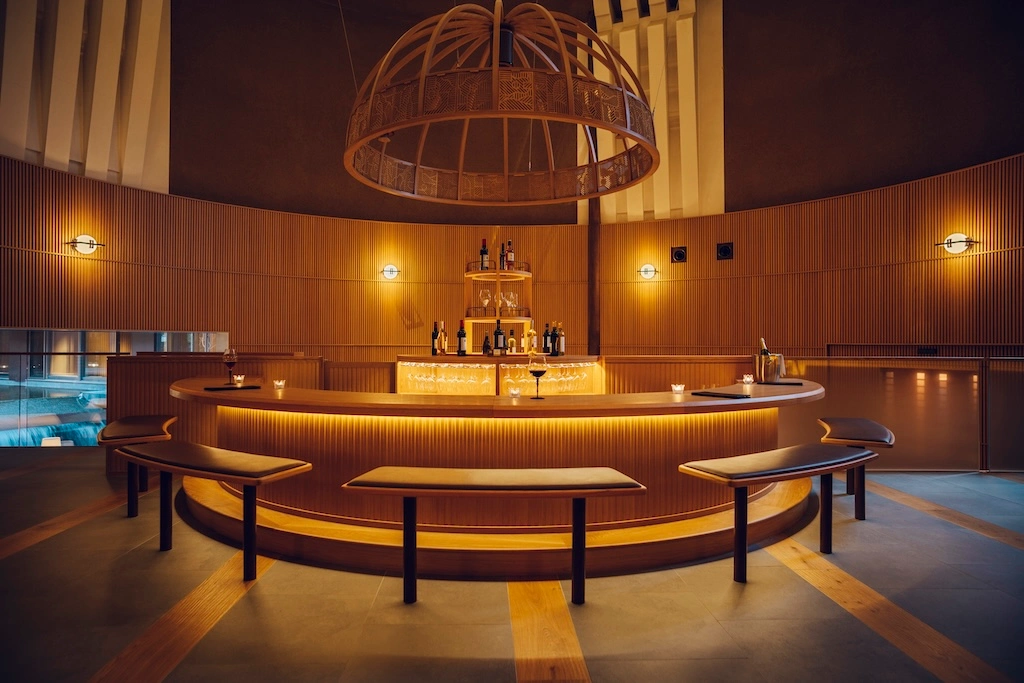
Off the lobby, the new Nagano Wine Bar gives you a front-row seat with a glass from nearby wineries. Vinyl plays throughout the property, which sets a pleasant analogue mood without ever feeling like a gimmick.
Rooms Built for Listening
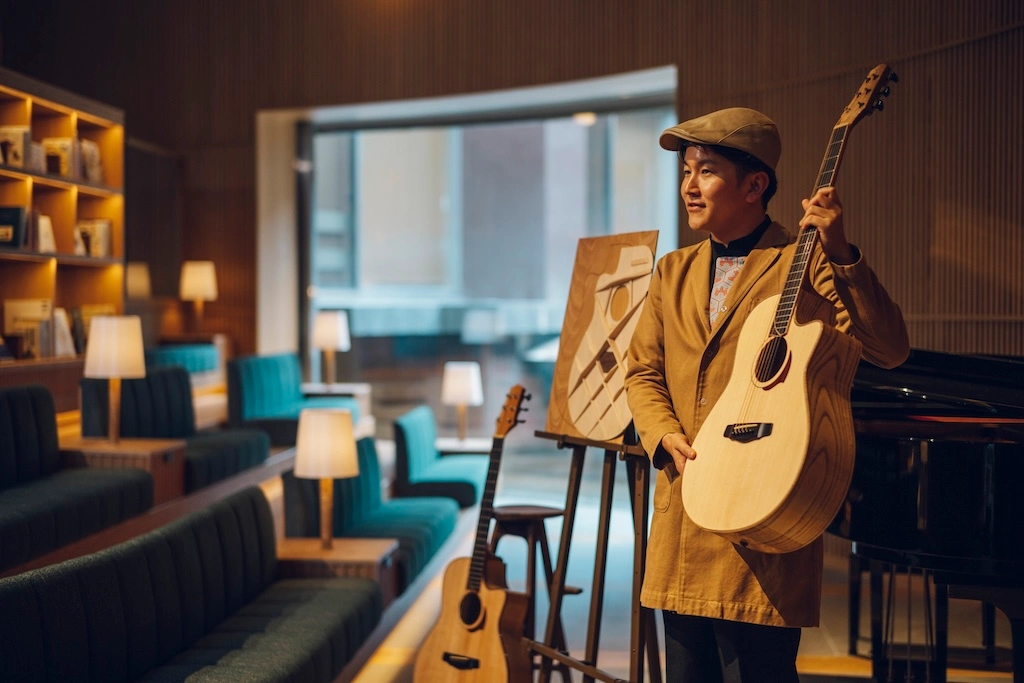
All 29 rooms have been rebuilt to KAI’s Regional Suite standard, branded Gaku no Ma. Gaku is a neat local pun: spoken aloud, it can mean learning, mountains or music, the three things Matsumoto holds dear. Every room gets a turntable, high-fidelity speakers and Matsumoto Keisei-nuri lacquer artwork, a local craft finished with techniques borrowed from guitar-body lacquering.
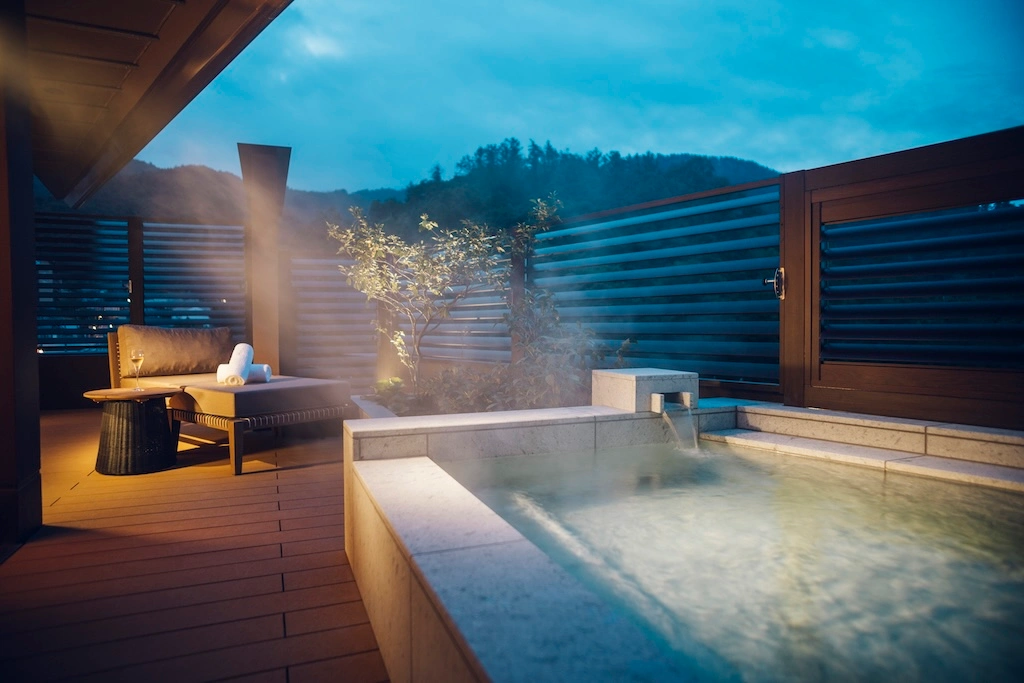
Nineteen of the rooms have private onsen baths, and those are the ones to book. If the weekend needs to impress someone, take the GAKU Suite. It covers 130 square metres and has a private sauna, a cold plunge, an open-air hot spring bath and a piano in the living room. The terrace has outdoor speakers and a daybed. It’s the only one of its kind in the building.
Thirteen Ways to Get in Hot Water
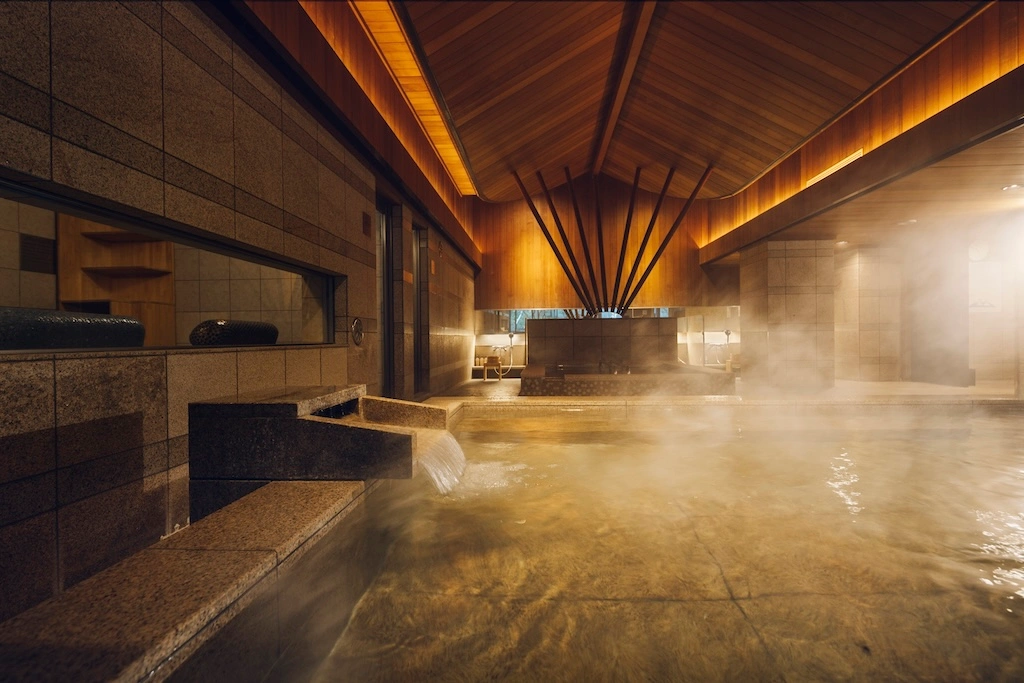
The bathing circuit is where the old Asama Onsen pedigree pays off: eight bath types in 13 variations. The list includes indoor and open-air pools, a radiant bath that warms you from below, a reclining bath where you simply float, and a hinoki sawdust bath that smells like an expensive cypress forest. Afterwards, the new post-bath lounge serves chilled apple vinegar made from Shinshu apples.
Drink it. It’s the most Nagano thing in the building.