

Forget the takeaway menus. Hosting a proper dinner party is the last great flex of modern manhood, and here is how to do it properly.
There’s a familiar scene that plays out in every good crime drama worth its salt: at some inevitable point, the protagonist, glass in hand, will address a room full of people who would happily ruin each other given half a chance, and somehow manages to keep it civil until the port comes out.
Netflix hit The Gentlemen has made something of an art form out of this particular skill, men in beautifully cut suits deciding, quietly and with total control, who sits where and who gets cut off after the second whisky. You do not need a criminal empire to borrow the technique. You just need a dining table, a decent plan, and the nerve to actually use them.
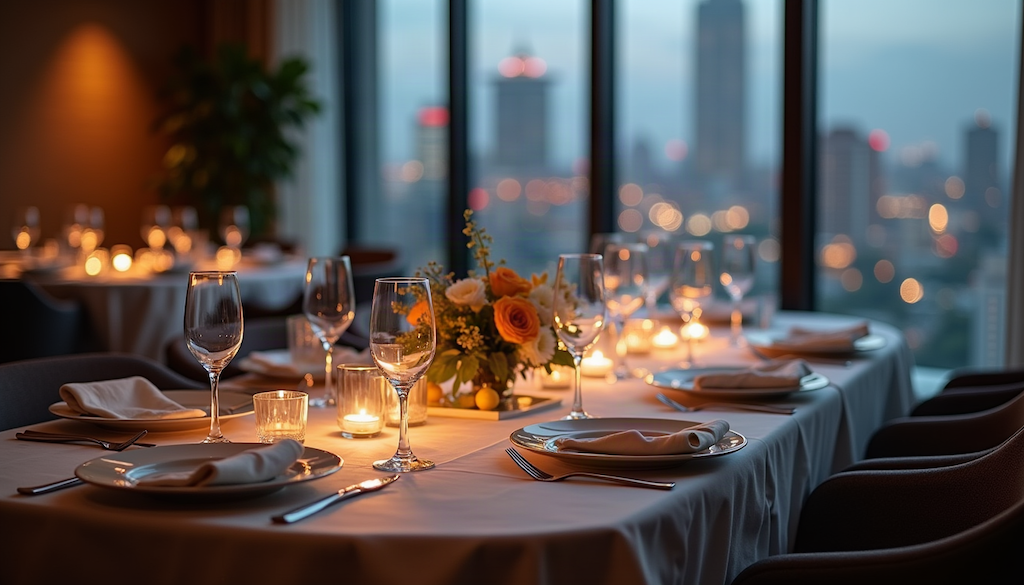
Hosting a dinner party has quietly become the most underrated status symbol available to modern men. Anyone can book a table. Fewer people can pull eight strangers and friends into their home, feed them properly, and send them back out into the night three hours later, slightly drunk and thoroughly charmed. That’s a skill, and like any skill worth having, it pays to learn it properly rather than winging it with store-bought lasagne and a side of wishful thinking.
The Role of the Host: Less Waiter, More Diplomat

The first mistake most men make when hosting is assuming the job is logistical: cook the food, pour the wine, keep the plates moving. However, this is only a fraction of the task. The real job is atmospheric. A host is closer to a diplomat than a waiter, someone whose main task is to make sure a room full of people with nothing obviously in common leave feeling like old friends, or at the very least, like they’d happily do it again.
This means the good host is never fully relaxed and never visibly stressed. You are reading the room constantly: noticing who has gone quiet, who has had one glass too many, who needs rescuing from the guest who has decided, unprompted, to explain cryptocurrency to the table. You steer conversation the way Eddie Horniman steers a room full of gangsters who all think they’re the smartest person in it: calmly, with a light touch, and always one step ahead of where things are about to go wrong.

Practically, this means front-loading your prep so the evening itself is about people, not panic. Nothing kills a host’s authority faster than disappearing into the kitchen for twenty minutes at the exact moment the conversation needs steering. If you are still assembling a course when guests arrive, you have already lost. Do the difficult things in advance, keep the finishing touches simple, and treat your own presence at the table as the priority it actually is.
Etiquette, From Black Tie to Bare Feet

Not every dinner party needs a dress code and a seating plan, and pretending otherwise is how you end up hosting a very stiff, very awkward evening for people who just wanted to eat some good food. The trick is matching the etiquette to the occasion rather than defaulting to either extreme.
Getting a Little Formal
For anniversaries, milestone birthdays, or the dinner where you are trying to impress someone’s parents, lean into structure. A proper seating plan, alternating genders and separating couples so people are forced to talk to someone new, does more for the evening than any amount of good food. Set the table properly: cutlery outside-in, glasses top-right, napkins folded rather than balled up beside the plate. Serve wine before guests ask for it. This is the version of hosting where the details are the entertainment, so pay attention to them.

A Little More Casual
Most dinner parties live here, and it’s the hardest register to get right, precisely because there are no fixed rules to hide behind. The table should look considered without looking staged: proper glassware, cloth napkins, candles if you have them, but no assigned seats and no pretence that anyone needs to know which fork comes first. Music matters more here than at a formal dinner, something with enough personality to fill silences without dominating conversation.
Keeping it Casual
Board games after, sharing plates instead of courses, and everyone helps clear the table. The etiquette here is really just generosity: make sure no one’s glass sits empty for long, make sure the quiet guest gets pulled into conversation at least once, and resist the urge to apologise for the mess. A relaxed host puts a room at ease faster than a perfectly ironed tablecloth ever will.

Across all three scenarios, one rule holds: know your guests better than they know each other, something we’re sure Sun Tzu would approve of. Whether it is a five-course tasting menu or pizza on the coffee table, the etiquette that actually matters is knowing who to seat next to whom, who needs a stronger drink to loosen up, and who needs a weaker one to slow down.
Getting Guests to Mingle Without Making It Obvious

Left to their own devices, most dinner party guests will cling tighter to whomever they arrived with than Kate Winslet on a floating door. Breaking that up without turning the evening into a corporate icebreaker session is a genuine skill, and it starts before anyone sits down.
Do the introductions yourself, and do them with a hook rather than a name and a job title. “This is Sarah; she just got back from three months in Japan and has strong opinions on the works of Nikkatsu Roman” gives people something to actually say to each other. A bare introduction leaves guests standing there with nothing but small talk to fall back on, which is how rooms go quiet.

Move people physically. Serve drinks and canapés in one room, then move everyone to the table for the meal itself, then move again for coffee or a nightcap somewhere else entirely, even if that somewhere else is just the sofa ten feet away. Every relocation is a natural reshuffle: people who have been talking for twenty minutes peel off and find someone new, and you have engineered a fresh conversation without anyone noticing you did it.
Seating plans do the same job at the table itself. Split up couples and existing friend groups, put talkers next to listeners, and resist the temptation to seat yourself at the head of the table like a Victorian patriarch. The best hosts sit in the middle of the action, close enough to redirect a flagging conversation, far enough from the head of the table that no one feels like they are dining with the boss.
What to Serve: Ambition Without Ego
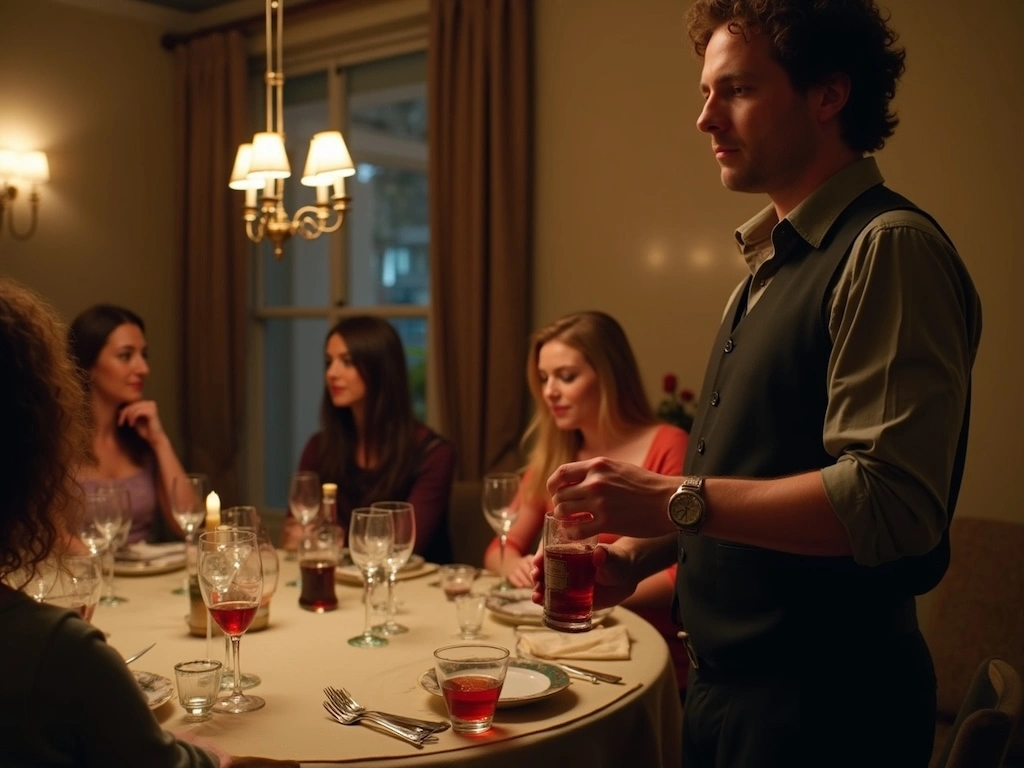
The food should be good enough to be memorable and simple enough that you are not sweating over it while guests are in the room. This is where a lot of hosts overreach, attempting a soufflé on the night itself because they saw it done well on television, and spending the entire evening in the kitchen instead of at the table where they belong.
The better approach is a menu built almost entirely around preparation. A slow-cooked main that only needs reheating, a starter that can be plated in under two minutes, a dessert made the day before. Save your ambition for flavour, not for timing. Nobody remembers the dish that arrived 40 minutes late because you were still passionately deglazing; they remember the one that arrived while the conversation was still good.

Drinks deserve the same discipline. A well-chosen wine list beats an extensive one so go for one crisp white, one structured red, something sparkling for the start of the evening, and a decent whisky or digestif for the end of it. You do not need to know everything about wine to host well, you just need to have chosen what you are serving with intention rather than grabbing whatever was on offer at the supermarket that morning.
And do ask about dietary requirements in advance, properly, not as an afterthought at the door. Nothing undermines a host’s authority faster than a scramble to feed a vegetarian guest with a side salad while everyone else eats a proper meal.
Pacing the Night
A dinner party has a rhythm, and the host’s real job is conducting it. Drinks and canapés should run for around 45 minutes to an hour, long enough for everyone to arrive and settle, short enough that hunger doesn’t turn to irritation. Move to the table once the room has properly warmed up, not the second the last guest walks through the door.

Between courses, give the table breathing room. A course served too quickly after the last one rushes conversation; too slow and the energy drops. Twenty to thirty minutes per course is a reasonable rule of thumb, adjusted by feel rather than a stopwatch. Watch the table rather than the clock: if the conversation is running hot, let a course sit a little longer before you clear it.
Dessert is where a lot of dinner parties lose momentum, arriving just as the best conversation of the night is getting going. Read the room before you serve it. If things are flowing, let them flow a little longer and bring dessert out when there is a natural lull rather than on principle. The evening should end when the energy starts to dip, not when the food runs out, so have a plan for what happens after the plates are cleared: a digestif, a game, a change of room, something that signals a new chapter rather than a slow, awkward wind-down.
Closing the Evening

The best dinner parties end the way the best scenes in The Gentlemen do: with everyone slightly unsure exactly how the night got so good, but certain that it did. That is the entire aim. Not a flawless evening, because those do not exist, but one where the host was calm enough, generous enough and paying enough attention that nobody in the room ever had to think about the mechanics of it at all.
Walk your guests out properly. Thank them individually, not as a group. If someone helped clear plates or brought a particularly good bottle, say so. The last five minutes of a dinner party shape the memory of the whole evening almost as much as the first five, so don’t let them become an afterthought while you are already halfway to the dishwasher.
Do this well a handful of times and something interesting happens: people start angling for an invitation rather than waiting for one. That, more than the food or the wine or the table settings, is the actual measure of a host worth his salt.
Your Dinner Party Questions, Answered

Even seasoned hosts panic-search the night before. Here are honest answers to the questions people quietly type into Google before their guests arrive.
How many people should I invite to a dinner party?
Six to eight is the sweet spot. Small enough that the table can hold one shared conversation rather than splitting into cliques, large enough that the evening doesn’t hinge entirely on any single guest’s mood. Beyond ten, you are running an event, not a dinner party, and the etiquette changes accordingly.
What should I serve at a dinner party if I’m not a great cook?
Pick one thing you can genuinely nail and build the rest of the menu around not competing with it. A great roast chicken, a good ragù, or a simple but properly seasoned fish dish will outperform an ambitious dish executed nervously. Guests forgive simple food far more readily than they forgive a stressed host.

How do I seat guests at a dinner party?
Alternate genders if it suits the group, separate couples and existing friend pairs, and put naturally talkative guests next to quieter ones rather than clustering all the extroverts together. Avoid seating yourself at the very head of the table if you want to stay part of the conversation rather than presiding over it.
What time should a dinner party start and end?
A 7 pm start with drinks first gives guests time to arrive without pressure and leaves room for a proper evening without running impossibly late. Most dinner parties naturally wind down between 10 pm and 11 pm on a weeknight, later on weekends, though the real end time should follow the room’s energy rather than the clock.

How much wine do I need for a dinner party?
Plan on roughly half a bottle per guest for a three-hour evening, more if drinks come before the meal. Round up rather than down. An unopened bottle at the end of the night costs you nothing; an empty rack at 9 pm costs you the rest of the evening.
What’s the etiquette for arriving at someone’s dinner party?
Never arrive early; arriving on time is early enough. Bring something, wine, flowers or a small gift for the host, even if they’ve told you not to bother. And always, always confirm dietary requirements with the host in advance rather than announcing them at the table – no one appreciates a chatty vegan quite as much as they do themselves.

How do I get quiet guests to open up?
Give them a specific question rather than an open one. “What’s the best thing you’ve eaten this year?” gets further than “so, what do you do?” Seat them next to someone naturally warm and inclusive, and check in on them directly at least once during the evening rather than leaving it to chance.
Is it rude to have a dinner party with a set menu and no choices?
Not remotely, provided you’ve checked for allergies and major dietary restrictions in advance. A confident, single set menu is a hosting strength, not a limitation. It’s the buffet of vague options that tends to leave guests unimpressed and hosts exhausted.