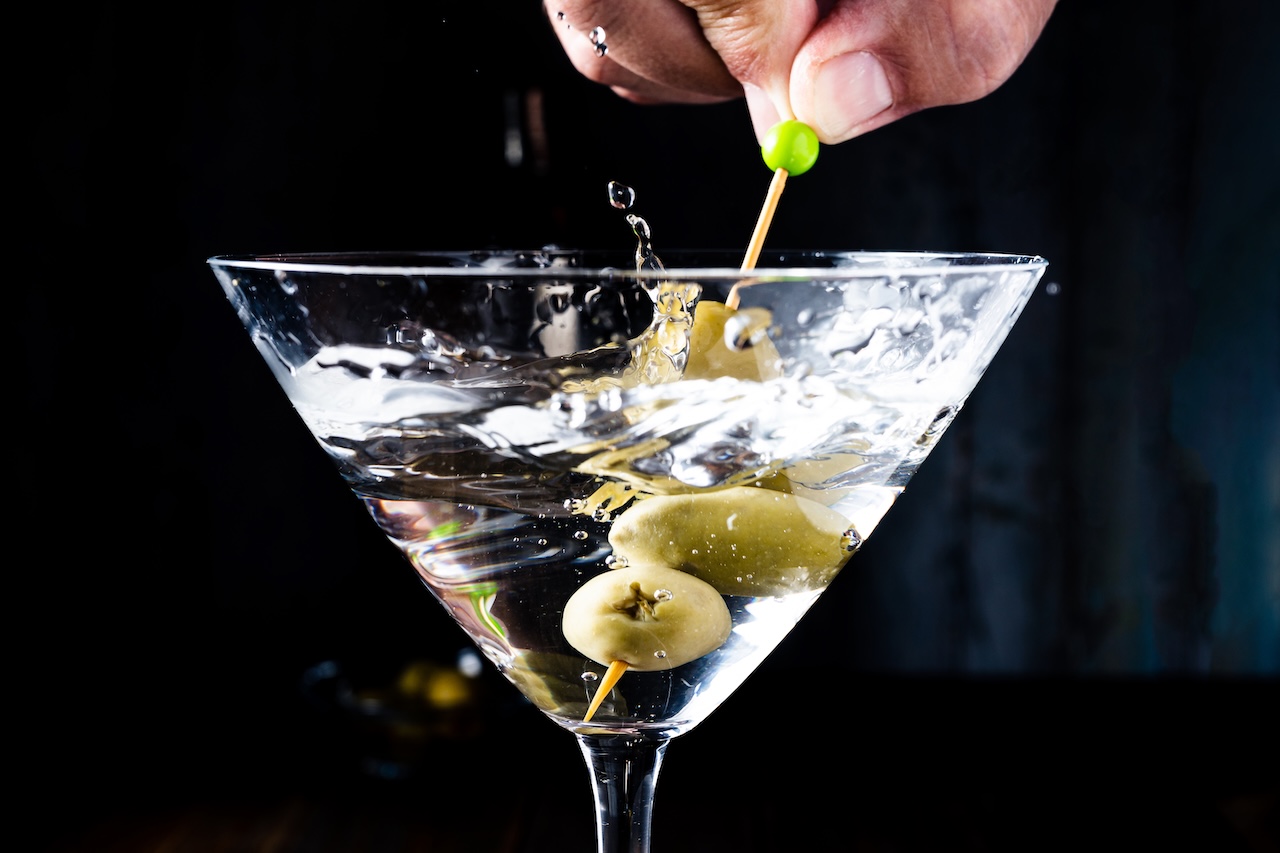

From gin vs vodka to the shaken vs stirred debate, here’s how to make, order, and drink a perfect martini — with the quiet confidence it deserves.
There’s something about a well-made martini that cuts through the noise of overcomplicated cocktails. It’s clean, sharp, and unapologetic — just like the man drinking it. Whether you’re after a touch of old-school elegance or simply want a drink that feels like an upgrade from the usual, mastering the martini is one of those quiet skills that pays off every time. No neon garnishes, no smoke machines. Just gin or vodka, vermouth, and the confidence to do it properly.
First, a Little History

It can (and perhaps should) be argued that the world has never witnessed such a potent symbol of sophistication, elegance and power as the Martini. And yet to many people, especially those with lifetime memberships to the ‘Ale Club’, exactly what constitutes a Martini is still unknown. We all recognise it as the Dutch courage that kept James Bond spying, the delicate if not potent cocktail of celebrities in years gone by, and possibly the deciding factor in so many political decisions as it was sipped from Westminster to the White House. In fact, its potency lies not only in its juniper extraction but also in its timeliness, as a symbol that has survived while so many have fallen to the ranks of nostalgia.

“The finest of all cocktails. Subtle, potent and a wonderful aperitif, it even has good looks,” says Michael Jackson’s (not the one you think) Bar and Cocktail Book. In it, he claims the origins of the Martini lay in the hands of John D. Rockefeller, a bartender at the Knickerbocker Hotel, New York City, back in 1910. Of course, it is not a surprise that an American is attributed with such a discovery, although it’s admitted he preferred to use sweet French vermouth, rather than the ubiquitous dry vermouth that’s common today.
However, author Alexander B. Struminger was not so sure about the American connection. He admitted that while the US made the Martini famous, there are still claims of its inception from Germany, Italy, France and of course, England, the home to ‘pompotory’.

“It seems, therefore, appropriate that the origins are obscured by the horizon of time and the story shrouded in myth and legend,” said the late cocktail commentator.
There are claims by Struminger in his book Martini that the cocktail was born sickly sweet in Martinez, California, in 1870, where it was crafted by a bartender with a little too much time on his hands. This town, like many others, has seized its opportunity for gratuity and claims itself the birthplace of the Martini (and forever may it be a place of pilgrimage).
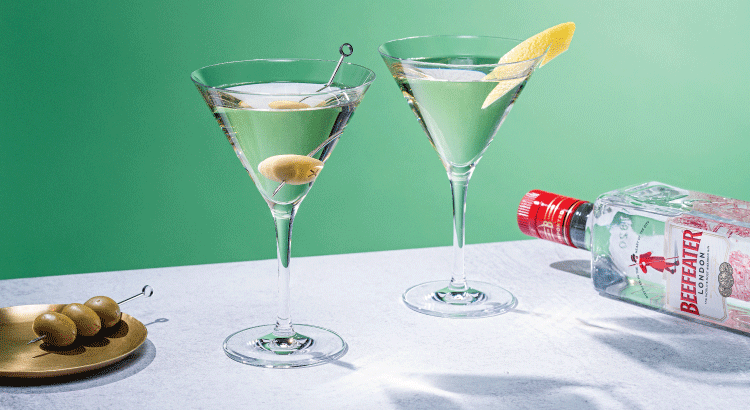
But wherever its birthplace, the Martini is an ever-evolving elixir. Over the decades, Old Tom Gin was replaced with dry London style gins such as Gordon’s or Tanqueray (Bombay sits in a style of its own), and Martini and Rossi extra dry became synonymous with the modern-day ‘silver bullet’. Olives, lemon twists, cocktail onions, and even jalapenos found themselves drenched in this socially rationalised inclination. The Martini became the Vodkatini, the Cosmopolitan, Desert Martinis, Saketinis, Tequilatinis and even the Manhattan.
Everyone has their way of drinking this little piece of history, and none more than Agent 007, James Bond.
“I never have more than one drink before dinner. But I do like that one to be large and very strong and very cold and very well-made. I don’t like small portions of anything,” says Bond in the original Casino Royale novel.
Gin or Vodka: Pick Your Poison
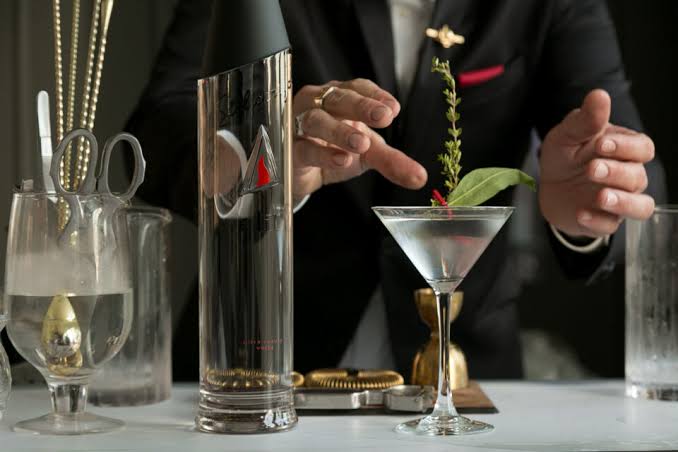
To make a martini, we must start with the base. Traditionalists swear by gin — London dry styles such as Beefeater, Tanqueray, or Hendrick’s bring botanical complexity that makes a martini taste like considerably more than just a chilled rationale at the end of a long day. Instead, they impart unique flavour profiles that are herbal, layered, and full of character.
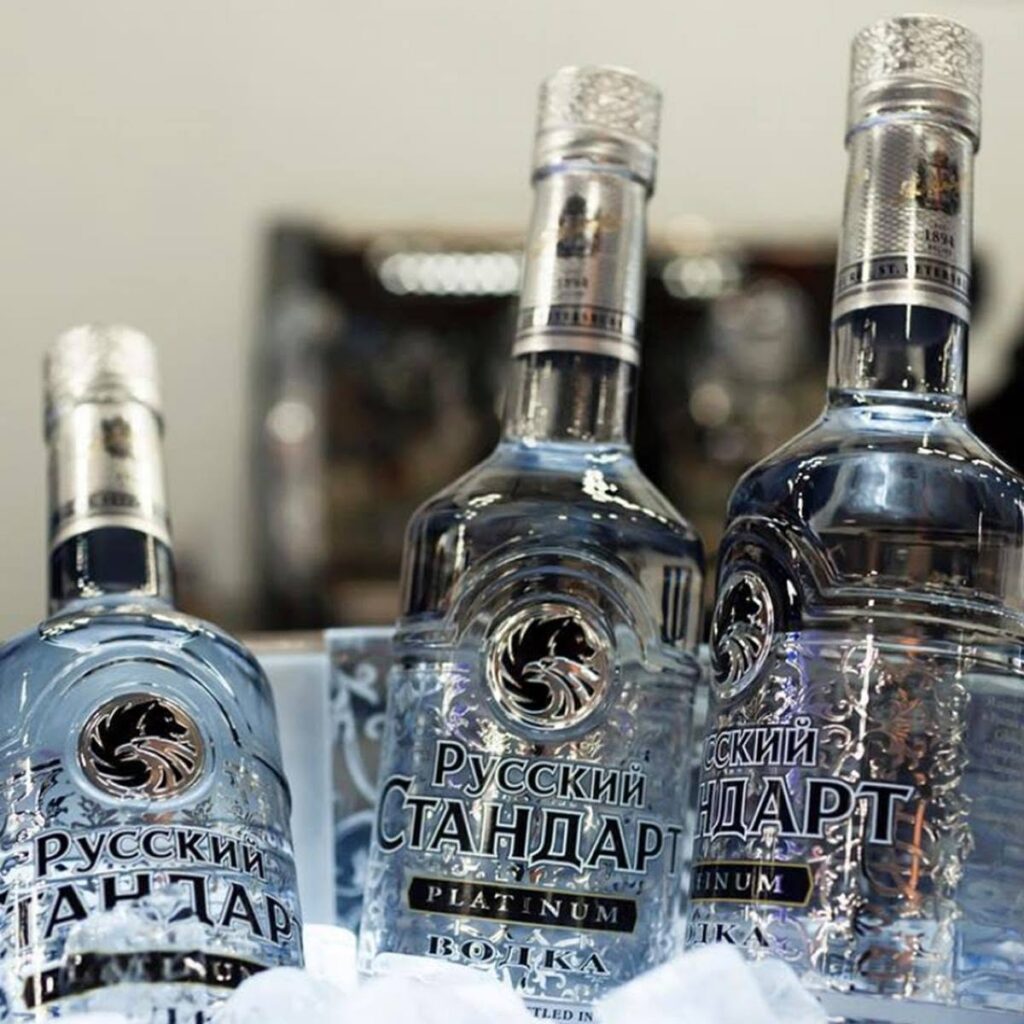
Vodka (my favourite), by contrast, is cleaner and smoother, letting the vermouth take a slightly more prominent role and lending that silky texture many drinkers now prefer. If you’re going Bond-style, vodka is the move — he was never shy about it. Choose wisely: something neutral but high-quality, such as Grey Goose or Ketel One. Cheap vodka tastes exactly like what it is, and you are what you drink. For a real elevation reach for something special, like Beluga Gold Line (their Trans-Atlantic Racing is also a favourite of mine), Russian Standard’s Imperia, Absolut Elyx, or Stoli Elit. You’ll thank me the next morning.
The rule of thumb: gin for depth, vodka for precision. Try both and see which suits your mood.
From here, you add a dribble of vermouth and a little bit of magic, and you have the cocktail that has had the world glassy-eyed and smiling for decades. Of course, like all symbols that claim celebrity status, things suddenly become so much more complex, and the perfect dimensions, not to mention the ancestry of this elusive substance, are still in heated debate.
Wet, Dry, or Somewhere in Between
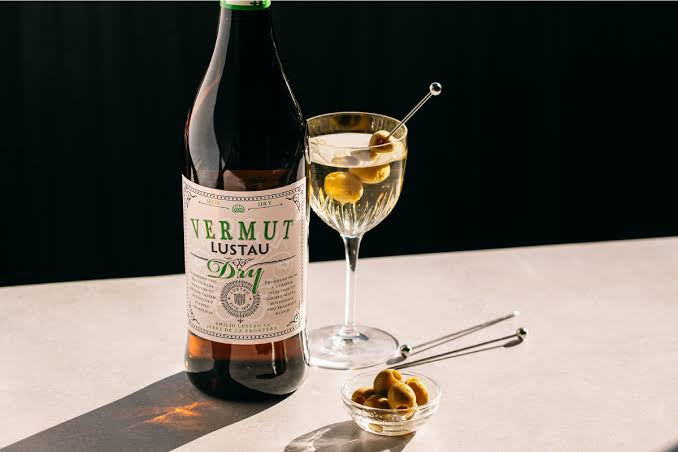
The ratio is where most home bartenders come unstuck. A “dry” martini means less vermouth — sometimes barely more than a rinse of the glass. A “wet” martini leans heavier on the vermouth, at around 2:1 or 3:1. While the classic sweet spot for most is somewhere between 5:1 and 6:1, spirit to vermouth, there’s a spectrum of styles (I prefer mine, in the fashion of Churchill, bone-dry, meaning the cocktail is shaken in the direction of France but with virtually no vermouth).
Use a quality dry vermouth: Noilly Prat or Dolin are the benchmarks (although French apéritif Lillet, which is technically not vermouth as it lacks wormwood, is also becoming increasingly popular). Crucially, keep it refrigerated once opened — vermouth is a fortified wine and doesn’t last indefinitely on the counter. Too much and you’re drinking chilled white wine with delusions of grandeur; too little and you might be sipping chilled spirit with as much character as a D-grade influencer.
Shaken or Stirred: The Great Debate

Bond famously demanded his martinis shaken, not stirred, and plenty of men still follow that lead. Shaking produces a colder, slightly more diluted drink with a silky texture courtesy of fine ice crystals. The result is a drink that’s crisp and refreshing.
Stirring, however, keeps things smoother, clearer, and more harmonious; it’s the purist’s method for letting the flavours speak without interference. One school of thought is that you shake a vodka martini and you stir a gin martini, so as not to “bruise” the juniper.

Use a mixing glass and a long bar spoon; stir for 20 to 30 seconds until the drink is properly ice-cold throughout.
The verdict? Shake for that sharp, Bond-esque edge. Stir for something more refined and contemplative. If (like me) you love a shaken dirty martini, keep a watchful eye on the bartender to ensure he’s not muddling the olives (I know, the sacrilege!) but is only using a barspoon of the brine, lest you end up with a drink that looks like a swamp.
Tools That Actually Matter
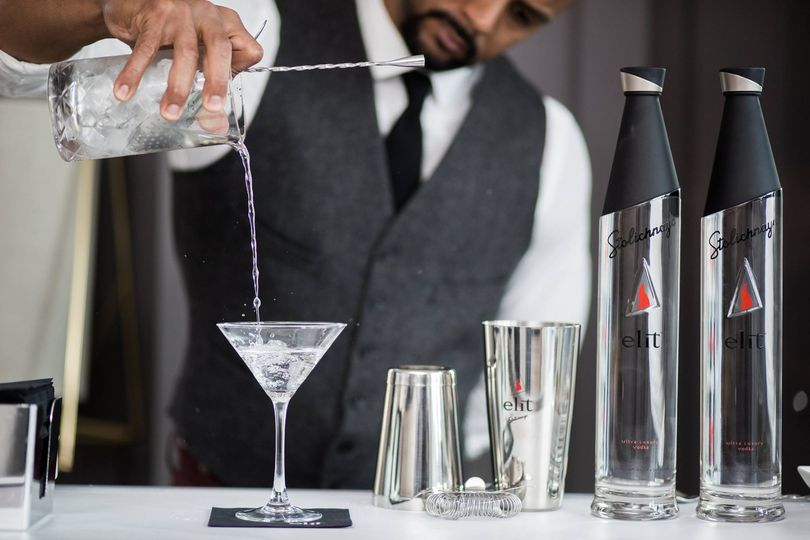
You don’t need a full bar setup (although that can come in handy), but a few quality pieces make the difference between something you’d serve with confidence and something you’d quietly apologise for.
- A Boston or cobbler-style cocktail shaker – you can pick these up online for around US$15
- Hawthorne strainer or fine mesh strainer – a strainer often comes in shaker packaged – opt for one that’s a stylish addition to your home bar rather than simply a utilitarian afterthought
- Mixing glass and a long bar spoon for stirring if you prefer this method
- Chilled martini glasses (keep a couple in the freezer for the ultimate touch)
- A jigger for accurate pours — eyeballing it rarely ends well!
Ice matters too (and more so in a martini than in almost any cocktail). Use large, fresh, dry cubes. Small or watery ice will over-dilute everything before you’ve even tasted it.
Step-by-Step: The Classic Martini

- Chill your glass — fill it with ice and cold water while you prepare, then discard.
- Add 75–90ml of gin or vodka to your shaker or mixing glass.
- Add 15–20ml dry vermouth, adjusting to your preference.
- To shake: Fill with ice, seal, and shake hard for 10 to 15 seconds until the shaker frosts over.
- To stir: Add ice and stir smoothly for 20 to 30 seconds.
- Strain into the chilled glass.
- Garnish with a lemon twist, sans zest — express (twist the peel) the oils over the drink, then rub the rim and either drop it in or discard — or three olives on a cocktail pick
Simple. However, every detail counts.
Pro Tips Worth Knowing

Always use fresh vermouth, and taste as you go as ratios vary by brand and palate. Never compromise on ingredient quality; a mediocre spirit produces a mediocre drink, full stop. If you’re hosting, pre-chill everything and have your setup ready before guests arrive.
One underrated trick: a small drop of saline solution or a tiny pinch of salt can brighten the entire drink without anyone being able to identify why it tastes better than expected.
Variations Worth Exploring
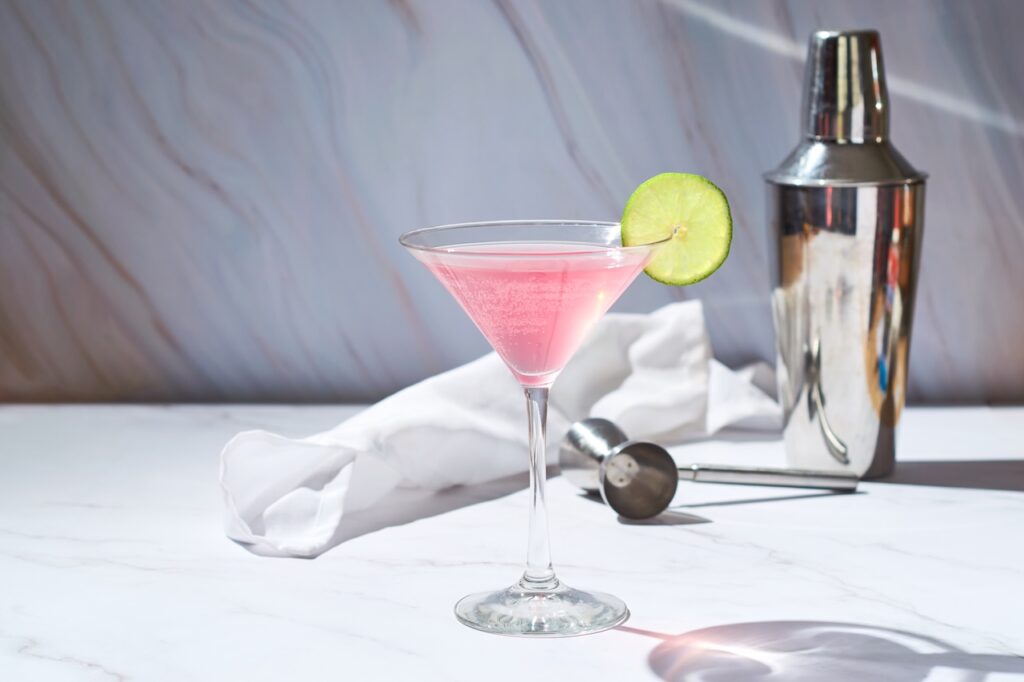
Once the classic is second nature, don’t be shy about branching out:
- Dirty Martini: Add 15–30ml of good olive brine. Start conservatively — it gets salty quickly. Use quality olives, not the cheap jarred variety (I love olives stuffed with anchovies, but I know it’s not for everyone)
- Vesper: Bond’s other classic — three parts gin, one part vodka, half a part Lillet Blanc. Shake, strain, lemon twist. Stronger and more aromatic.
- Gibson: Identical to the classic but garnished with a cocktail onion rather than an olive or lemon peel. Subtle and sharp.
- Smoky twist: A rinse of peaty Scotch whisky before adding the spirit. Adventurous, but effective.
The beauty of the martini is its restraint. Don’t overcomplicate it.
Ordering It with Confidence
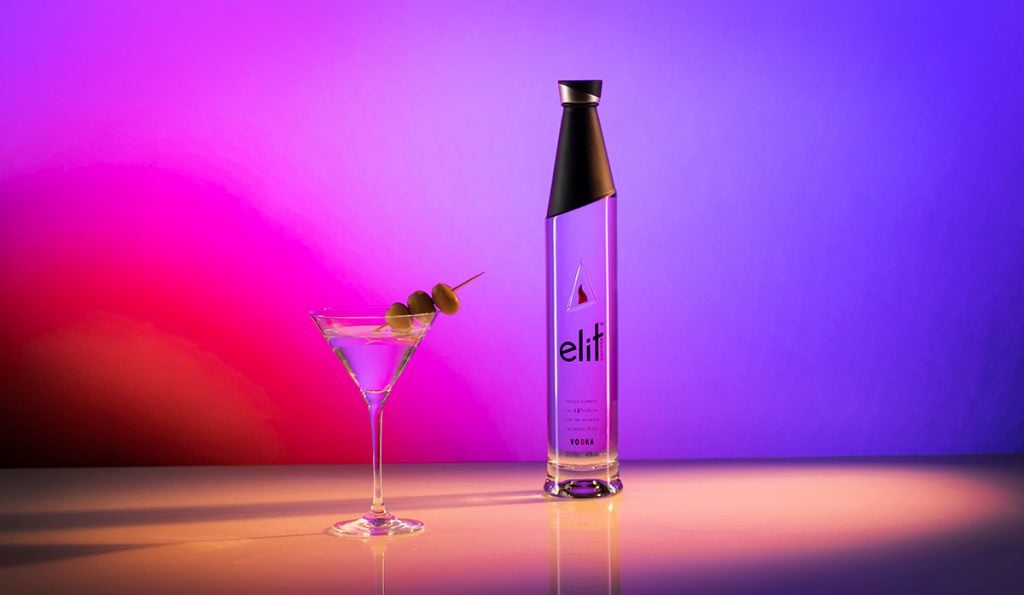
This is where the poseur and the man who actually gets it part ways. Like ordering a good whisky, ordering a martini is not about sounding sophisticated — it’s about knowing exactly what you want. Walk up to the bar and speak clearly: “Vodka martini, dry, with olives.” Or: “Gin martini, up, lemon twist.” No lengthy explanations, no hesitation.
The psychology is straightforward. A martini signals deliberateness. You’re not chasing trends or hiding behind something sweet. You’re comfortable in your own skin, choosing something timeless over whatever’s currently popular on social media. That quiet confidence lands better than any flashy order.
Sip it slowly. The first sip should hit crisp and cold; the rest should unfold with that herbal or clean finish. No need to announce how refined your taste is — the glass handles that.
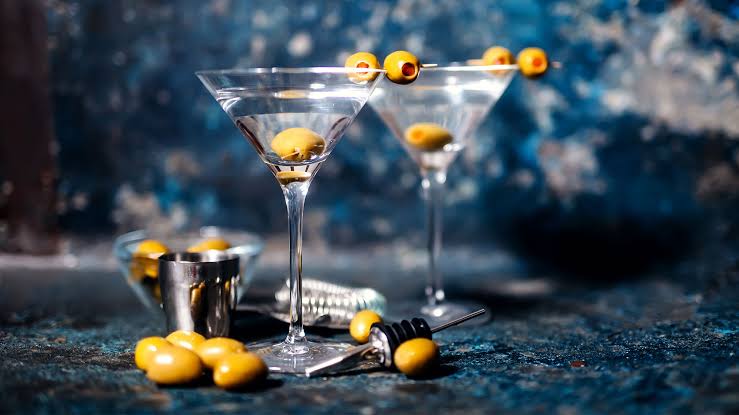
A perfect martini isn’t complicated, but it does demand attention to detail and a little restraint. Master the basics, experiment thoughtfully, and carry yourself like a man who knows his own taste. Whether you’re behind the bar or in front of one, order or mix yours with conviction.
Bond would approve. So would anyone who appreciates doing things properly. Cheers.
Martini FAQ: Every Question You Were Too Proud to Ask, Answered
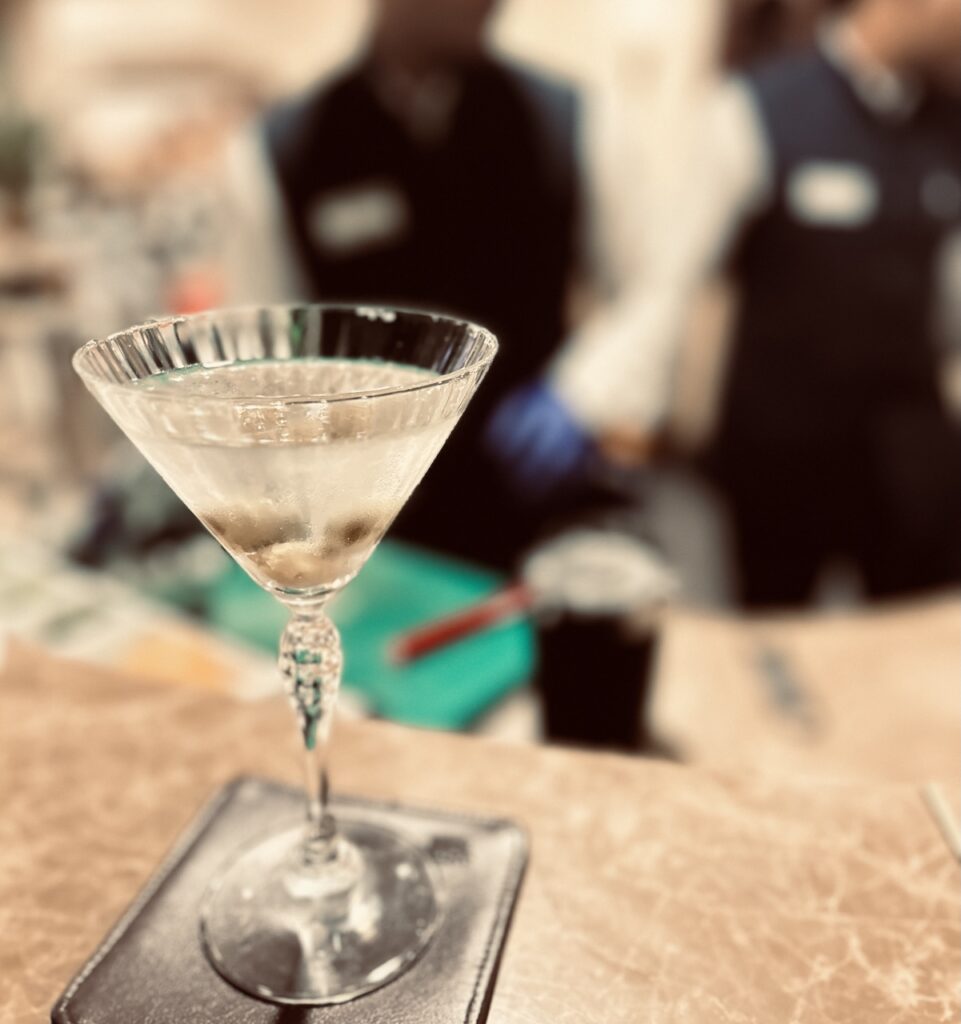
With all the variations and traditions, martinis are a cocktail all of their own. Here are the most commonly asked questions when it comes to this timeless libation.
What exactly is a martini?
A martini is a cocktail made from two core ingredients: a base spirit (traditionally gin, though vodka is widely accepted) and dry vermouth, served cold in a stemmed cocktail glass and garnished with either a lemon twist or olives. Despite its reputation for complexity, it is one of the most stripped-back drinks in the canon — which is precisely why technique and ingredient quality matter so much. There is nowhere to hide.
What’s the difference between a gin martini and a vodka martini?
A gin martini, the original, is botanically complex, herbal, and full of character. The juniper, citrus peel, and other botanicals in the gin interact with the vermouth to create a layered, aromatic drink. A vodka martini is cleaner and more neutral, allowing the vermouth (and any garnish) to take on a slightly more prominent role. Neither is objectively superior; they are simply different drinks for different moods. If you want depth and complexity, go gin. If you want precision and a silkier texture, go vodka.
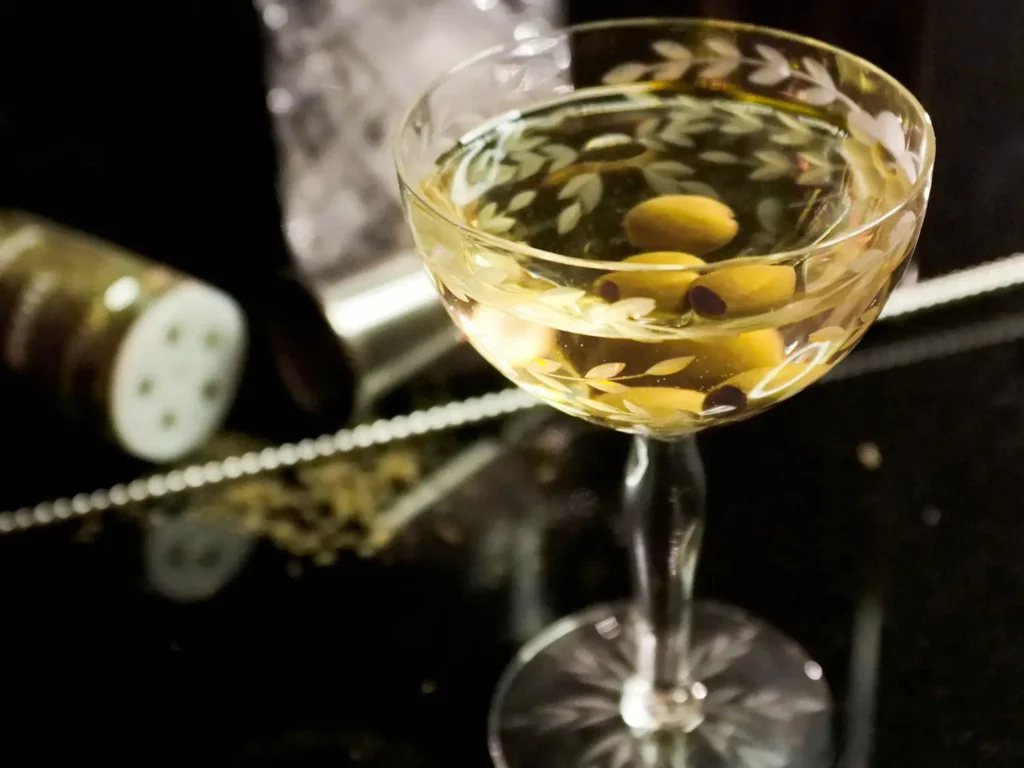
What does “dry” mean in a martini?
A dry martini contains very little vermouth — sometimes no more than a rinse of the glass or a single spray. The drier the martini, the closer it is to pure chilled spirit. A “wet” martini leans heavier on the vermouth, producing a softer, more aromatic result. “Extra dry” has become common shorthand for almost no vermouth at all. Most bartenders default to somewhere between 5:1 and 6:1 (spirit to vermouth) unless instructed otherwise.
Shaken or stirred — which is correct?
Both are legitimate, and the choice changes the character of the drink. Stirring produces a silkier, clearer martini with gentle dilution, making it the traditional method favoured by purists. Shaking produces a colder drink with slightly more dilution and a cloudy appearance from microscopic ice shards, resulting in a crisper, more refreshing texture. James Bond’s preference for shaken has been debated for decades; scientifically, the stirred method preserves the gin’s aromatic complexity better. The honest answer: try both and decide for yourself.
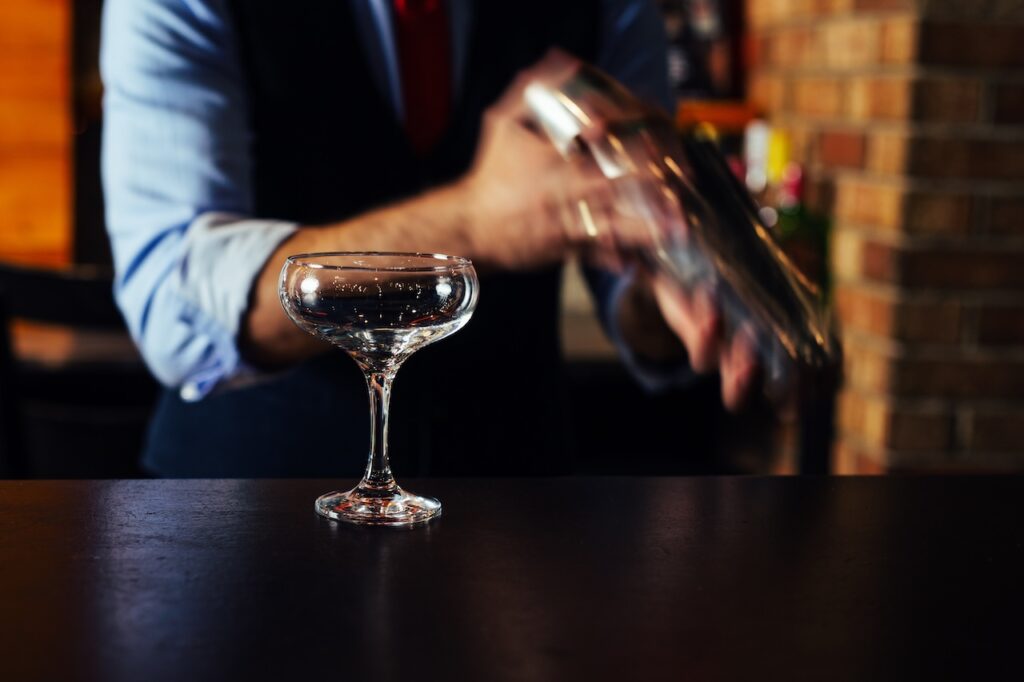
What vermouth should I use?
Use a quality dry (French) vermouth. Noilly Prat and Dolin Dry are the benchmarks and both are widely available across Asia and consistently reliable. Avoid cheap vermouth; it will undermine even excellent spirits. Crucially, vermouth is a fortified wine and oxidises once opened. Store it in the refrigerator and use it within four to six weeks. Flat, stale vermouth is one of the most common reasons a home martini disappoints.
Can you make a martini without vermouth?
Technically, yes, but purists would argue you’re simply drinking cold gin or vodka. That said, if vermouth genuinely isn’t to your taste, there are approaches: a light rinse of the chilled glass with vermouth before discarding it, or a single spray from an atomiser, add faint aromatic complexity without an obvious vermouth presence. Winston Churchill reportedly just glanced at the vermouth bottle while . That’s one method.
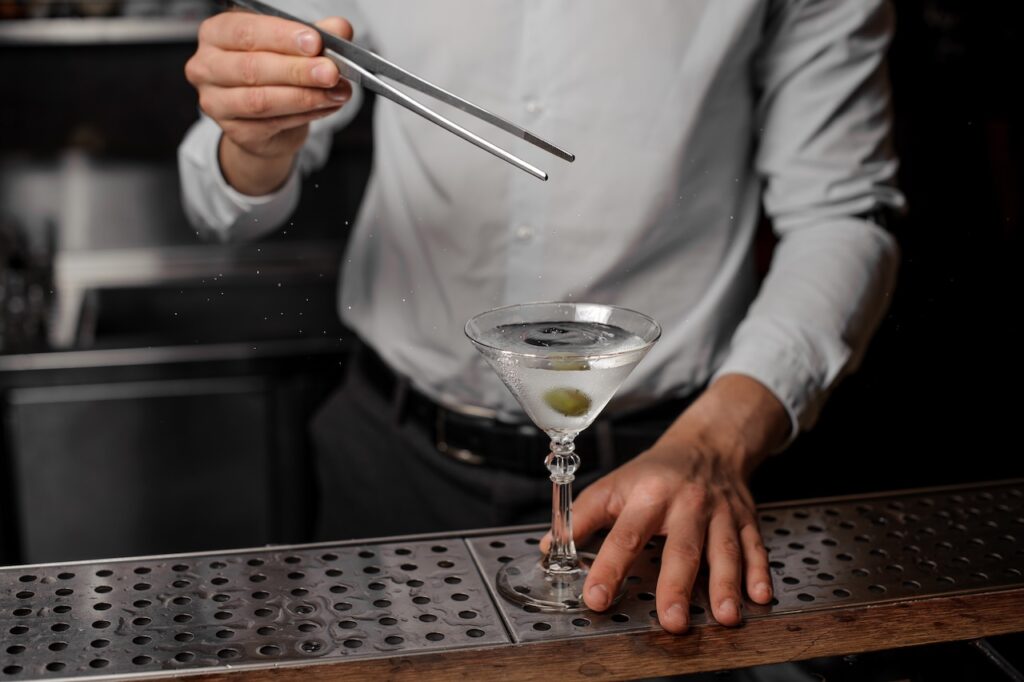
What is a dirty martini?
A dirty martini (President Roosevelt was such a fan he travelled with his own martini kit and botle of brine) includes olive brine — typically 15 to 30ml added to the shaker alongside the spirit and vermouth. The brine adds a savoury, briny depth that softens the alcohol’s edge. It is one of the most popular martini variations, particularly for vodka martini drinkers. A word of caution: go easy on the brine initially, as it can quickly overwhelm the drink. Always use good-quality olives; the brine from a cheap jarred variety will taste exactly like that.
What is a Vesper martini?
The Vesper was created by Ian Fleming in Casino Royale and ordered by James Bond as follows: “Three measures of Gordon’s, one of vodka, half a measure of Kina Lillet. Shake it very well until it’s ice-cold, then add a large thin slice of lemon peel.” The modern equivalent replaces the now-discontinued Kina Lillet with Lillet Blanc or Cocchi Americano. It is stronger than a standard martini, slightly more aromatic, and rewarding once you’ve mastered the classic.
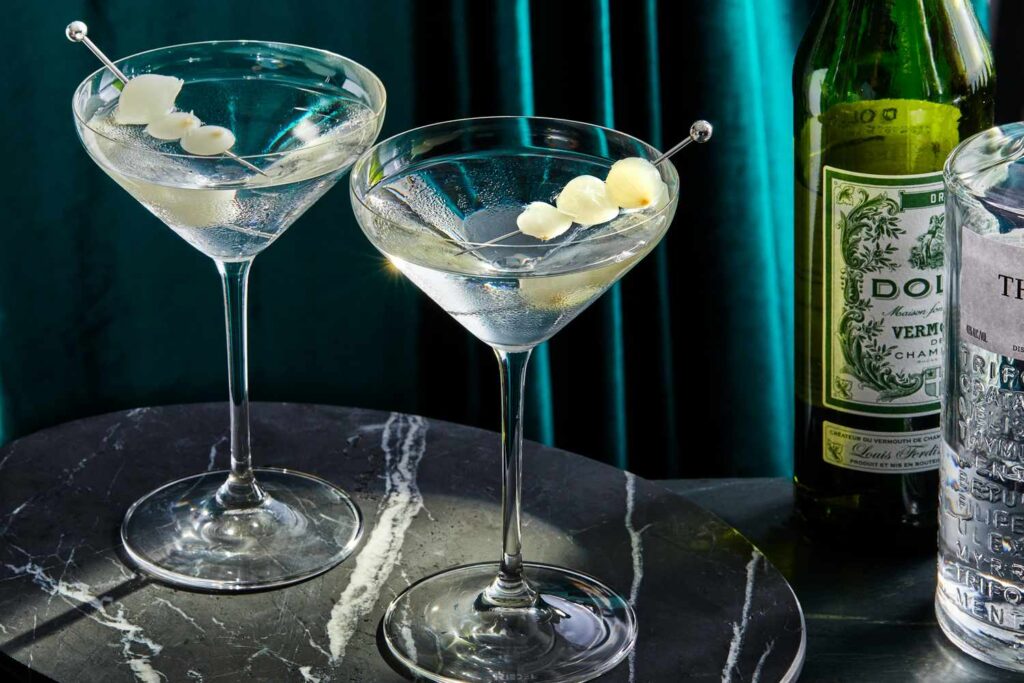
What is a Gibson martini?
A Gibson is structurally identical to a classic martini — same spirit, same vermouth, same ratio — but garnished with a cocktail onion rather than olives or a lemon twist. The onion imparts a subtle savoury note that slightly alters the finish. It is a gentleman’s variation: understated, precise, and pleasingly obscure enough to raise an eyebrow at a well-stocked bar.
What glass should a martini be served in?
The classic martini glass — a wide, V-shaped bowl on a long stem — is the traditional vessel, and the stem exists for a reason: to keep your hand away from the bowl and prevent the drink warming. A coupe glass (the rounded, shallow alternative) is increasingly common in better bars and is arguably more elegant and less prone to spillage. Either is correct. What matters is that the glass is properly chilled before service so keep a couple in the freezer if you’re making them at home.

How strong is a martini?
A standard martini — made with approximately 75ml of spirit at 40% ABV and a small measure of vermouth — comes in at roughly 30% ABV in the glass after dilution from stirring or shaking. That makes it considerably stronger than a glass of wine or a beer, and roughly comparable to several standard drinks in one. It is not a drink to be rushed, which is rather the point.
How do you order a martini at a bar?
Clearly and concisely. State your spirit preference, your dryness level, your method, and your garnish: “Gin martini, dry, stirred, lemon twist.” Or: “Vodka martini, extra dry, with olives.” A competent bartender needs nothing more. If you want it dirty, say so: “Vodka dirty martini, medium, olives.” Avoid vague orders such as “just a martini” at busy bars as they’ll default to whatever is quickest, which may not be what you had in mind.

What food pairs well with a martini?
The martini’s clean, saline, and slightly bitter profile pairs exceptionally well with salty, briny, and umami-rich foods, with a classsic choice being caviar. Other popular pairings include oysters, smoked salmon blinis, charcuterie, parmesan, and good olives. It also works well before a rich meal as an appetite stimulant, the original purpose of the pre-dinner cocktail. Avoid sweet foods, which will clash with the drink’s dry character and make both worse.
What are the best gin brands for a martini?
For a classic martini, London Dry styles are the standard. Beefeater and Tanqueray are the workhorses as they’re reliable, botanically expressive, and well-priced. Hendrick’s brings a distinctive cucumber and rose character that suits a slightly wetter martini. For something more premium, look to Monkey 47, The Botanist, or Roku Gin (the latter a Japanese expression particularly well-suited to the Asian palate). Each produces a noticeably different martini, which is part of the pleasure. Check out our guide to gin styles and our top recommendations.
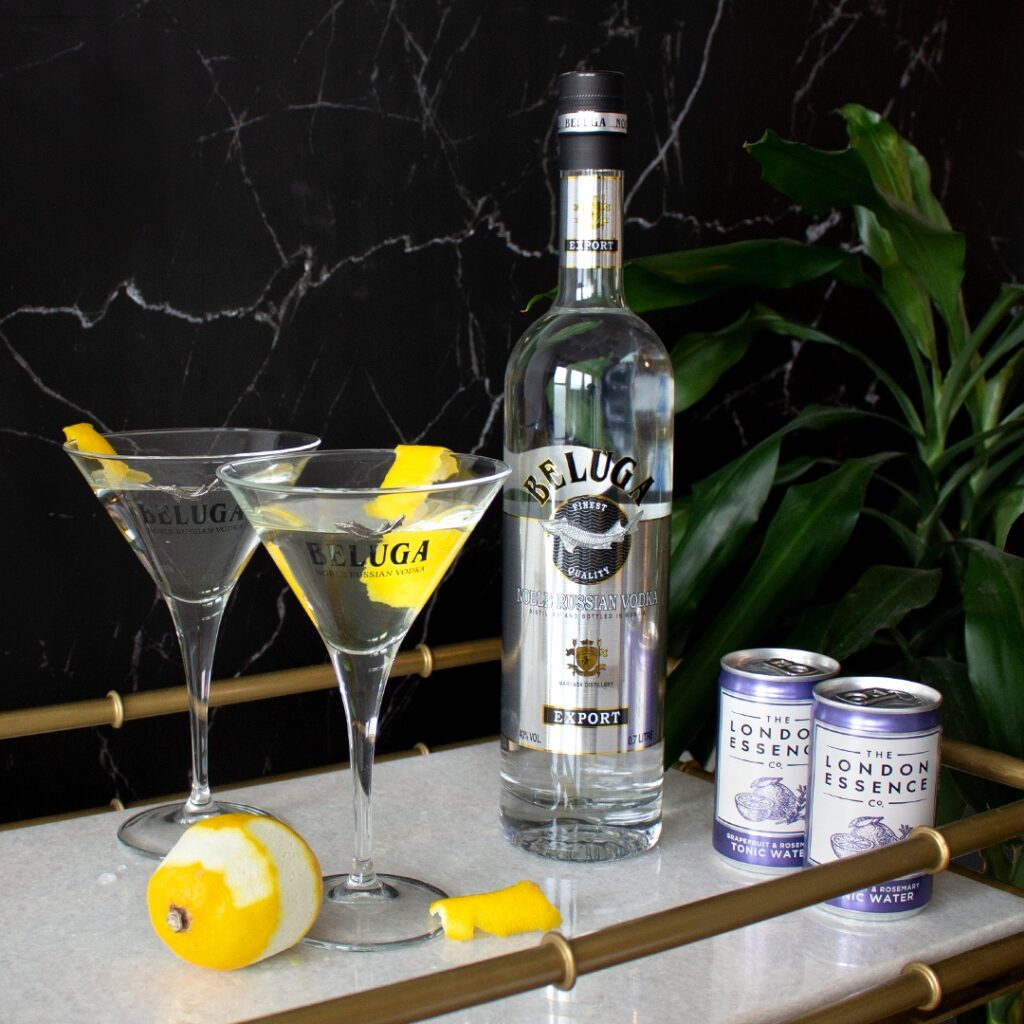
What are the best vodkas for a vodka martini?
Choose something clean, smooth, and neutral. Grey Goose and Ketel One remain the benchmarks at the premium end. Belvedere is another reliable choice. For something with a slight character edge, Stolichnaya Elit or Absolut Elyx are worth exploring. Avoid flavoured vodkas in a martini as they introduce sweetness and artificiality that undermine the drink’s elegance. And as noted, never use cheap vodka in a martini: at these concentrations, quality is everything. Be sure to check out our guide to vodka and the best brands to try.
Why does my home martini not taste as good as one from a bar?
Usually one of four reasons: stale vermouth left unrefrigerated, insufficient chilling (the drink must be properly ice-cold), low-quality ice that dilutes too fast, or imprecise ratios. The glass also matters as a warm martini glass will undermine everything. Fix these four variables and the gap between your home martini and a professional one closes considerably. The fifth possibility is simply that you need more practice, which is not exactly a hardship.
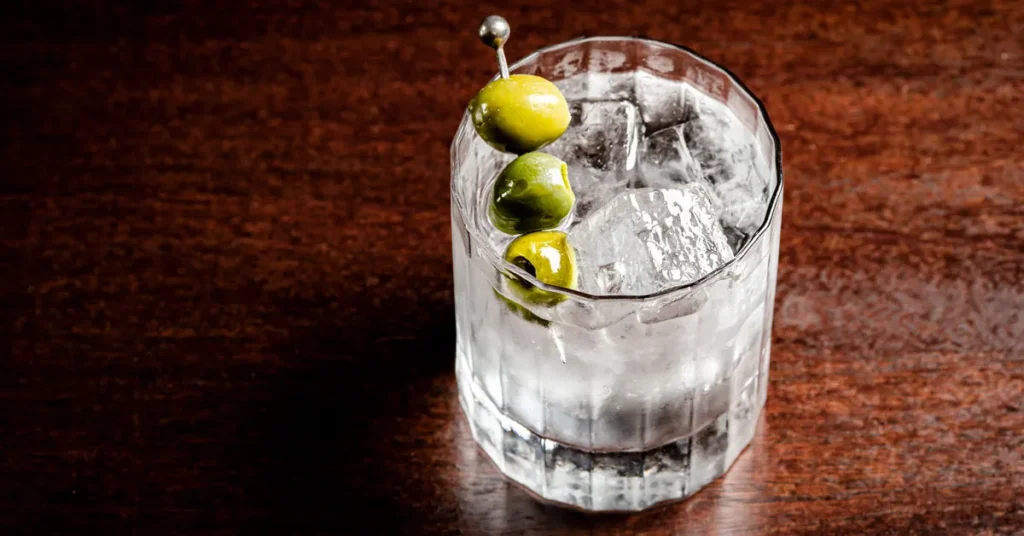
Is a martini always served “up” (without ice)?
By convention, yes — a martini is chilled over ice during preparation and then strained into a chilled glass without ice. Served “on the rocks” (over ice in a lowball glass) it technically becomes a different drink, though some prefer it this way as it stays cold longer and allows the flavours to evolve as the ice melts. There is no rule against it; it simply isn’t the classic serve (however, it’s my choice for the tropics).
What does “straight up” mean when ordering?
“Straight up” or simply “up” means the drink has been chilled over ice and strained into a glass without ice in the standard martini serve. It is distinct from “neat” (spirit poured at room temperature with nothing added) and “on the rocks” (served over ice in the glass). When ordering a martini, “up” is implied unless you specify otherwise.
Your Martini Glossary

There are a lot of in-the-know terms used when it comes to martinis, their production and the many variations that came after. Here’s the terminology you need to know.
Chocolatini – Vodka, crème de cacao, served in a chocolate rimmed glass.
Cocktail – The term used for any drink which is a mixture of various components.
Cosmopolitan – Made famous by Sex in the City, use Absolute Citron (30ml), Cointreau (30ml), Lemon juice (30ml) and Cranberry juice (45ml), shake over ice and pour in a martini glass. Garnish with a lemon twist.

Dry – A dry flavour, not sweet. Seen in dry gin and dry vermouth.
Juniper – The berries used to make gin.
Martini & Rossi – An Italian family that manufactures a popular brand of vermouth.
Manhattan – A Martini derivative usually made with Rye whisky. Use Canadian Club (45ml) sweet vermouth (15ml) and a splash of Angostura bitters. Shake over ice and serve with a maraschino cherry.
Mixology – The fanciful science of booze, where bartenders rename themselves ‘mixologists’ while they create better ways to get blind.

Shaken – Fill a cocktail shaker with dry ice (not shiny), pour in ingredients, shake firmly (above the head Tom Cruise style) and use a strainer to separate the ice with the goods.
Stirred – Fill heavy bar glass (beer glass) with ice, add ingredients and use a long handled bar spoon to swirl the ice around without disturbing them too much. Plays on the myth that juniper berries can be bruised after being made into gin.
Twist – Usually lemon. Cut a wheel from the center of a lemon. Use a sharp knife to separate the peel (yellow) from the zest (white). Cut white away as close as possible so that only yellow peel is visible. Use a straw or bar spoon to make peel into a tight spiral. The aim is to add citrus oil to the surface of a classic Martini once it has been poured.
Vermouth – Herbal treated wine whose true recipe died in the dark ages but whose legacy is carried on by some family companies, mainly in Italy.

Vodkatini – Preferred by James Bond, (especially after the film rights were sold to Stoli) make a martini with vodka (grain produced, not potato) instead of gin.
Whichever way you like your Martini, shaken, stirred, sweet or neat, the Martini will forever have a place in society, where sociality, politics, and sophistication can be summed into one 2 ½ oz. V-shaped glass, with a twist of ripe charisma.