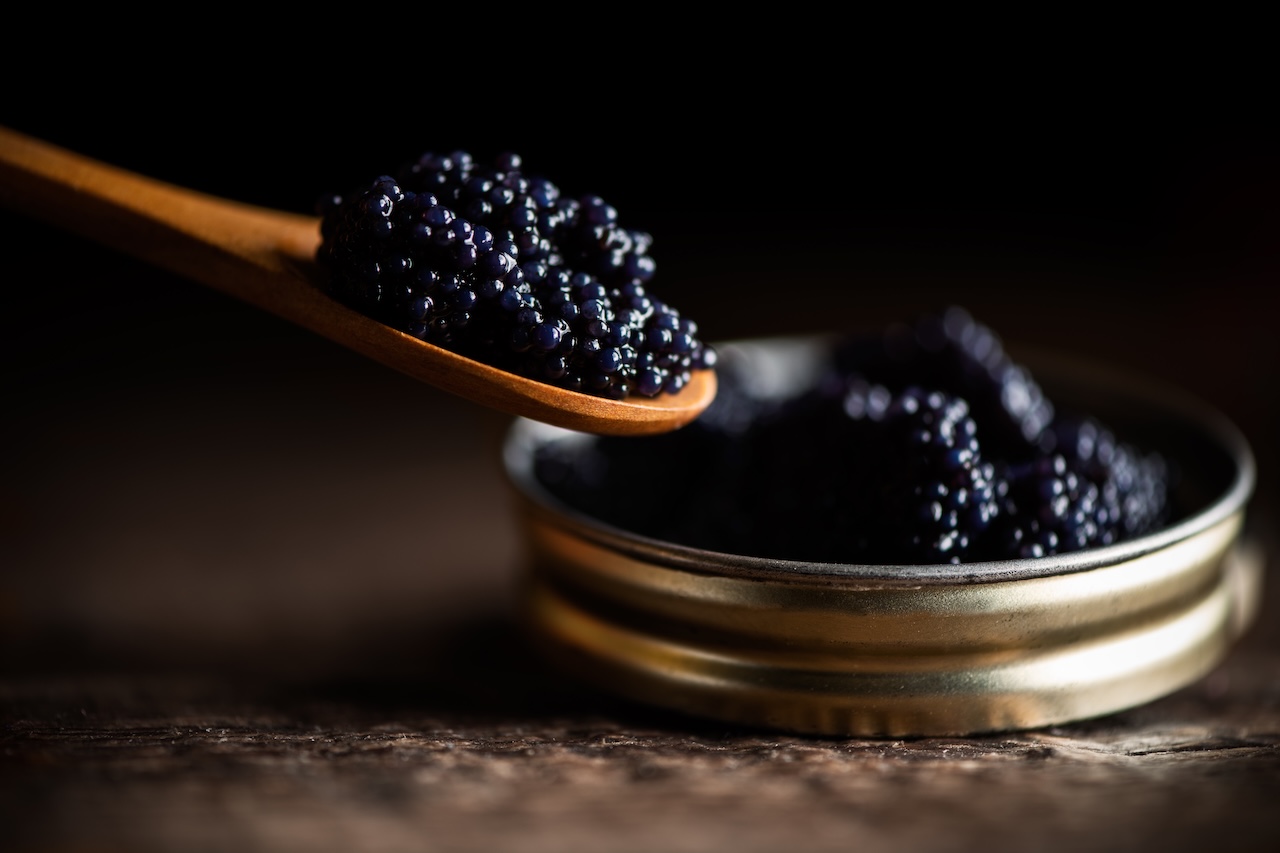

From the Caspian Sea to the finest restaurants in Asia, caviar remains the ultimate expression of discerning taste. Here is everything a modern gentleman needs to know.
There are foods that nourish and foods that impress, and then there is caviar, a substance so singular in its luxury, so loaded with history and connotation, that merely ordering it changes the temperature of a room (and often the assumptions of your dining companions). A small tin placed on a table between hungry souls is an event in itself. The pop of its lid, the glint of the pearls within, the particular hush that follows. These things simply don’t happen with your average cheese plate.
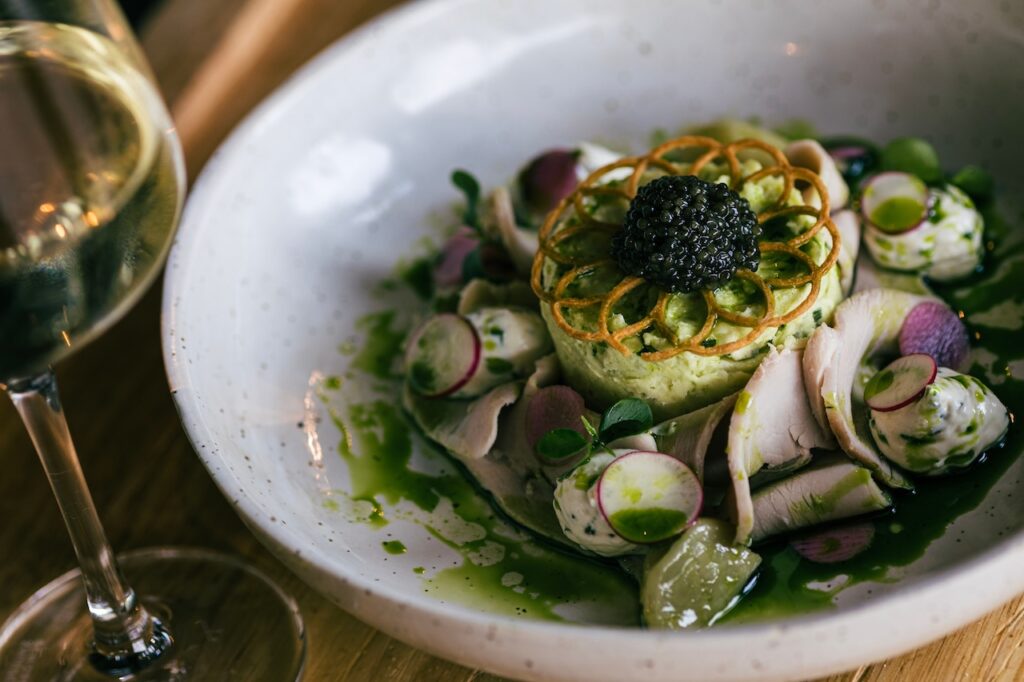
However, caviar is also one of the most misunderstood luxuries on earth. Many men have ordered it to appear sophisticated without quite knowing what they were eating, where it came from, or why it cost as much as a return flight from that distant locale. That ends here. Whether you are planning an evening at a rooftop caviar bar, selecting a tin for a private celebration, or simply want to hold your own at a Michelin-starred dinner, this is the guide you need.
A Brief and Extraordinary History
The word caviar derives from the Turkish khavyar, itself drawn from the Persian khāyah, meaning egg. But the story of caviar as a luxury product is far older and more geopolitically charged than its etymology suggests.
Sturgeon have inhabited the earth for more than 200 million years, meaning they pre-date even the dinosaurs. For most of human history, they were simply a large, rather menacing-looking fish. While the ancient Romans feasted on them at banquets and the Byzantine Greeks salted and traded their roe, it was the Persian empires surrounding the Caspian Sea who first cultivated a true reverence for the eggs of the Huso huso — the beluga sturgeon — as something approaching sacred food.
By the medieval period, the Caspian’s bounty had attracted the attention of Russian tsars, who declared sturgeon a “royal fish,” granting the crown exclusive rights to the harvest (yes, it’s good to be the King). Caviar quickly became currency among the nobility, sent as diplomatic gifts between courts and reserved for feasts of genuine consequence. The tsars were not merely eating it; they were wielding it as a culinary weapon of statecraft.
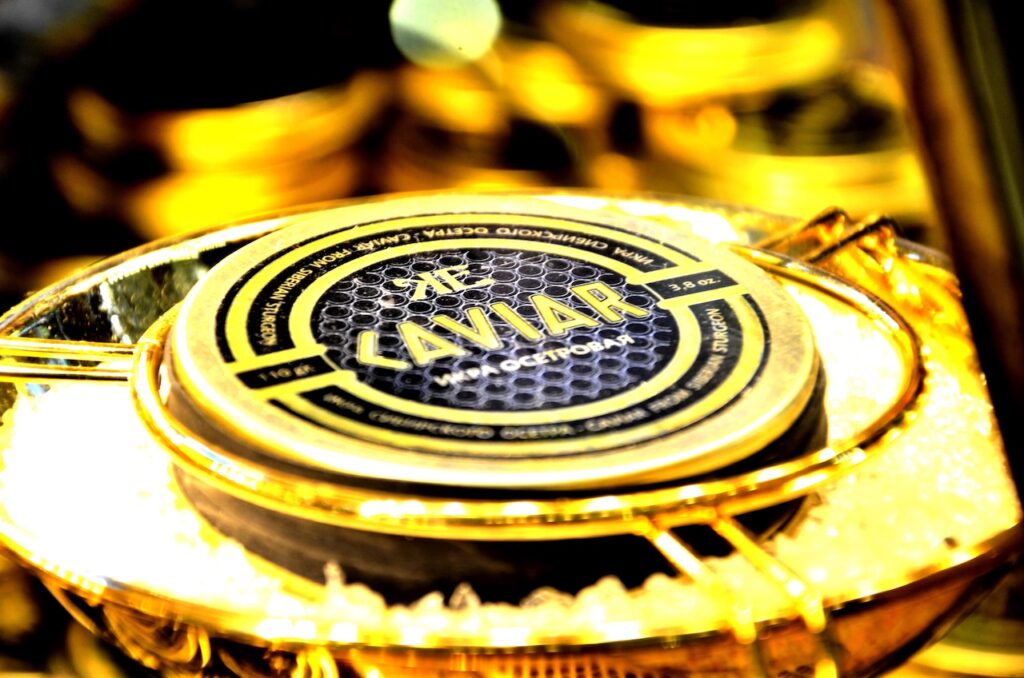
The transformation into global luxury happened in two waves. The first came in the early 20th century, when Russian and Iranian producers began exporting Caspian caviar to Europe and America, with Parisian society quickly becoming besotted. The second came after the Soviet Union’s collapse in the 1990s, when deregulation briefly flooded the market, only for overfishing and environmental collapse to make wild Caspian caviar critically scarce. By the early 2000s, CITES (the Convention on International Trade in Endangered Species) had placed severe restrictions on wild sturgeon trade, and beluga caviar was effectively banned from import into many nations, including the United States.
What happened next is one of the more remarkable turns in modern gastronomy: aquaculture saved the day. Caviar farming, pioneered in China, Italy, France, Uruguay, and beyond, produced sturgeon-raised in controlled, sustainable conditions that could rival — and in some cases surpass — the flavour profiles of the wild product. Today, the finest caviar on the market comes not from the Caspian but from farms in Zhejiang province, the Po Valley, and the cold rivers of Aquitaine. While the geography has shifted, the luxury endures.
Why Caviar Became the Ultimate Status Symbol
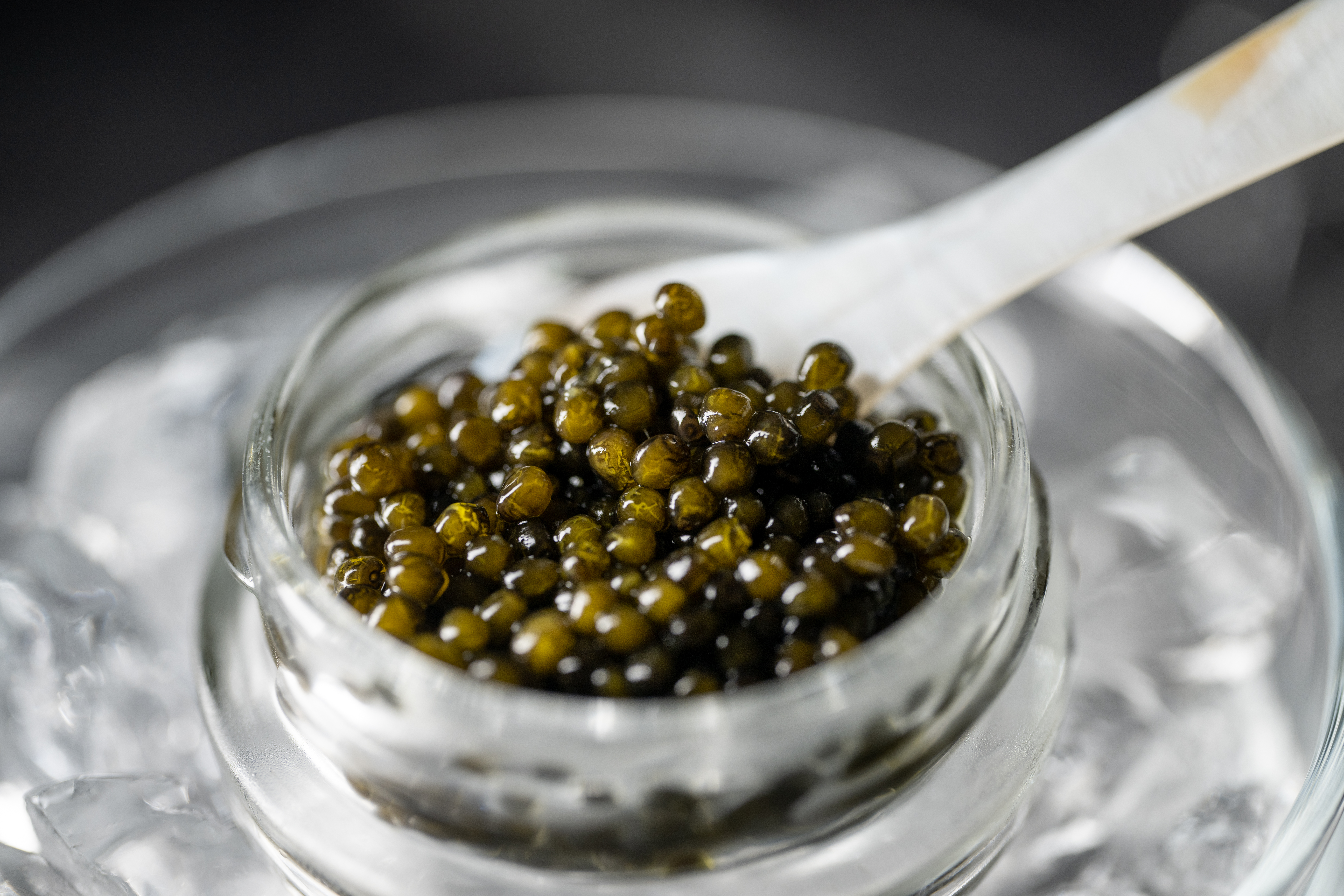
Rarity, of course, is the foundation of any luxury. A female sturgeon takes anywhere from seven to twenty-five years to reach sexual maturity, depending on species — the beluga, the most prized, can take two decades. Even in aquaculture, producing a tin of beluga caviar requires years of investment before a single pearl can be harvested. That alone justifies a significant part of the price.
But caviar’s status transcends mere scarcity. It exists at the intersection of several powerful luxury codes: the ancient (a food eaten by emperors and tsars), the ephemeral (it must be consumed fresh, ideally within days of opening), and the sensory (the experience of eating it is unlike anything else — the pearls burst on the palate with a cool, oceanic depth that lingers).
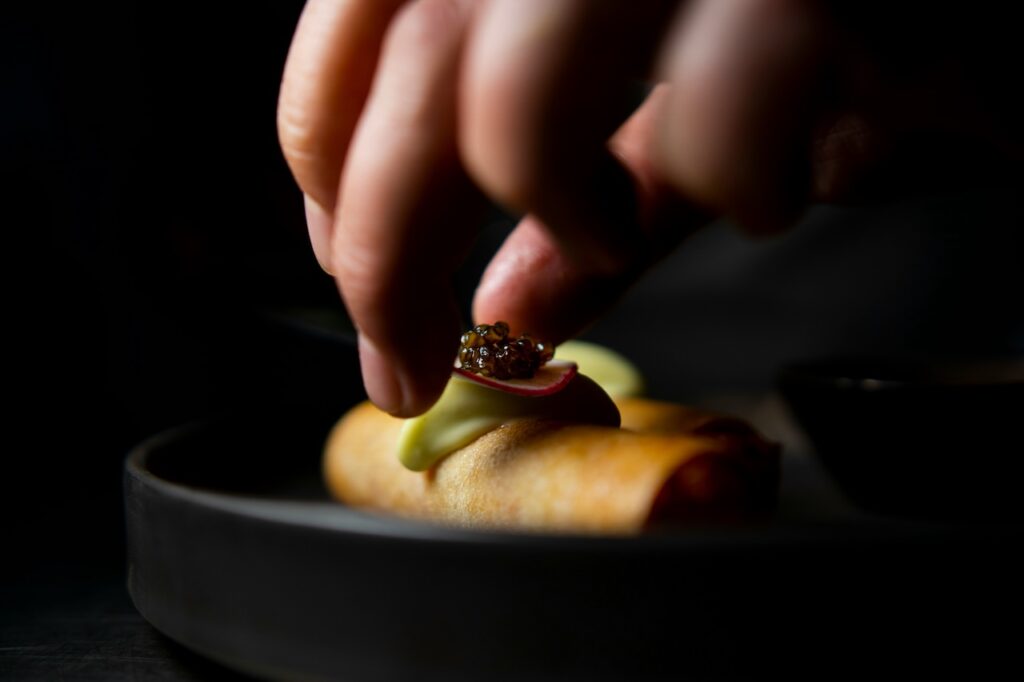
It also demands ceremony. You cannot eat caviar carelessly. It requires proper service — the right temperature, the right vessel, the appropriate accompaniments — and that insistence on ritual is itself a form of luxury. In a world of frictionless consumption, caviar makes you slow down and pay attention.
For the gentleman traveller and Asia-based epicurean, it holds an additional resonance. In cities like Hong Kong, Shanghai, Tokyo, and Singapore — where wealth is concentrated, tastes are global, and dining is a competitive sport — caviar has become a benchmark of the serious restaurant. To know it well is to signal exactly the kind of cultivated palate that these cities reward.
The Main Varieties: A Hierarchy of Pearls
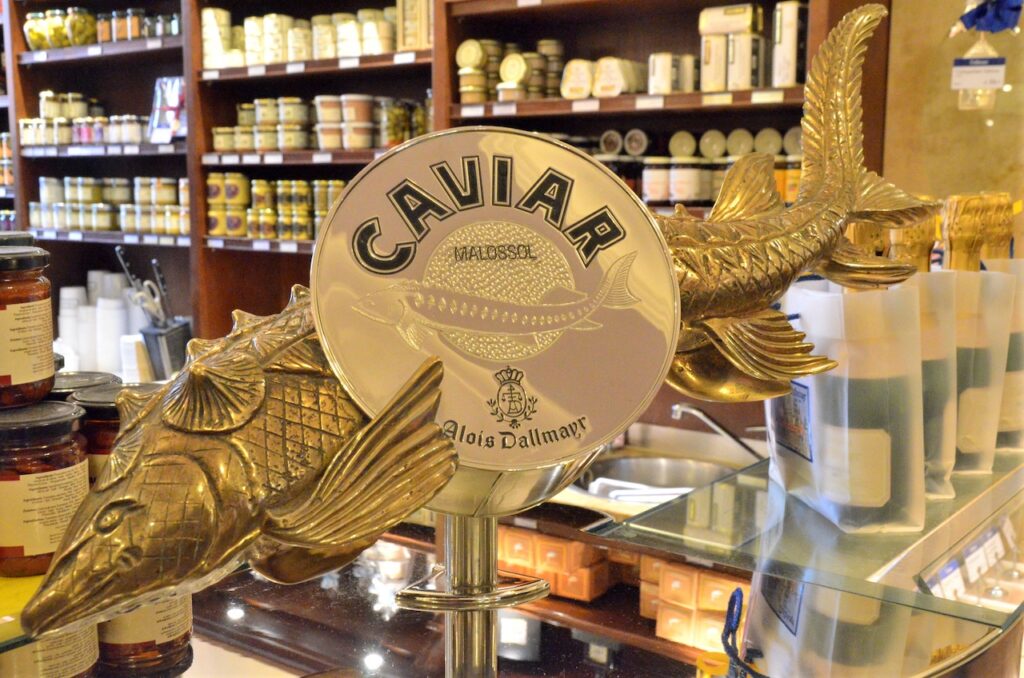
Not all caviar is equal, and knowing the difference is the first mark of connoisseurship. The key variables are species, origin, and processing method.
Beluga (Huso huso)
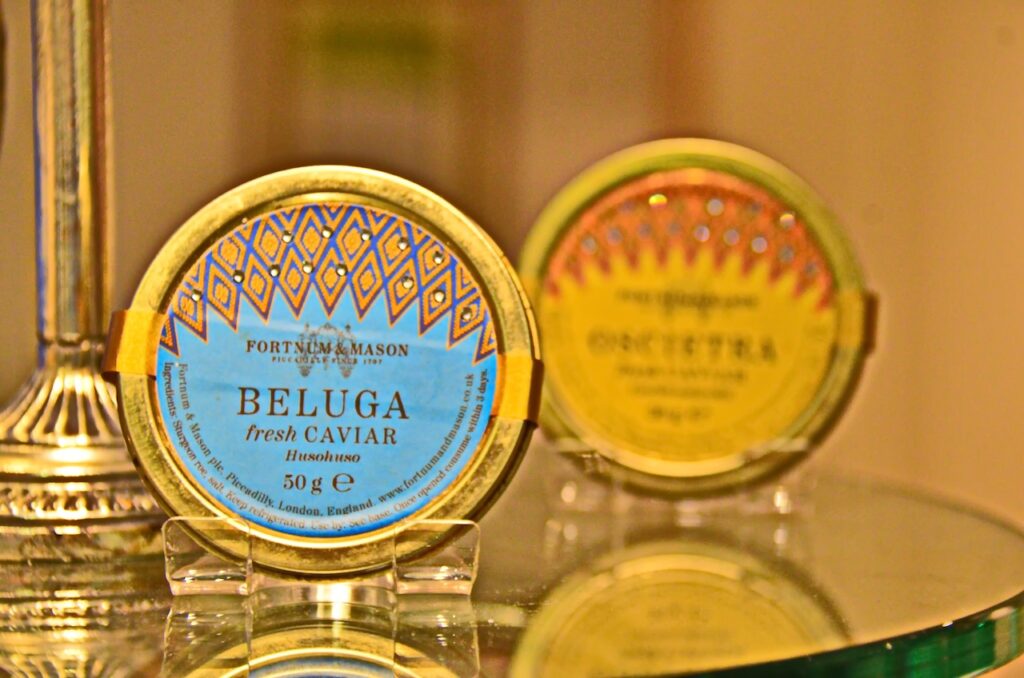
The apex predator of the caviar world. Beluga sturgeon produce the largest eggs — typically 3 to 4 millimetres in diameter — in shades ranging from pale silver to anthracite grey. The flavour is extraordinarily delicate: creamy, buttery, and long-finishing, with almost no fishiness whatsoever. Because wild Caspian beluga is all but commercially extinct, virtually all beluga caviar now comes from aquaculture, primarily in Italy (Calvisius), Bulgaria, and China. Prices are commensurately stratospheric, often exceeding US$1,200 for 100 grams from premium producers. If you’re planning on eating caviar just once, beluga is the standard against which everything else is measured.
Ossetra (Acipenser gueldenstaedtii and related species)
If beluga is the king, ossetra is the connoisseur’s choice. Eggs are medium-sized, ranging from golden brown to dark olive, and the flavour profile is notably more complex — nutty, briny, with occasional notes of cream and dried fruit. Many caviar obsessives actually prefer a well-aged ossetra to beluga for precisely this complexity. Iranian ossetra from the Caspian set the historical benchmark; today, French Aquitaine ossetra (farmed by producers such as Sturia and Kaviari), Italian ossetra, and Chinese ossetra are all producing exceptional results. Worth seeking out are the “Royal” or “Imperial” ossetra grades, which denote larger, older eggs with even more developed flavour.
Sevruga (Acipenser stellatus)
This is the smallest and most prolific of the three classic Caspian species. Sevruga eggs are tiny, dark grey to black, and pack an intense, assertively briny punch. Less fashionable than ossetra or beluga, sevruga is often the entry point for serious caviar exploration, and at lower price points, it offers remarkable character. If you want to understand what “caviar taste” actually means at its most direct, sevruga is the teacher.
Kaluga Hybrid (Huso dauricus × Acipenser schrenkii)
Here is where the modern caviar story gets interesting. The Kaluga hybrid — a cross between the Kaluga river sturgeon and the Amur sturgeon, farmed primarily in China’s Heilongjiang province — has become one of the most respected caviars in the world. In flavour, it sits closest to beluga: large pearls, silky texture, creamy and complex with a clean, ocean-fresh finish. Chinese producers, once dismissed by European purists, are now supplying Michelin-starred restaurants from Paris to Hong Kong. Releases like N7 Kaluga, a popular choice in Hong Kong and Singapore, is a prime example of this new world order.
Amur (Acipenser schrenkii)
The pure Amur sturgeon, also farmed along the Heilongjiang river basin in China, produces smaller, firmer pearls than the Kaluga hybrid, with a flavour that is cleaner, more mineral, and distinctly saline. It tends to be the more affordable of the Chinese premium caviars, making it an excellent entry point for those wanting to explore the category seriously without committing to the most rarefied prices.
Other Notable Varieties
Beyond the Acipenser family: Siberian caviar (Acipenser baerii), farmed extensively in France, Italy, and China, produces reliable, approachable pearls with good brine and moderate richness. White sturgeon caviar from California (particularly from Sterling Caviar and Tsar Nicoulai) has built a devoted following in America and increasingly in Asia. And for those who want a conversation piece: Almas caviar — white or pale gold beluga eggs from albino sturgeon — is the rarest and most expensive caviar in the world, sometimes packaged in 24-karat gold tins and retailing for extraordinary sums. It is as much objet d’art as foodstuff.
Grading and Quality Indicators
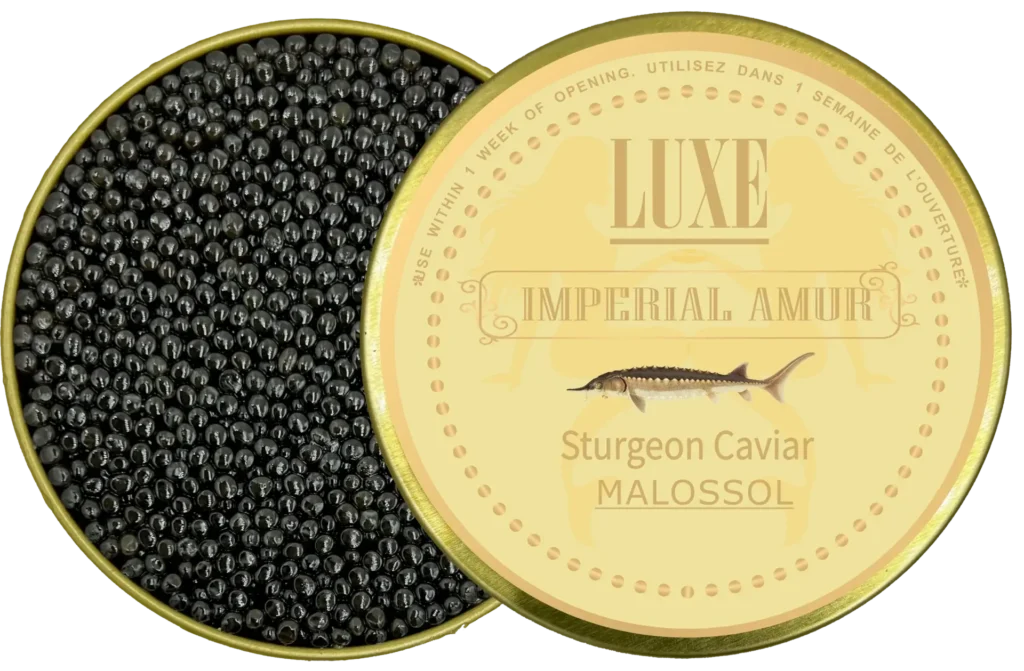
Caviar is typically graded by producers using internal systems, but a few universal quality markers apply across the board.
Malossol is the single most important term to know. It is Russian for “little salt,” indicating caviar cured with a minimum of salt (typically under five per cent). All serious caviar is malossol. Higher salt content was historically used to mask inferior product or extend shelf life so a tin labelled malossol is a baseline assurance of quality.
Colour is less significant than many buyers assume. Shade varies by species, diet, and individual fish. It’s good to note that within a single species, paler eggs are not inherently superior to darker ones, though some markets have historically fetched premiums for lighter tones.
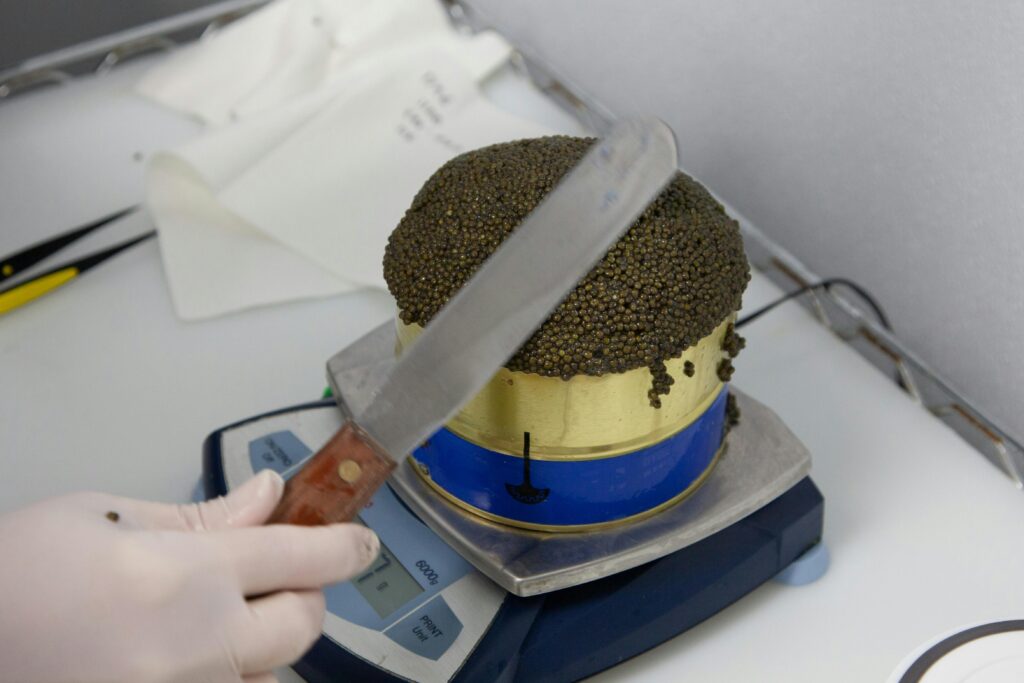
Size matters mostly within a species: larger eggs from older fish tend to carry more developed, complex flavour. But a small-pearled sevruga from an excellent producer will always outperform a large-pearled mediocrity.
Texture should be firm. The pearls should hold their shape, give a slight resistance before bursting, and release their flavour cleanly. Mushy caviar, or caviar that releases liquid immediately upon pressing, is past its prime.
Smell should be clean and oceanic — evocative of the sea, not of fish. Any ammonia or sulphurous note is a warning sign.
How to Serve and Eat Caviar Like a Pro
This is where many otherwise confident men come unstuck. The mechanics of caviar service are simple once you know them; getting them wrong is simply unnecessary.
Temperature
Caviar should be served cold — between 0°C and 4°C. It is typically presented nestled in crushed ice, and a quality establishment will ensure the tin or dish never warms during service. At home, keep it in the coldest part of your refrigerator (the bottom shelf, near the back) and bring it out only moments before serving.
The Mother-of-Pearl Spoon
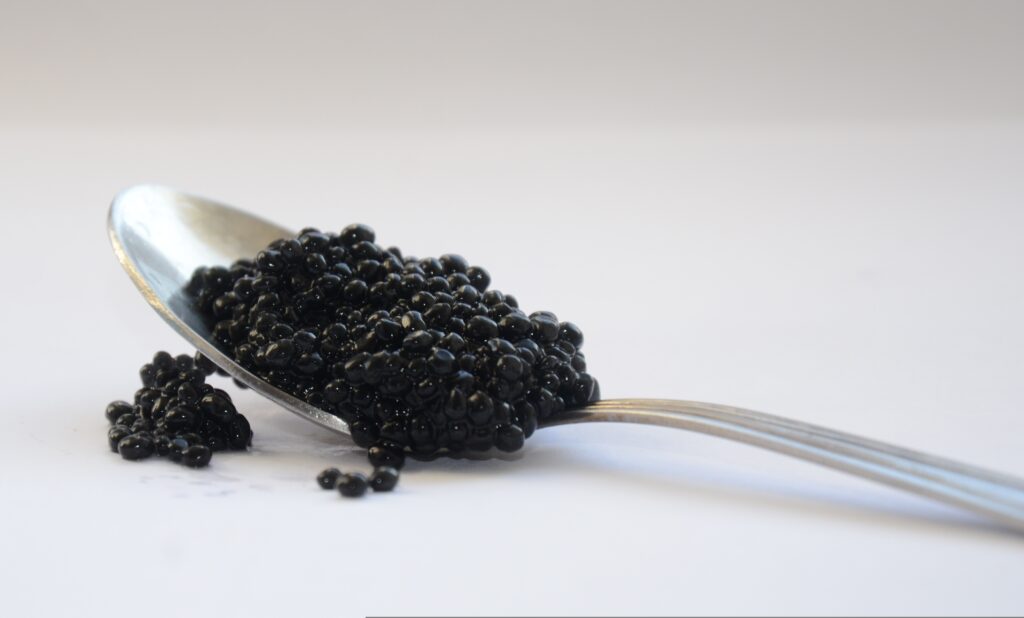
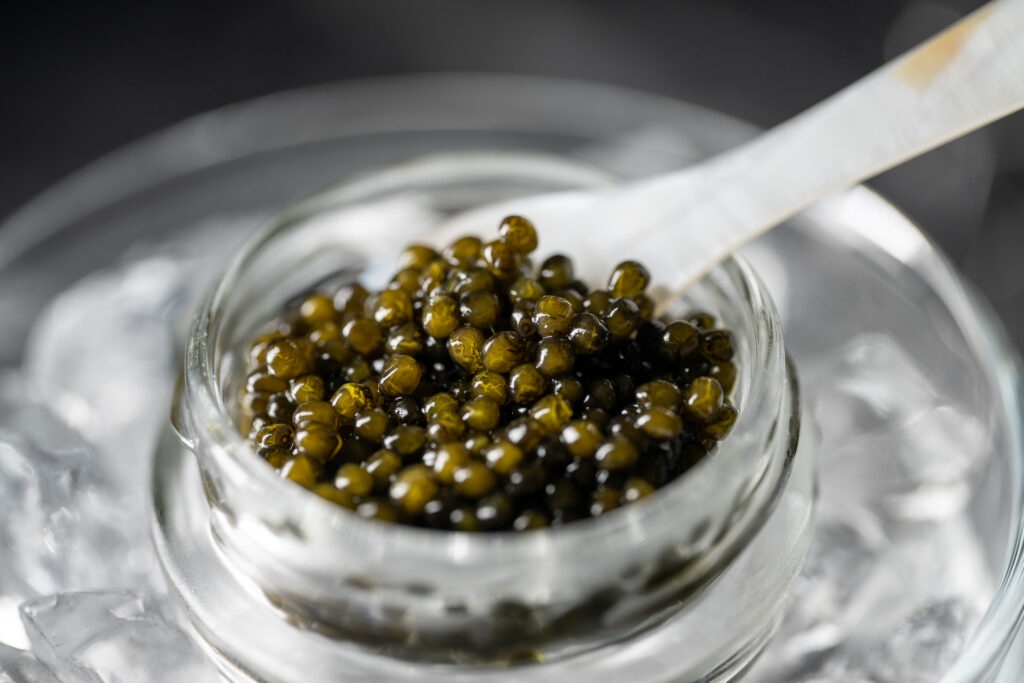
Never use a metal utensil with caviar. The metal — even silver — reacts chemically with the delicate oils in the roe, imparting a metallic off-note that overwhelms the flavour. The correct implement is a mother-of-pearl spoon, though bone, horn, or even a wooden paddle will do. Most serious caviar bars will provide one automatically.
Accompaniments: What to Accept and What to Decline
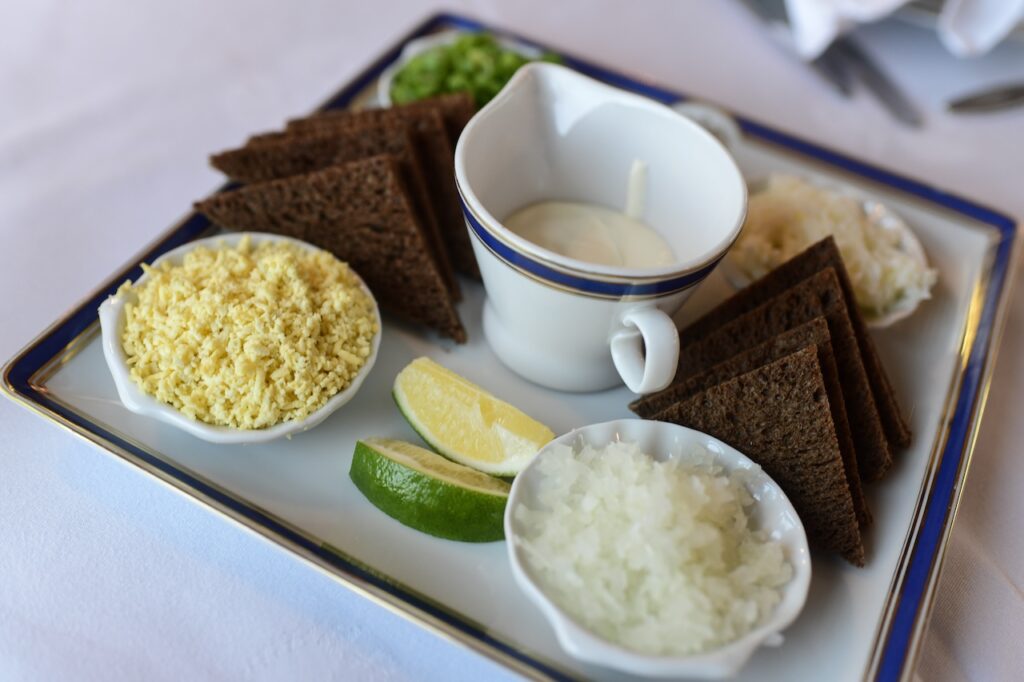
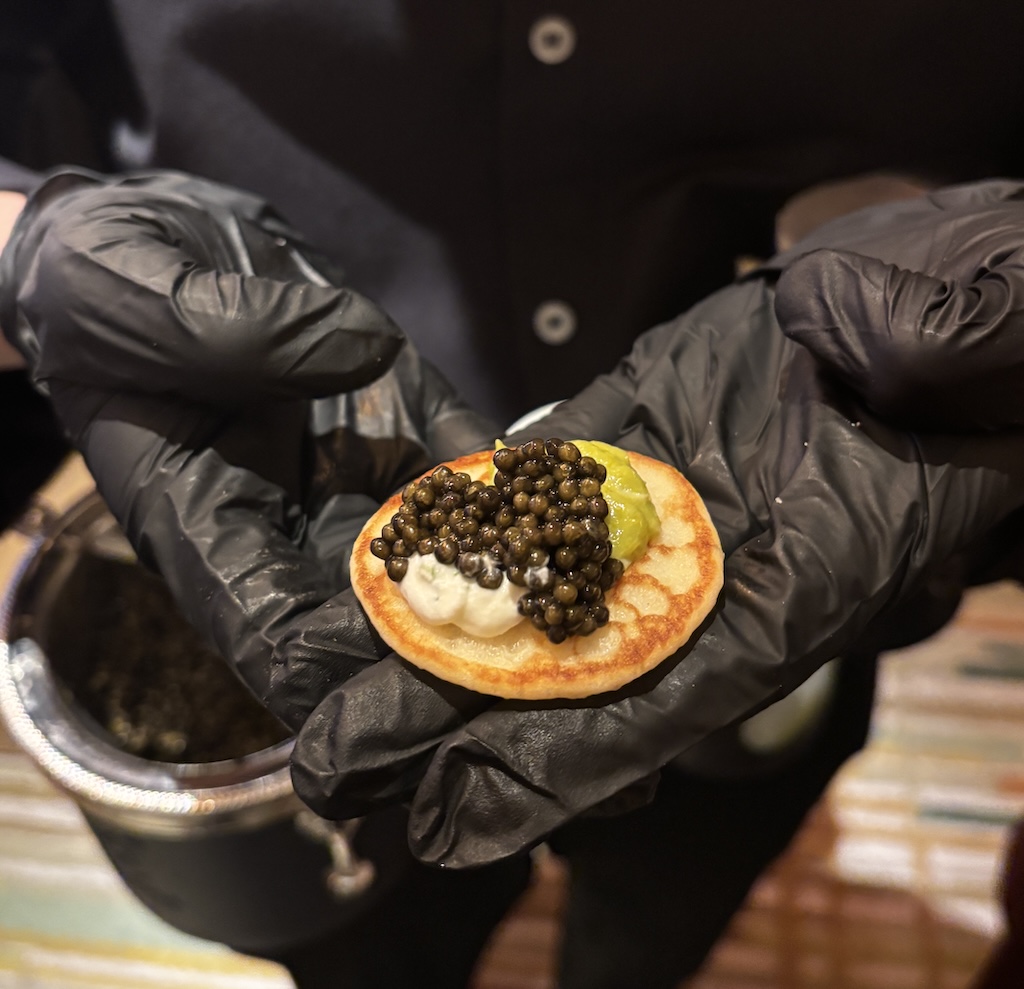
The classic accompaniments — blinis, crème fraîche or sour cream, and finely chopped chive or onion — exist for very good reason. The neutral, slightly tangy base of a blini provides structure without competing; the fat of the crème fraîche amplifies the caviar’s richness and smooths its brine. These are not fussy affectations, they actually work.
A smart lad will avoid heavily flavoured or acidic garnishes that mask rather than complement. Lemon, however, is a contested point — a few drops over oysters is fine, but squeezing citrus directly onto caviar is considered, at best, aggressive. Similarly, toast is an acceptable substitute for blinis, but anything heavily seasoned or buttered beyond a neutral spread will compete with the caviar rather than support it.
The purist’s method, which is increasingly fashionable in fine dining, is simply to eat the caviar straight from the spoon — placed on the back of the hand between thumb and forefinger (the “bump”), warmed slightly by body heat, and consumed neat. It’s a way of tasting the product without any distraction so if you’re eating exceptional caviar for the first time, try it this way before the blinis arrive.
What to Drink
Champagne is the canonical pairing, and it earns its place. The autolytic, brioche notes of a blanc de blancs Champagne — a Krug, a Billecart-Salmon, or a Dom Pérignon — offer a complementary richness while the bubbles cleanse the palate between spoonfuls. The marriage is so well-established because it is genuinely correct.
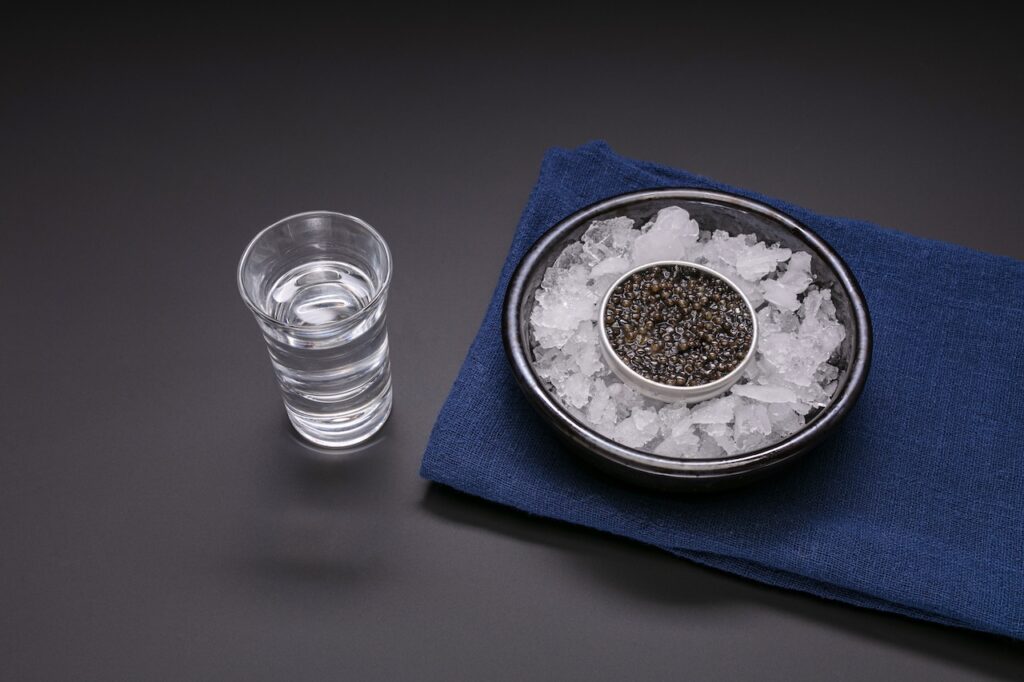
Vodka, served ice-cold and neat, is the other great tradition — Russian and Scandinavian, rather than French, but equally valid. A quality grain vodka such as Beluga (name entirely coincidental, or perhaps not) or Grey Goose clears the palate with brisk efficiency and allows the caviar to speak without competition.
Chablis, particularly premier or grand cru, is the wine lover’s alternative: mineral, high-acid, unoaked, it mirrors the marine salinity of the caviar beautifully. Avoid tannic reds entirely as they’ll make the caviar taste metallic and flat.
Portion and Pacing
A standard serving is 30 grams per person as an amuse or first course, though serious enthusiasts will order 50 grams or more. Eat slowly, caviar is not a food to dispatch quickly. The correct pace is deliberate — a small spoonful, a pause, a sip, another spoonful. The flavours evolve over the course of a tin, often becoming richer and more complex as the caviar very gently warms from ice temperature.
The Modern Caviar Renaissance in Asia
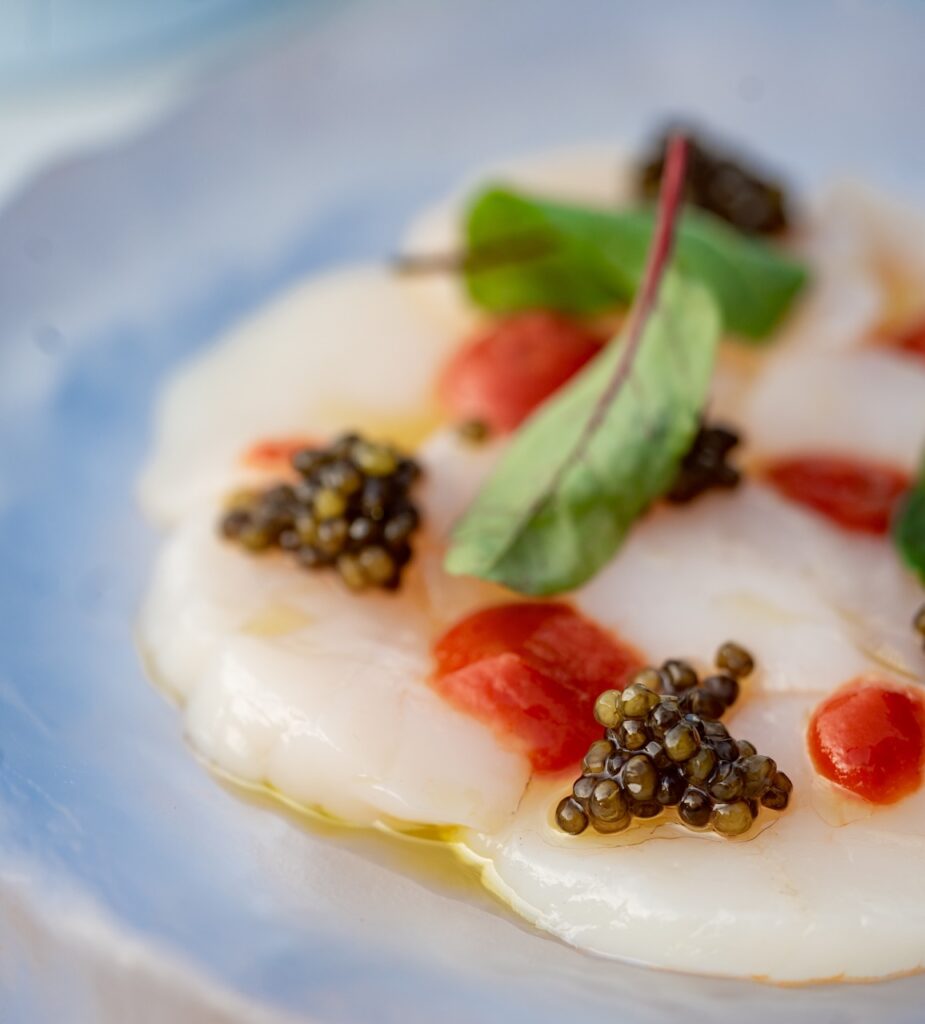
Asia has emerged as the world’s most dynamic caviar market. China produces some of the finest farmed sturgeon on earth, yet ironically its domestic luxury dining scene now also consumes vast quantities of it. Meanwhile, Hong Kong and Singapore, with their concentration of wealth, Michelin-starred dining cultures, and appetite for international luxury, have become two of the region’s great caviar cities.
The gentleman who knows his Kaluga from his ossetra, who requests the mother-of-pearl spoon without being asked, and who chooses his champagne to match rather than merely to impress, is not showing off. He is simply paying attention to one of the great pleasures of a well-lived life.
And that, in the end, is what caviar has always been about.