
A. Lange & Söhne releases platinum TRIPLE SPLIT and two gold 1815 UP/DOWN editions, each built around rare in-house complications.
There’s a reason A. Lange & Söhne chronographs rarely sit still in a collection — they tend to get worn, discussed, and eventually chased. The Saxon manufacture is adding two more reasons to that list, unveiling a platinum TRIPLE SPLIT limited to 100 pieces and special editions of the 1815 UP/DOWN in pink and white gold, limited to 300. Both recently debuted alongside Challenging Chronographs, an exhibition that put Lange’s most technically ambitious timekeeping on public display.

The TRIPLE SPLIT remains the more audacious of the two, and for good reason: it’s the only split-seconds chronograph in Lange’s catalogue capable of tracking intermediate, comparative, and overall times across a full twelve hours, with a flyback function built in.
The new 950 platinum case houses a rhodié dial arranged with the kind of visual discipline Lange is known for — grey auxiliary dials, luminous hour and minute hands, blued rattrapante hands, and red accents marking the hour and minute counters and the UP/DOWN power-reserve display. It reads as busy only until you understand what each element is doing, at which point it reads as nothing less than remarkable.
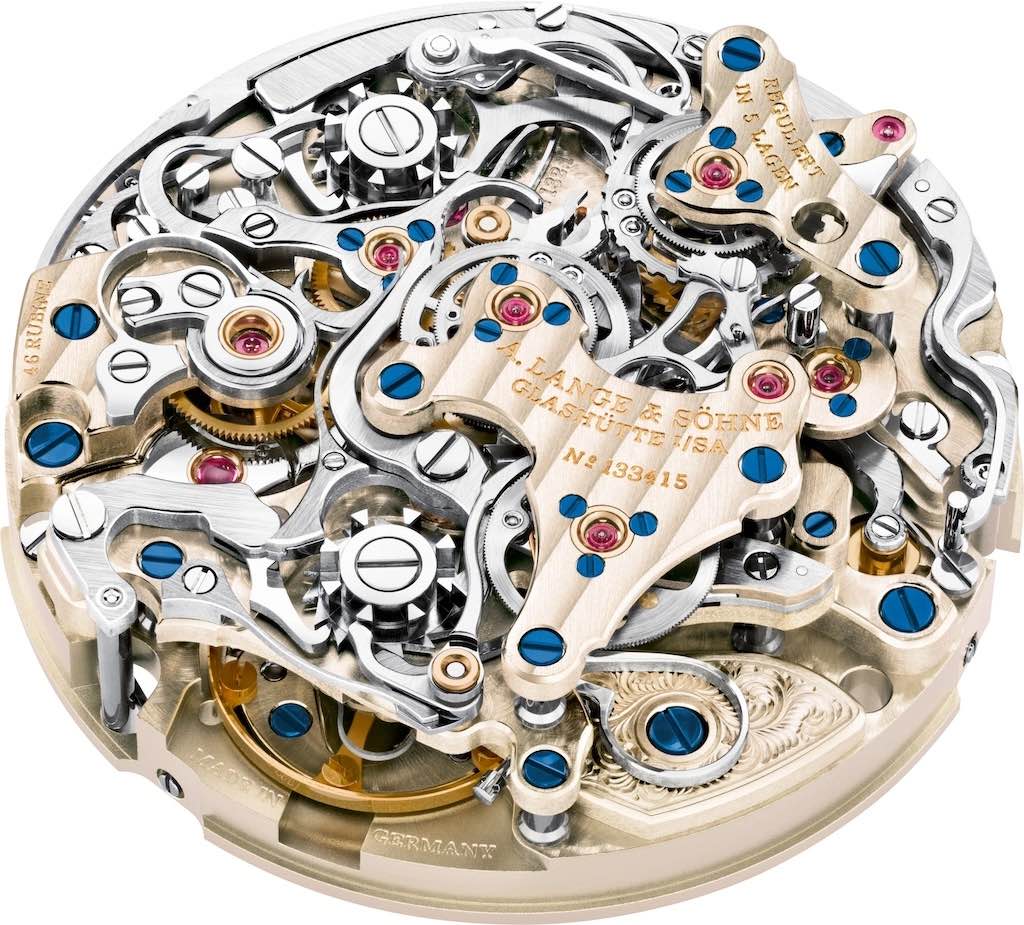
Underneath sits the L132.1 manufacture calibre, which carries a triple rattrapante mechanism unlike anything else Lange builds: three chronograph hands and three rattrapante hands, each independently starting, stopping, catching up, and resetting without interfering with the others. A patented disengagement mechanism keeps power flowing steadily to the escapement throughout, which is what allows the complication to run without sacrificing rate stability — no small feat given how much is happening inside the case.
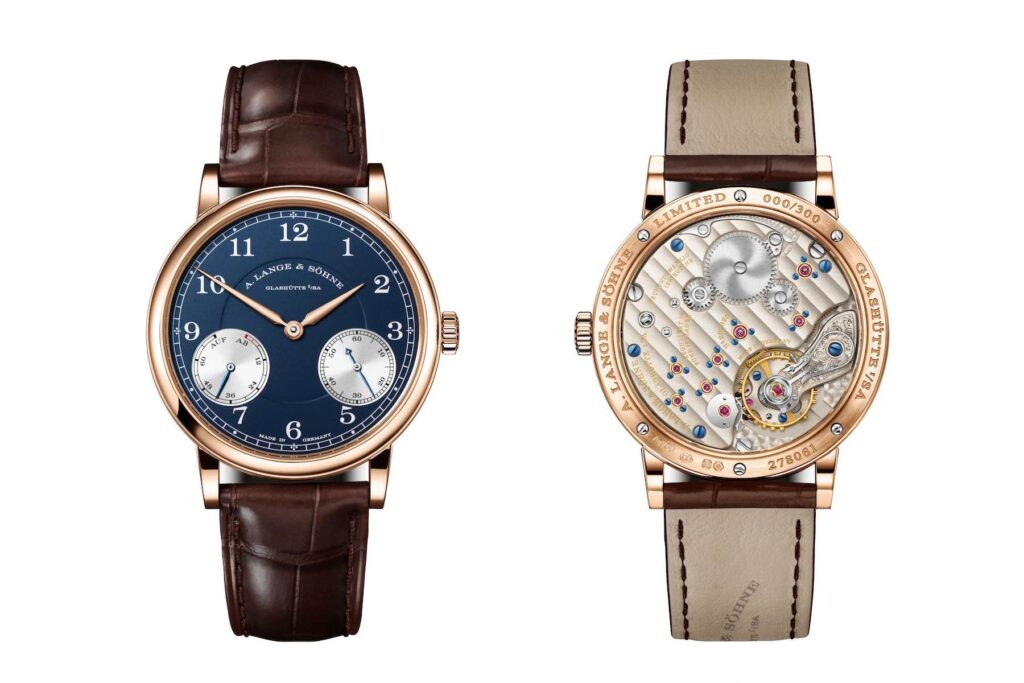
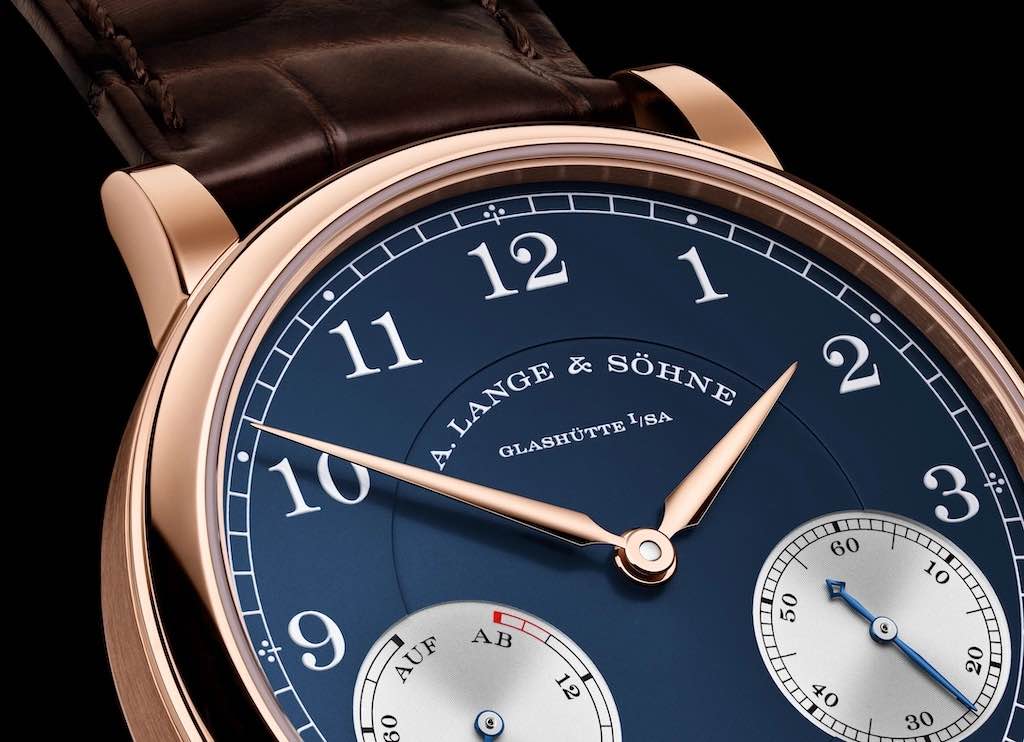
The 1815 UP/DOWN editions take a quieter approach, though “quiet” is relative for a watch with seven gold chatons and a three-quarter plate in untreated German silver. Cased in 750 pink or white gold, both versions center on the collection’s signature UP/DOWN power-reserve indicator: AB for an unwound movement, AUF for a fully wound one, with 72 hours of reserve at maximum.
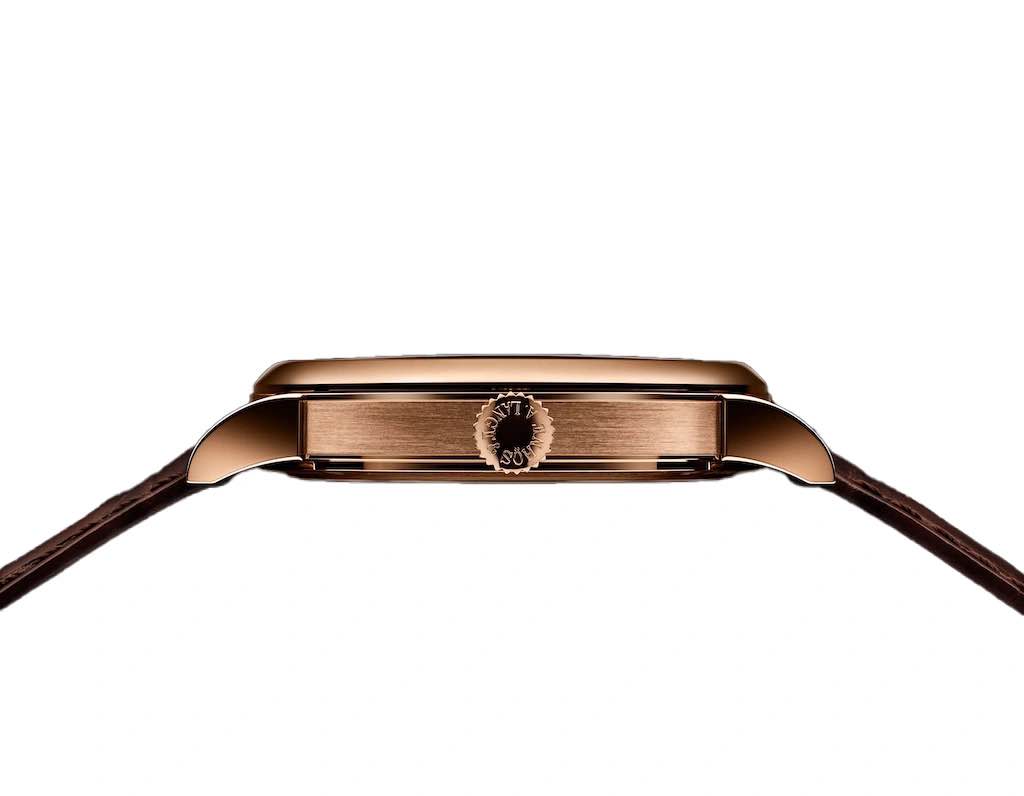
The blue dial sits inside a slender, subtly tiered bezel, playing off argenté-coloured auxiliary dials and blued hands — a combination pulled deliberately from Lange’s own pocket-watch archive, right down to the railway-track minute scale and recessed central dial segment. At 37.5mm across and 8.7mm high, the proportions favor restraint over presence.
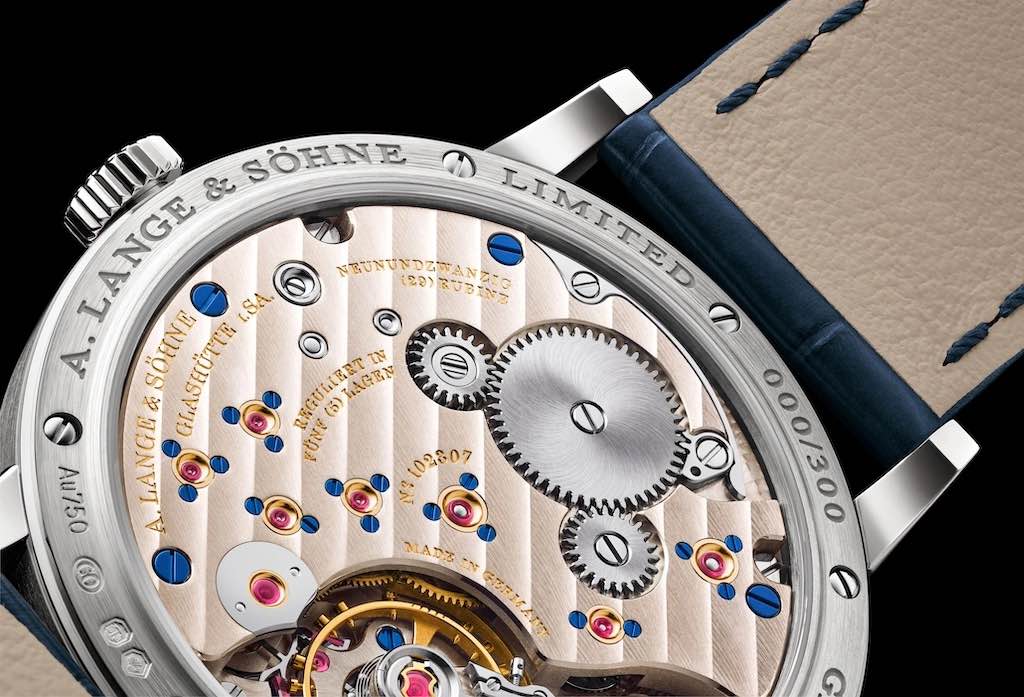
That restraint doesn’t extend to the movement. The manually wound L051.2 calibre, visible through the sapphire caseback, includes the visibly integrated winding wheels finished with solarisation and the blued screws securing those seven gold chatons — details that reward the kind of close inspection collectors tend to enjoy.
Both releases anchor “Challenging Chronographs,” where Lange is showing the DATOGRAPH UP/DOWN, DOUBLE SPLIT, and TRIPLE SPLIT alongside pieces from all six of its watch families: LANGE 1, ZEITWERK, SAXONIA, 1815, RICHARD LANGE, and ODYSSEUS. Interactive displays walk visitors through the mechanics behind each in-house movement and the dial geometry that defines them, while Lange’s master engraver performs live hand-engraving demonstrations — a rare chance to watch the kind of handwork that usually happens well out of view.
It’s an unusually direct pitch: come see how the movements are built, then look at what that engineering makes possible on the wrist. For a brand whose watches are already among the most coveted in Saxon horology, that’s less an introduction than a reminder.