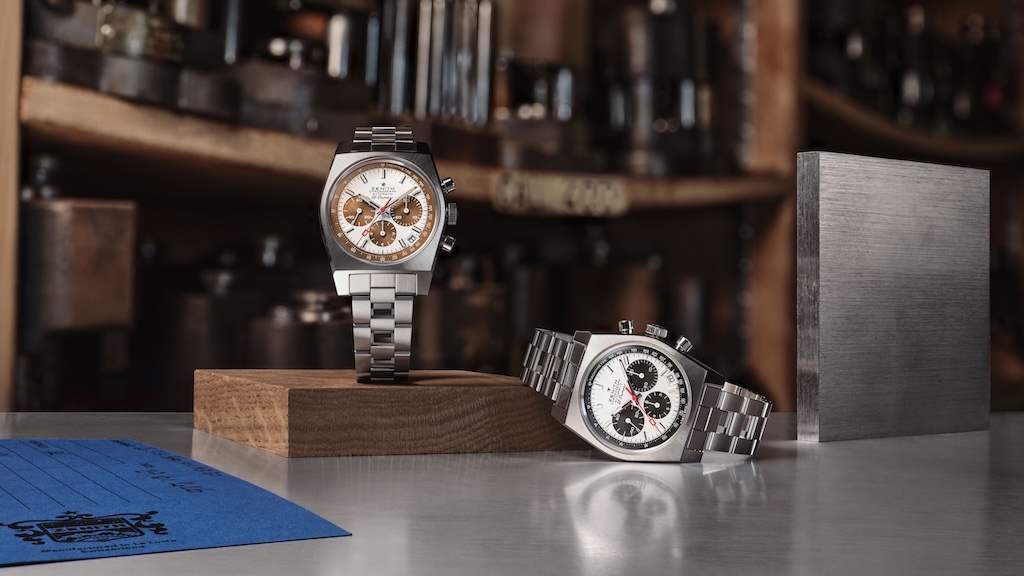

Zenith revisits its most collectable 1969 chronograph, translating decades of sun-faded “tropical” patina into a precise, contemporary dial worth knowing about.
The El Primero turns 56 this year, and Zenith isn’t marking the anniversary quietly. The Chronomaster Revival A384 Tropical takes one of the brand’s most collectable references and does something most reissues don’t dare: it builds the watch around decay.
Back in 1969, Zenith released the world’s first automatic, integrated high-frequency chronograph, a genuine turning point in mechanical watchmaking. Among that debut lineup, the A384 stood out immediately. Its tonneau-shaped case and unapologetically bold design gave it a look nothing else on the market had, and over five decades it became one of the most sought-after vintage Zenith references in existence. This year’s Revival doesn’t just bring the A384 back. It reimagines it through the one thing time did to the originals that no factory ever could: patina.
What Makes a Dial “Tropical”
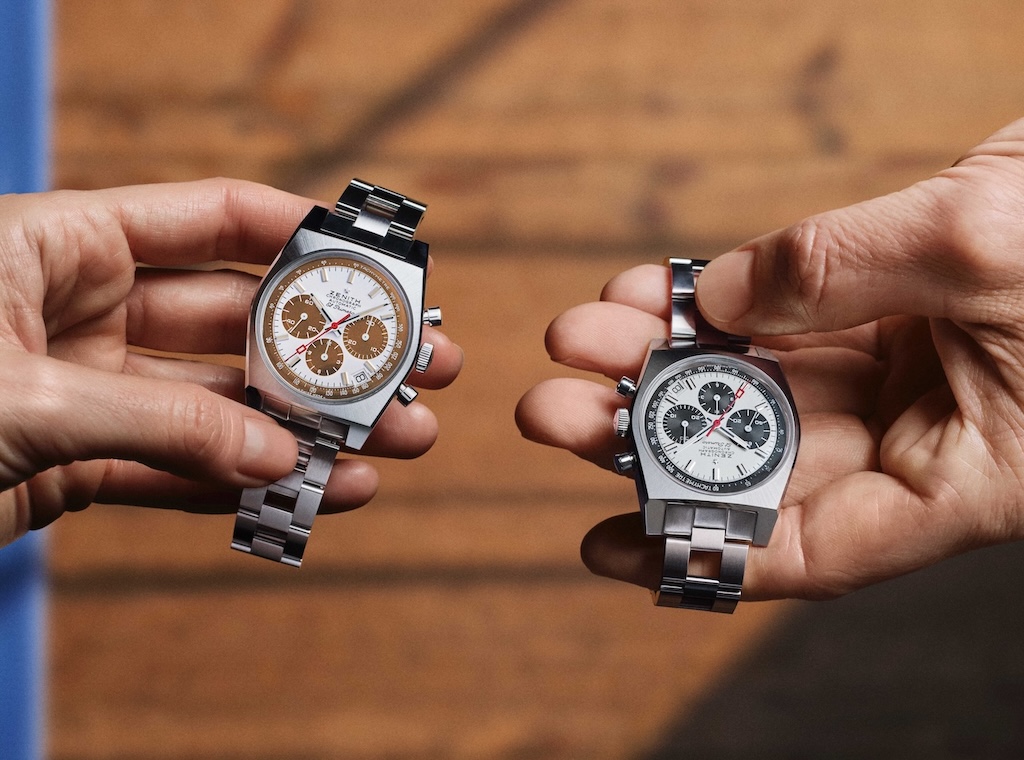
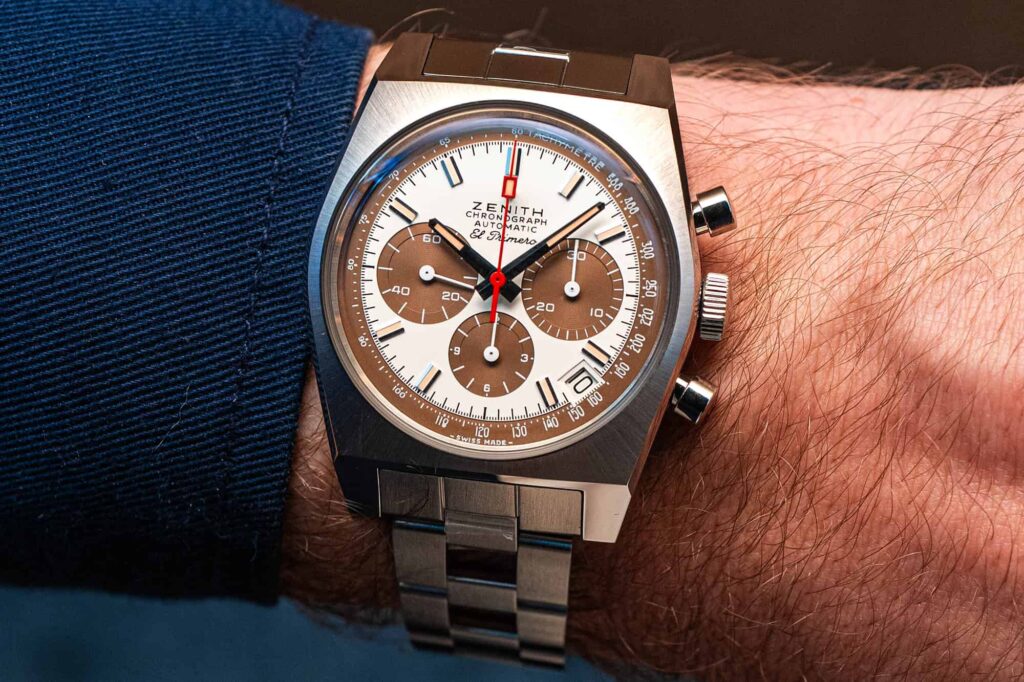
Ask any collector serious about tropical dials, and you’ll get a reverent pause before the explanation. The term refers to vintage watch faces that have shifted, through decades of UV exposure and slow oxidation, from their original colour into warm, uneven browns. No two age the same way, which is exactly the point. That unpredictability is what turns an ordinary vintage piece into a five- or six-figure auction lot. A genuine tropical Rolex, Patek, or Zenith can fetch multiples of a standard example simply because its imperfections are unrepeatable.
Zenith hasn’t tried to fake a specific historical dial here. Instead, it’s distilled the visual language of tropical ageing — the warmth, the depth, the two-tone drama — into something deliberate and repeatable. It’s patina, engineered.
The Chocolate Panda Dial
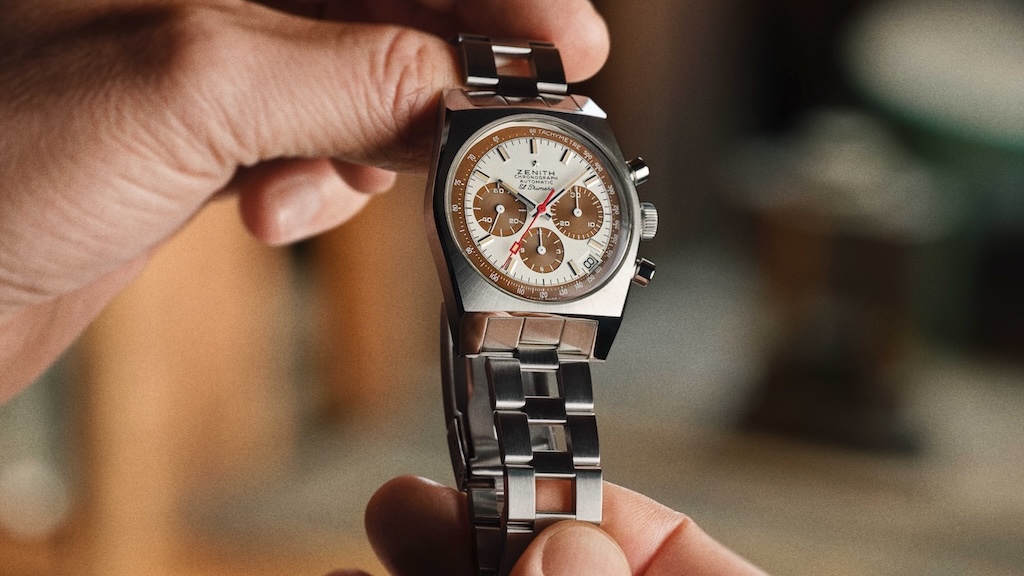
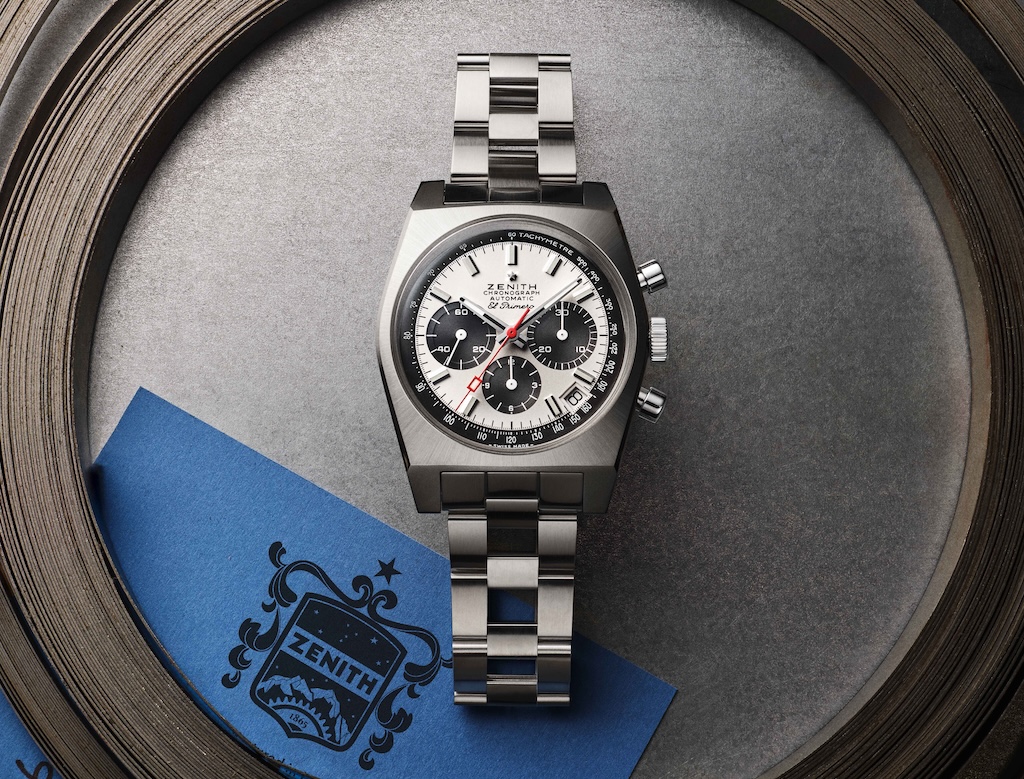
The result is what collectors call a “chocolate panda” configuration: a white lacquered base offset by rich brown sub-dials, with the tachymetric scale rendered in matching brown for full cohesion. Faceted markers and hands carry “old radium” Super-LumiNova, giving off the soft glow of aged lume without sacrificing legibility after dark. Then there’s the red chronograph seconds hand, a sharp, modern jolt against all that warmth, and a reminder that this is still, fundamentally, a tool watch.
A Case Pulled Straight From 1969
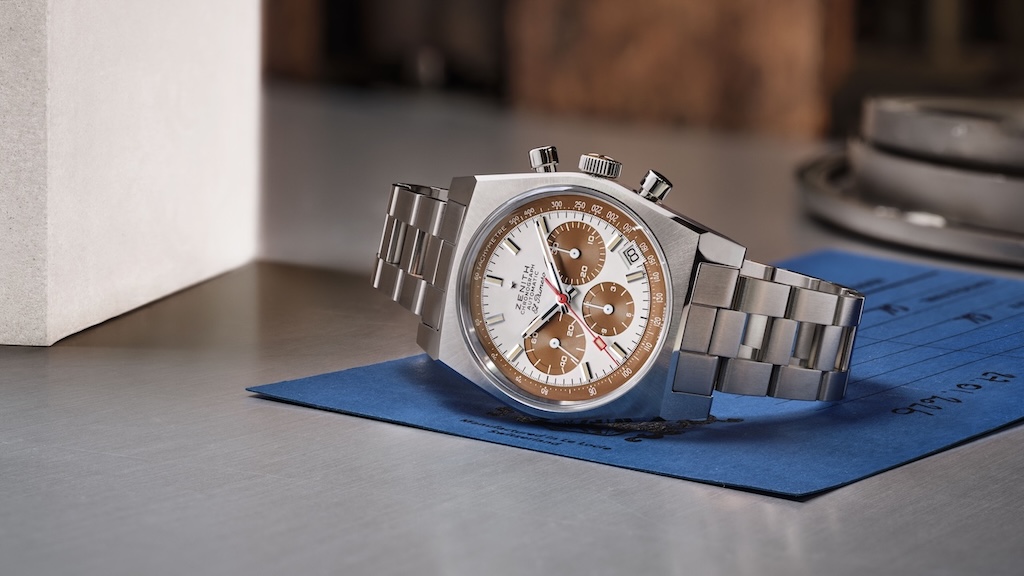
At 37mm, the stainless steel case follows the original blueprints almost exactly: the tonneau profile, the pump pushers, the mix of brushed and polished surfaces that made the A384 instantly identifiable. That sizing also happens to suit where collector taste has landed lately — smaller, more wearable, less concerned with wrist presence than with proportion and history. Water resistance is rated to 5 ATM, enough for daily wear without pretending to be a tool for anything more extreme.
The El Primero 400, Still Doing What It Did in 1969
Inside is the El Primero 400, the most direct descendant of the original 3019 PHC calibre. Manufactured entirely in-house at Zenith’s Le Locle facility, it runs at 5Hz — 36,000 vibrations per hour — allowing chronograph readings down to a tenth of a second, a level of precision still rare in mechanical watchmaking. With a 50-hour power reserve and 278 components, it’s visible through the sapphire case back, where the openworked rotor takes the shape of Zenith’s five-pointed star.
Completing the package is the “ladder” bracelet, originally developed for Zenith by Gay Frères in 1969. It remains one of the most recognisable bracelets in vintage watchmaking, one that’s lightweight, flexible, and unmistakably of its era, while still comfortable enough for daily wear today.
Why It Matters
This isn’t nostalgia dressed up as new product. It’s a brand with a genuine claim to chronograph history choosing to revisit it deliberately, right down to the dial’s imperfections. The tropical dial trend shows no sign of cooling at the top of the vintage market, and the 37 mm case speaks to a collector base that increasingly prizes accuracy over size. The El Primero 400 isn’t a modern compromise; it’s the same architecture that made Zenith’s name in the first place, and the Gay Frères bracelet is the kind of detail collectors will clock immediately.