

Most of us love sushi, and in Asia, most know there’s the sushi that comes in a stapled plastic box, and there’s the timeless craft that comes with an appropriately hefty price tag. Here’s how to get the most out of a legitimate sushi counter experience.
Sushi is among the most refined expressions of Japanese culinary philosophy — an art form built on restraint, precision, and absolute trust in the quality of what is in front of you — and approaching it with knowledge transforms the experience from a meal into something considerably more significant. As a firm fish ‘n’ rice fan, I thought it was about time we had a deep dive into this serious culinary business.
More Than Just Raw Fish
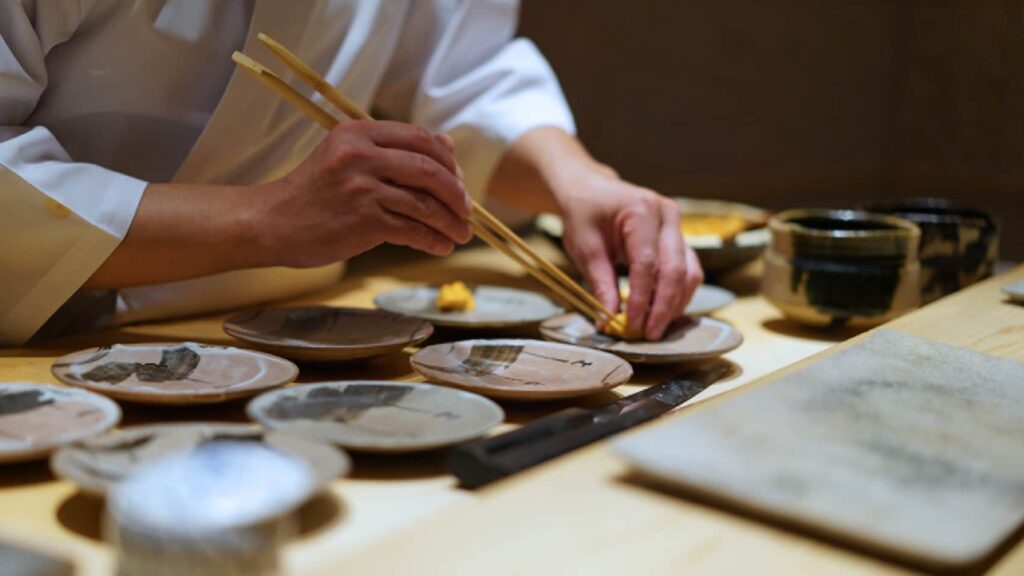
The man who approaches a serious sushi counter the same way he approaches the conveyor belt at a shopping mall food court is not simply eating differently; he’s missing an entirely different experience. The finest sushi counters in Tokyo, and increasingly in Singapore, Hong Kong, and Bangkok, offer one of the most intimate and technically demanding dining experiences in the world: a direct, unmediated encounter between a craftsman who has spent 20 or more years perfecting a single discipline and the person sitting three feet away who is the immediate recipient of that craft.
What you know when you sit down determines, more than at almost any other type of restaurant, how much of that experience is available to you.

The knowledge required is not vast or esoteric. It covers a set of practical conventions — how to use condiments correctly, what to order and in what sequence, how to behave at the counter, what the fish in front of you actually is and what distinguishes a good version from a mediocre one. Most of this knowledge is fairly functional, in the sense that it changes what you taste and experience rather than simply signalling to others that you’ve been paying attention. The man who understands why the ginger is there, and uses it accordingly, has a better meal. The man who dips the rice into the soy sauce like it’s a 3 am chicken nugget is having a worse one regardless of his awareness of the convention.
We cover the full range, from the philosophy of sushi and what it asks of the diner, to the practical etiquette of the counter experience, the fish types and progressions you will encounter at a serious omakase, what makes great sushi rice, how to book and prepare for the occasion, and where to eat serious sushi beyond Tokyo.
The Philosophy: Simplicity as the Highest Difficulty

To understand sushi at the level that makes the eating more rewarding, it helps to start with what is actually being attempting. At its origin in 19th-century Edo — the city now called Tokyo — sushi was fast food, little more than vinegared rice pressed around preserved or lightly cured fish, sold from street stalls and designed to be eaten immediately and without ceremony. The evolution from that street-food origin to the extraordinary refinement of a modern Ginza omakase counter is the story of a form finding the limits of its own simplicity and pushing against them.
What Jiro Ono — the sushi master who ran Sukiyabashi Jiro in Tokyo’s Ginza district and the subject of the 2011 documentary Jiro Dreams of Sushi — articulated more clearly than perhaps any other practitioner is that the constraint of simplicity is itself the source of the form’s demands. When there is nowhere to hide — when the dish is two ingredients, the fish and the rice, and nothing else — the quality of each becomes the only thing.

It doesn’t get more exacting than sushi. The fish must be sourced from the finest possible sources at the precise moment of optimal condition. The rice must be prepared to a specific temperature, seasoned to an exact acidity, formed to a density that allows it to fall apart in the mouth without disintegrating in transit. The relationship between the two must be calibrated so that neither dominates. This is why the greatest sushi masters train for a decade before they are permitted to form the rice and another decade before they work on the fish.
During an omakase experience, you’re not there to assemble a meal from a menu but to receive a sequence of specific things in a specific order that the chef has determined will express his current understanding of what is best and what is most in season, presented in the way he believes will show it to its best advantage. The diner’s role is to simply receive this with genuine attention, to eat it promptly, and — ideally — to respond to it honestly. Yours is not a passive role; it requires a quality of presence and attention that the best sushi counters are designed to elicit.
The Omakase Experience: What to Expect and How to Navigate It
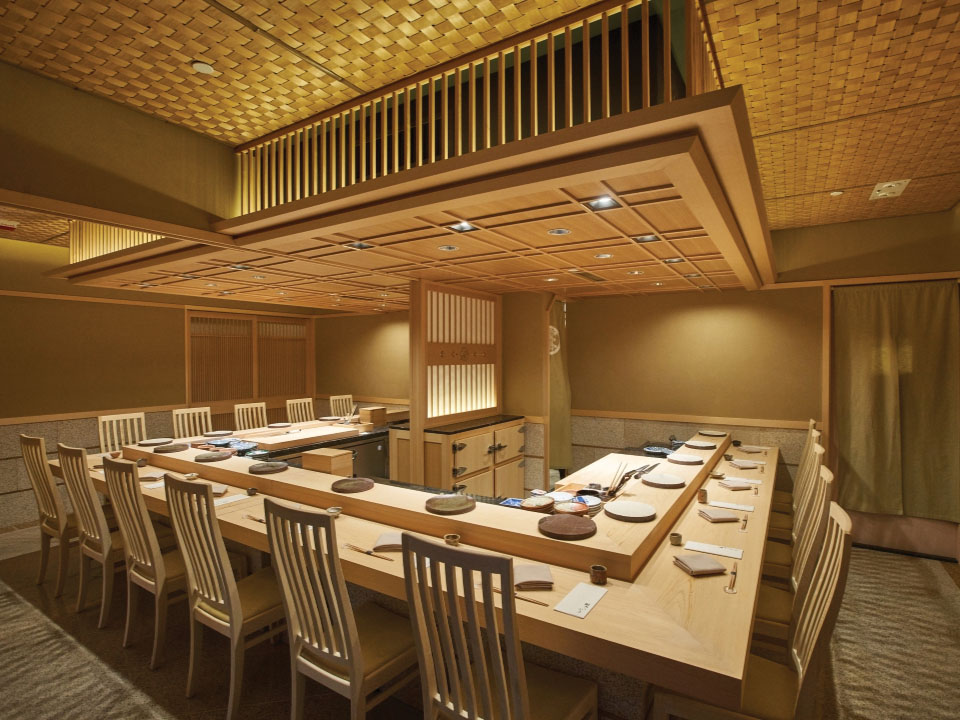
Omakase, a Japanese word that translates roughly as “I’ll leave it to you,” is the format in which a chef presents a sequence of courses entirely at their discretion, with no input from the diner on specific items. At a sushi omakase, this typically means 15-20 pieces of nigiri — hand-pressed sushi — presented one or two at a time across sixty to ninety minutes, bookended by appetisers, a soup, and occasionally a hand roll or a small dessert.
Booking
The finest omakase counters in Tokyo — places like Saito, Harutaka, Sushi Yoshitake and Sushi Sawada — require reservations made weeks or months in advance, often only through a Japanese-speaking intermediary or a concierge service with existing relationships. The one, two, and three-Michelin-starred sushi counters of Ginza and Roppongi are booked by their regulars and by hotel concierges who maintain personal relationships with the restaurants.
For the visitor to Tokyo who wants to eat at a serious counter, the most reliable route is through the concierge at one of the international hotel chains whose concierge teams have the relationships required — luxe spots like the Four Seasons, Aman Tokyo, and the Peninsula all maintain serious concierge programmes for exactly this purpose.
Closer to home, the best omakase counters — Shinji by Kanesaka and Sushi Kimura in Singapore, Sushi Shikon and Sushi Saito in Hong Kong — are similarly sought-after but somewhat more accessible through online reservation platforms for non-prime bookings. Reservations two to four weeks ahead are typically sufficient for weeknight seats; weekend seats require considerably more advance planning.

A note on cancellation that is worth stating clearly: cancellations at omakase counters (especially the really small setups) cause genuine financial damage. The ingredients have been ordered specifically for the booking, and the counter typically operates at limited capacity, so a no-show or a same-day cancellation is more than a dick move; it’s a significant financial imposition that damages the restaurant materially. Cancel as early as possible if plans change, it’s just basic courtesy and the minimum the experience deserves.
Arrival and the Counter
If there’s a set dining time, be sure to arrive on time or slightly early. The counter format, with typically 6-10 seats, operates as a shared social experience — the other diners are present, the chef is working in full view, and the timing of each piece is calibrated so that the entire counter receives their sushi in proximity. While this is slowly shifting, and many sushi restaurants are becoming a little more flexible, if there is a stated commencement time, turning up late disrupts this choreography in a way that arriving late to a regular restaurant does not.

Take your assigned perch and order drinks — sake and Champagne are the most natural choices, with whisky (Japanese, naturally) before and after rather than during, and attend to what’s in front of you. Turn the phone face down. This isn’t about etiquette performance but about the quality of attention that the experience rewards.
If you’re flexing the wallet a little, the piece of sushi in front of you will have been made by someone who has spent more time practising that specific motion than many people have spent in their entire professional careers. It will be at its optimal temperature and texture for approximately 30 seconds, so give the moment 30 seconds of your full attention before it passes.
Engaging with the Itamae
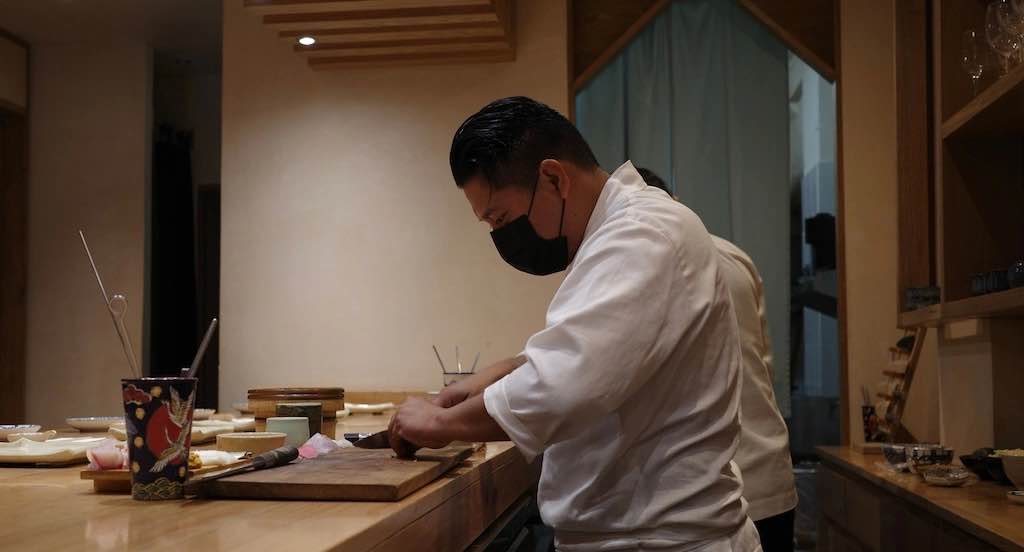
The itamae — the chef at the counter — is available for conversation in a way that the chef in a kitchen is not, and engaging with him (it’s almost always a him at the traditional Japanese sushi counter, a gender imbalance that is beginning to shift but slowly) is part of the experience. Asking about the fish — where it’s from, what time of year it’s at its best, what technique has been applied — is always appreciated as it signals the quality of attention and respect that the craft deserves.
The tone of this conversation should be curious rather than challenging. Asking “What fish is this?” is excellent. Asking “why didn’t you use X instead of Y?” implies a judgment that the chef’s choices require justification, which is not the spirit of omakase.

The single most important disposition at the counter is trust: you’re in the hands of someone who knows more about what they are doing than you do, and the experience of genuinely receiving what they have prepared — without reservation, without modification requests, with full and honest attention — is the experience the form is designed to produce.
The Condiments: What They Are and How to Use Them
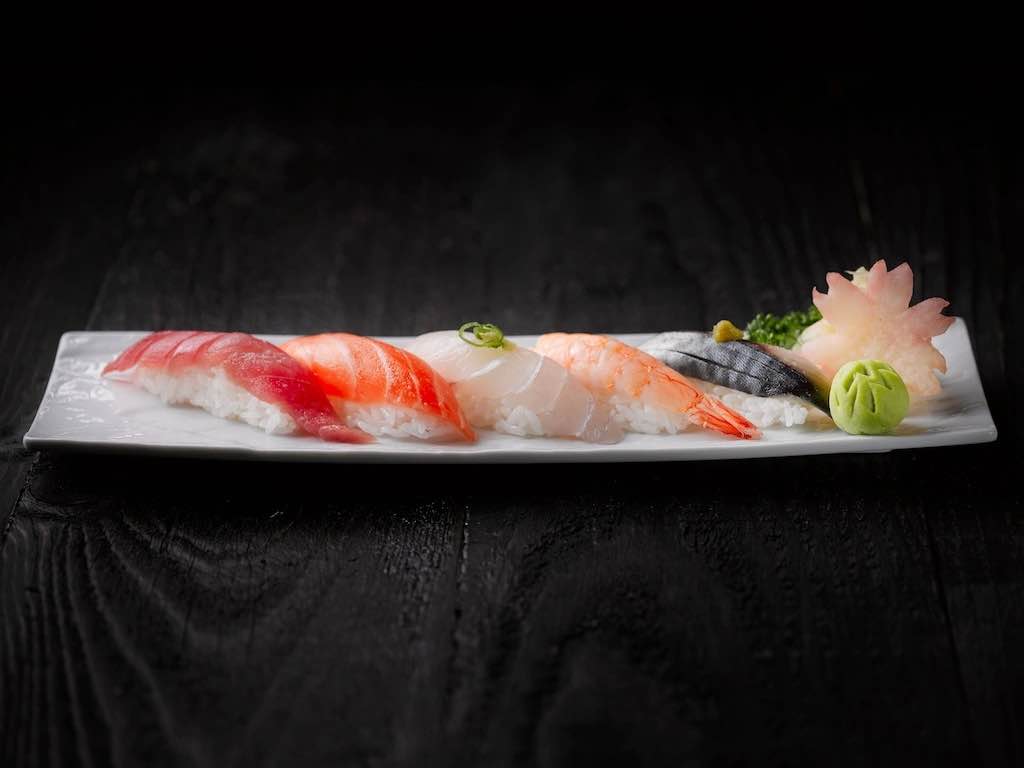
Like so many simple concepts, how to eat your sushi and how to use the condiments are the most common culinary faux pas.
Soy Sauce
Soy sauce is present at every sushi counter but is used differently at different stages of the experience. At a conveyor belt or casual sushi restaurant, liberal application of soy sauce is standard and unproblematic. At a serious omakase counter, the etiquette around soy sauce is more nuanced because the chef has already seasoned each piece — typically by brushing the fish with a nikiri (a reduction of soy sauce, sake, and mirin that is specific to each restaurant) — and the piece is presented at the flavour the chef intends it to have.
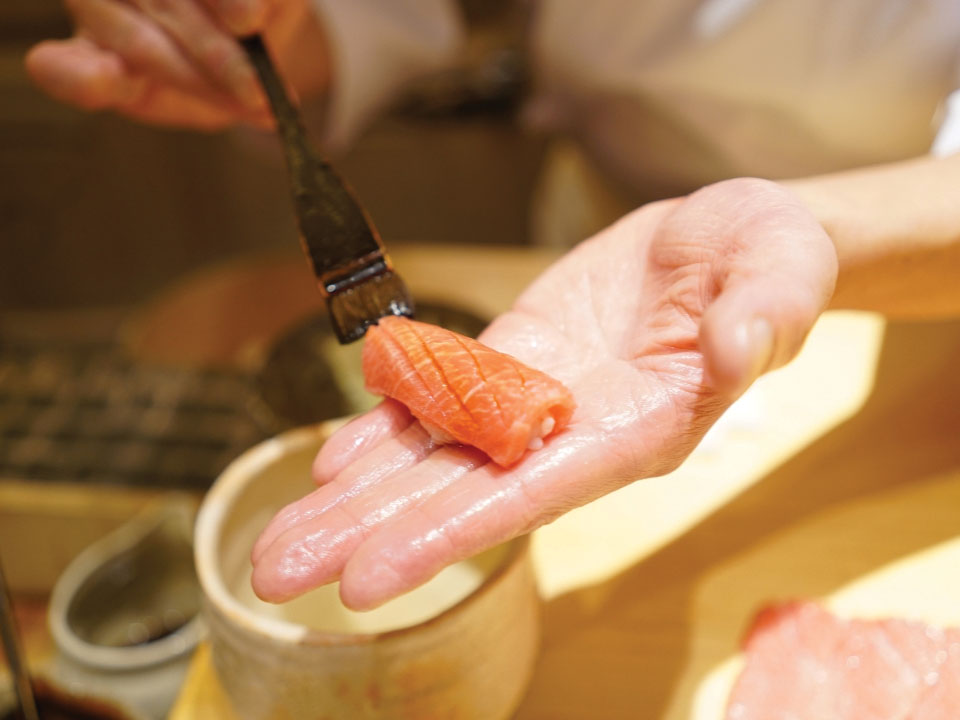
At a casual to mid-range counter where you are dipping your own pieces, the correct technique is to dip the fish side, not the rice side, into the soy sauce. The logic is practical and flavour-based: the rice, if dipped, absorbs soy sauce rapidly and becomes overly salty, and the piece may fall apart. A brief touch of the fish surface to the soy sauce — enough to pick up the umami and salt without saturating the fish — is correct. For pieces where the fish is on top of the rice (the conventional nigiri presentation), this means either inverting the piece and dipping, which requires some dexterity, or brushing the fish lightly with soy sauce using a piece of ginger or a fingertip.
At the finest omakase counters, soy sauce may not be placed on the counter at all as each piece has been seasoned by the chef and is complete as presented. In this context, reaching for soy sauce is the equivalent of salting a dish before tasting it at a fine restaurant: it implies a judgment about the chef’s seasoning before any evidence is in.
Wasabi
Real wasabi — Wasabia japonica, the plant whose rhizome is freshly grated to produce the pale green paste that burns cleanly and briefly — is expensive, perishable, and used at serious sushi counters in specific, carefully judged quantities applied by the chef between the rice and the fish.
The green paste commonly served at casual sushi restaurants and in the individual sachets of supermarket sushi kits is horseradish coloured with spinach or food dye, which is an entirely different plant with a different flavour profile — hotter, more pungent, longer-lasting in its heat — that produces the conventional association of wasabi with nose-clearing pain.
At a legit omakase counter that uses real wasabi, the quantity applied by the chef is deliberately calibrated to the piece: more for oily fish, where it provides a counterpoint to the richness, less for delicate white fish, where it would overpower the subtlety. Adding additional wasabi — particularly the horseradish substitute — to pieces that arrive at the counter already seasoned is like adding yellow mustard to a Kobe fillet and deserves a slap.
The convention of mixing wasabi into the soy sauce to produce a seasoning paste, which is widespread in casual sushi contexts, is not appropriate at a serious counter for the same reason: the flavour that results is no longer either wasabi or soy sauce but a blend of both that is applied indiscriminately, removing the chef’s careful calibration. If you really can’t live without the burn, request a small amount separately and apply it directly to the fish.
Ginger
The sliced ginger, or gari, served with sushi is a palate cleanser, not a condiment. Its function is to reset the palate between different fish, removing the lingering flavour of one piece before the next arrives so that each can be tasted on its own terms. Used correctly, a small piece of ginger is eaten between pieces of sushi, not alongside them and not on top of the fish.
The most common misuse of ginger — eating it draped across the sushi itself, or using it to brush soy sauce onto the fish — is a genuine flavour error as well as an etiquette one: the ginger’s pickling acid and its sharp aromatic character compete with rather than enhance the fish, and they prevent the palate resetting that is ginger’s actual purpose.
The Fish: A Guide to What You’ll Encounter

The sequence of a sushi omakase typically moves from delicate to robust, from lean to rich, building in flavour intensity across the meal in a way that allows the palate to develop with the experience rather than being overwhelmed by heaviness at the outset.
The White Fish (Shiromi)
The omakase commonly opens with shiromi — white fish of delicate flavour and clean, cool texture — that present the rice and the craft without the distraction of intensity. Tai (sea bream) is the most common as its clean, slightly sweet flavour and delicate texture make it the purest expression of the sushi form at its most restrained. Hirame (flounder or sole) is similar in register but with a distinct firm texture and a faint marine mineral quality. Engawa, the muscle along the flounder’s fin that has been exercised continuously and developed a different texture and fat content from the main body, is a specific and prized piece that appears at serious counters as a demonstration of the chef’s knowledge of the fish’s anatomy.

The white fish pieces test the rice as much as the fish — their delicacy makes the quality of the shari (rice) perceptible in a way that a more intensely flavoured fish would mask. Which is the other reason they open the meal.
The Tuna Progression
Tuna, and specifically the range of tuna from the leaner akami through the progressively fattier chutoro to the supremely marbled otoro, is the narrative spine of most sushi omakase. The progression from lean to fatty within a single fish across three or more pieces is one of the more instructive experiences in the omakase format because it demonstrates, in direct sensory terms, how the same fish’s flavour and texture changes with fat content and where on the body the cut originates.
Akami — the lean, deep red tuna from the back of the fish — is the most commonly served and the most clearly flavoured of the three, with a clean, direct iron-and-sea richness without the complexity of fat. Chutoro — the medium fatty belly — introduces the marbling that produces a richer, more complex mouthfeel and a flavour that lingers longer than the lean. Otoro — the most heavily marbled section of the belly — is the most prized and the most divisive because its extraordinary fat content produces an almost melting quality in the mouth that is, when the fish is genuinely excellent, unlike anything else in the culinary world.

For first-time otoro tasters, the experience can seem more about texture than flavour; with experience, the subtlety of the flavour within the richness becomes the focus.
The finest tuna at Tokyo counters is bluefin from specific sources — the tuna auction at Toyosu market, the fishing grounds off Oma in Aomori Prefecture, the cold waters off Hokkaido — whose specific origin and condition the chef will typically mention. This is not snobbery; the provenance genuinely affects the quality in ways that are perceptible to anyone paying attention.
Shellfish
Hotate (scallop) is among the most crowd-pleasing pieces in any omakase because its clean, sweet, subtly creamy flavour is immediately accessible and reliably excellent when sourced from Hokkaido’s cold waters. It’s also one of the pieces most commonly served with a small amount of citrus or a dab of real wasabi that acts as a foil to the sweetness.

Aka uni and bafun uni — the two main types of sea urchin used in Japanese sushi — are the pieces most likely to divide opinion among non-specialist diners and the ones most worth understanding before the omakase. Uni’s distinctive flavour — intensely briny, creamy, with a specific sweetness when fresh and a deeply unpleasant ammonia quality when not — is the purest possible expression of the freshness imperative that underpins all sushi. Good uni that has arrived within hours of being harvested, tastes of the sea in a way that is completely specific and completely extraordinary. Bad uni, served past its optimal condition or transported without adequate cold management, will linger as one of life’s greatest regrets.
Oily Fish
The kohada (gizzard shad), a small, silver-skinned fish cured in salt and vinegar before serving — is one of the most important tests of the chef’s skill. Because its flavour is assertive and its acidity pronounced, the balance between the cure and the natural oiliness of the fish, and the calibration of its relationship to the rice, requires experience and judgment that cannot be concealed. Many serious sushi enthusiasts rate the quality of a counter’s kohada as highly as its tuna.

Aji (horse mackerel), iwashi (sardine), and sanma (Pacific saury, seasonal in autumn) are the other principal oily fish in the traditional omakase progression, each with a specific season during which they are at their best and a characteristic flavour that rewards learning to distinguish.
Aji at its peak — typically late spring through summer — has a clean, lively oiliness and a fragrance from the ginger and spring onion traditionally used to balance it. Sanma in September and October, when the fish has fattened for the winter, is one of the great seasonal sushi experiences available to the visitor to Japan at the right time of year.

Tamago: The Chef’s Signature
The tamago — sweet egg omelette, served as one of the final pieces at a traditional omakase — is a specific test of the chef’s skill that experienced sushi diners use as a calibration point for the overall standard of the restaurant. The tamago is not a simple rolled omelette but is made with dashi and sometimes ground shrimp, baked rather than fried in some traditions, and calibrated to a specific sweetness and texture. A great tamago has a custardy interior that gives way under gentle pressure, a slightly caramelised surface, and a flavour that is sweet but grounded by the dashi’s depth.
What Makes Great Sushi Rice

The shari — the vinegared rice that forms the base of every nigiri — is at least as important as the fish in the quality of the finished piece. The rice should be short-grain Japanese rice (koshihikari or similar) cooked to a specific texture — slightly firm, the grains distinct but cohered — and seasoned while warm with a precise quantity of rice vinegar, sugar, and salt that is each chef’s proprietary formula. The balance of the seasoning determines how the rice flavour interacts with the fish: too much acid and the rice dominates; too little and it reads as bland.
The temperature at which the shari is served is a detail that separates the finest counters from the merely excellent ones. The rice should be served at approximately body temperature — warm, not hot — because this is the temperature at which it presents its flavour most fully and at which it has the optimal texture for the brief time between formation and eating. Rice that has been prepared too far in advance and served cold has lost both temperature and texture. The itamae at the finest counters forms each piece to order, which is why the instruction to eat immediately is not a nicety but a requirement for experiencing the sushi as intended.

The formation — the amount of rice, the pressure and shaping of the shari, the positioning of the fish — is the central physical skill of the sushi chef. Jiro Ono, now 100 years young, is said to form the rice at a specific weight and density for each type of fish, adjusting the pressure and the shaping to complement the texture of the neta or topping. Tasting sushi with this awareness — noticing the ratio of fish to rice, the way the piece holds together and falls apart in the mouth, the way the rice density affects the experience of the fish — adds a dimension to the omakase experience that is not available to the diner who is simply eating fish.
Hands or Chopsticks?

This question produces unnecessary anxiety among newcomers because the answer seems like it should be definitive, but in fact both methods are historically legitimate. Nigiri sushi was traditionally eaten with the fingers — the hand roll (temaki) essentially demands it, and the compact, formed structure of a nigiri piece was designed to be picked up cleanly.
Using chopsticks is equally acceptable and more comfortable for many diners. What’s important in either case is that the piece is eaten in a single bite, maintaining the ratio of fish to rice that the chef formed, rather than bitten in half and put down — which both exposes the rice interior and produces a less coherent flavour experience from the remaining half-piece.
The Etiquette Summary: What to Remember

Eat each piece immediately after it is placed before you. Dip the fish, not the rice, into soy sauce if dipping is appropriate. Use ginger between pieces rather than on them. Add no wasabi at a serious omakase counter unless specifically invited to do so. Ask questions of the itamae with curiosity rather than judgment, and engage with what is in front of you rather than your phone.
The omakase counter is one of the few contexts in modern life where the full expertise of a decades-long craft is directed entirely toward your immediate experience. The appropriate response to that is attention — genuine, unhurried, curious attention to what you are tasting and where it came from and what has gone into making it what it is.
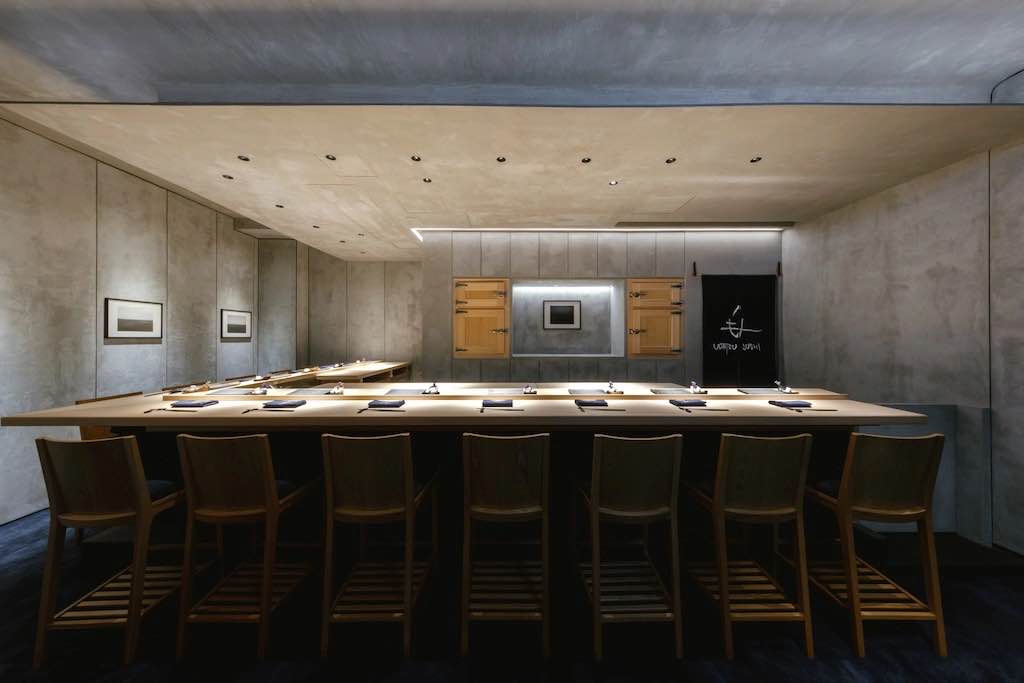
That quality of attention is what separates eating sushi like a CEO from merely eating sushi, and it is available to anyone who chooses to bring it.