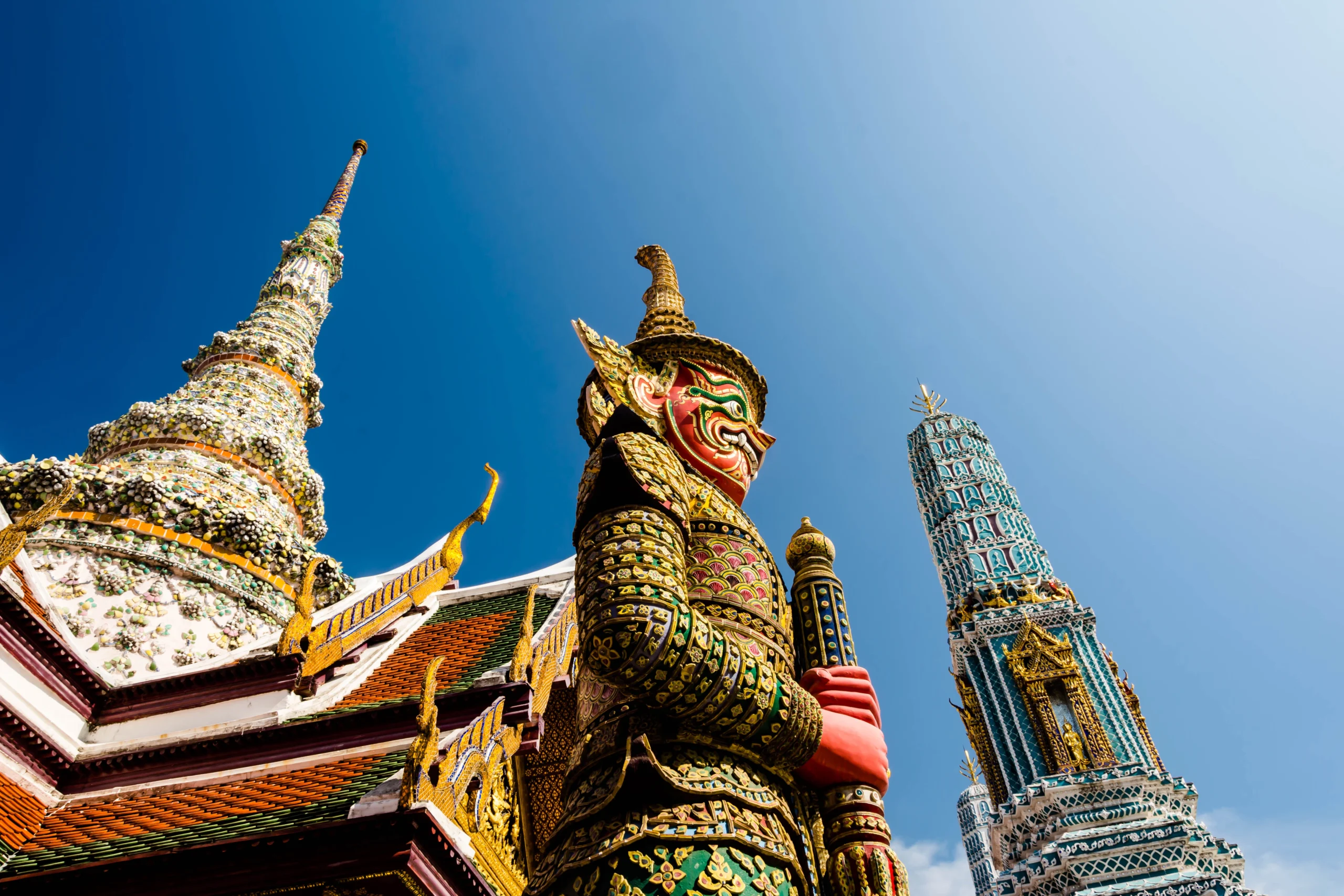

Bangkok rewards the man who knows where to look. Here’s MMA’s curated shortlist, from where to stay to where you should be socialising, and the back-alley noodle stalls you’ll need after.
Bangkok is not a city you visit. It’s a city you negotiate with.
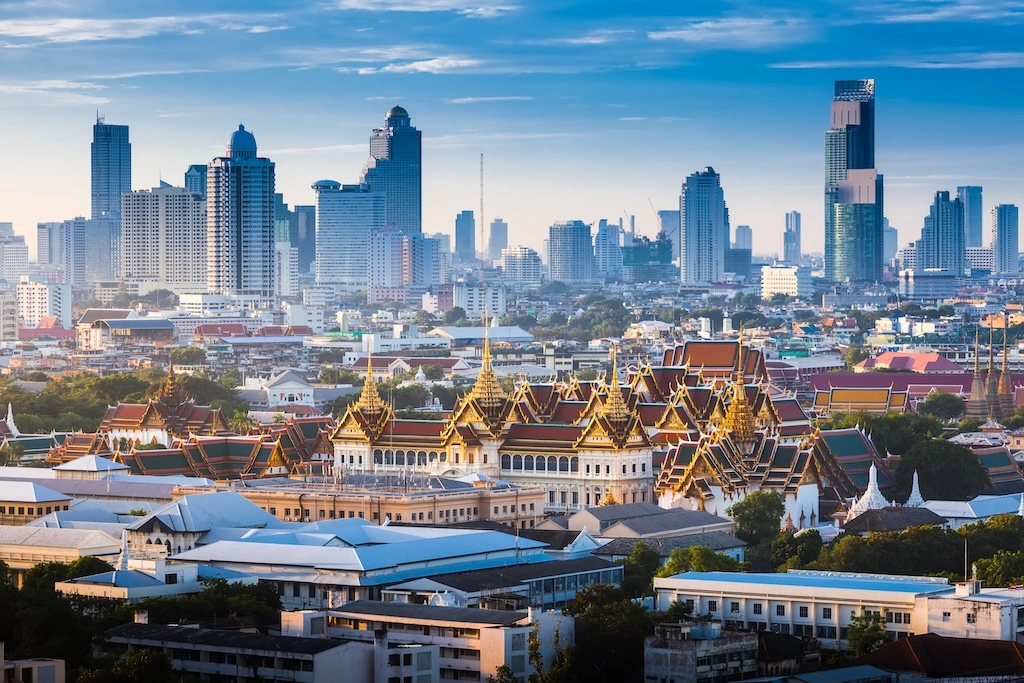
Every other Asian capital picks a lane — Singapore polishes, Tokyo perfects, Hong Kong hustles. Bangkok refuses to choose. A 700-year-old temple sits three blocks from a rooftop bar pouring pisco sours to a soundtrack of Peruvian house music, and both are doing brisk business on a Tuesday. This is a city that has spent decades absorbing everything thrown at it — colonial near-misses, coups, floods, a tourist economy the size of a small country’s GDP — and has turned it into something that still, somehow, stays resilient.
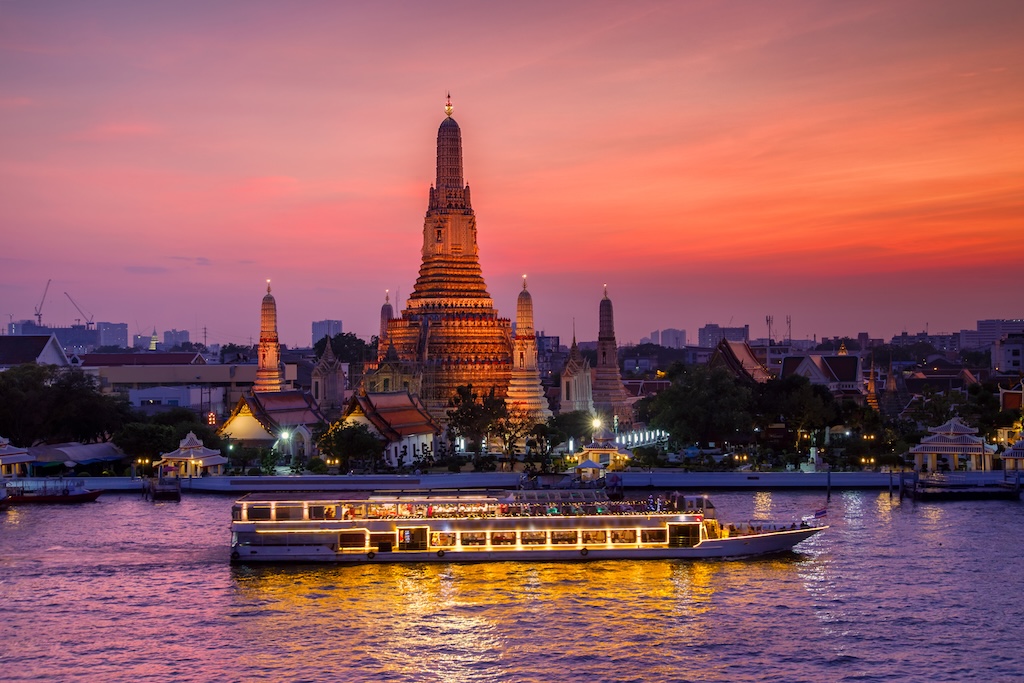
The pace is the tell. Locals move fast through the heat and slow through a meal, which is the opposite of how most cities operate. Sukhumvit’s glass towers are five minutes from a canal community that hasn’t changed its rhythm since the reign of Rama V. The result is a city that’s ideal for the traveller who wants texture, not itinerary, where the best plan is usually the one you abandon by 9 pm in favour of whatever the guy at the bar just told you to try instead.
Bangkok in 2026 is also mid-boom: Fairmont is the latest in a string of luxury hotels to open in the city centre, Sathorn’s bar scene is climbing the world rankings, and a Southern Thai kitchen just became the first in the country to hold three Michelin stars. This guide covers where that boom is actually worth your baht.
Facts & Figures
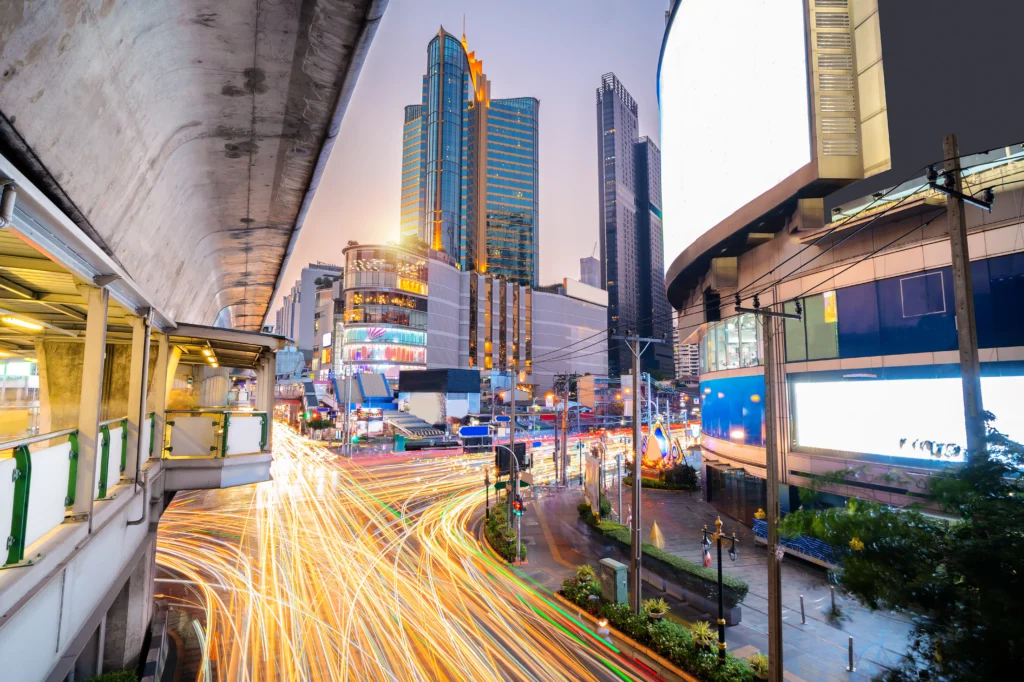
Population: roughly 5.7 million in the city proper, ballooning to around 11.4 million across greater Bangkok.
Best time to visit: November through February, when the cool-and-dry season keeps humidity honest and skies clear.
Tipping: not obligatory but genuinely appreciated; round up taxis, leave 10–15% at restaurants without a service charge already added, and THB 20–40 (US$0.60-1.20) per bag for porters.
The surprising stat: Bangkok’s full ceremonial name runs 168 letters, the longest official place name on Earth — locals just call it Krung Thep.
Bonus trivia for the trivia hounds: Red Bull was invented here in 1976, as Krating Daeng, eight years before its Austrian reinvention.
Where to Stay
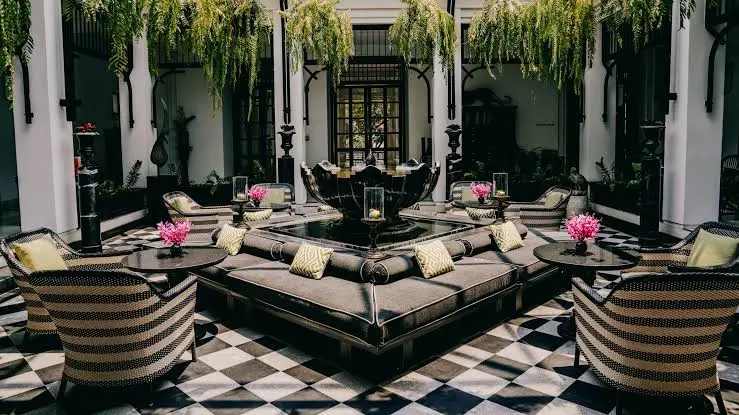
There’s no shortage of hotels in Bangkok, which can make picking the place to lay your head all the harder. We’ve rounded out four of our favourites.
The Siam
Bangkok’s most convincing argument is that heritage and boutique aren’t opposites. Set on three riverside acres in old-money Dusit — a ten-minute boat shuttle from the chaos of central Sukhumvit — this boutique urban retreat is stacked with genuine Chinese and Buddhist antiques rather than reproduction “Thai-inspired” décor. Pool villas come with private plunge pools; the on-site Muay Thai ring and Sak Yant tattoo sessions are not gimmicks, they’re run by people who take both seriously.
Park Hyatt Bangkok
The business hotel that makes you forget you’re at a business hotel. Attached directly to Central Embassy on Wireless Road, the Yabu Pushelberg-designed interiors recently earned the property two Michelin Keys, and the 40-metre saltwater rooftop pool with its own infinity lap lane has become the unofficial Sunday office for half of Bangkok’s expat finance crowd.
Aman Nai Lert Bangkok
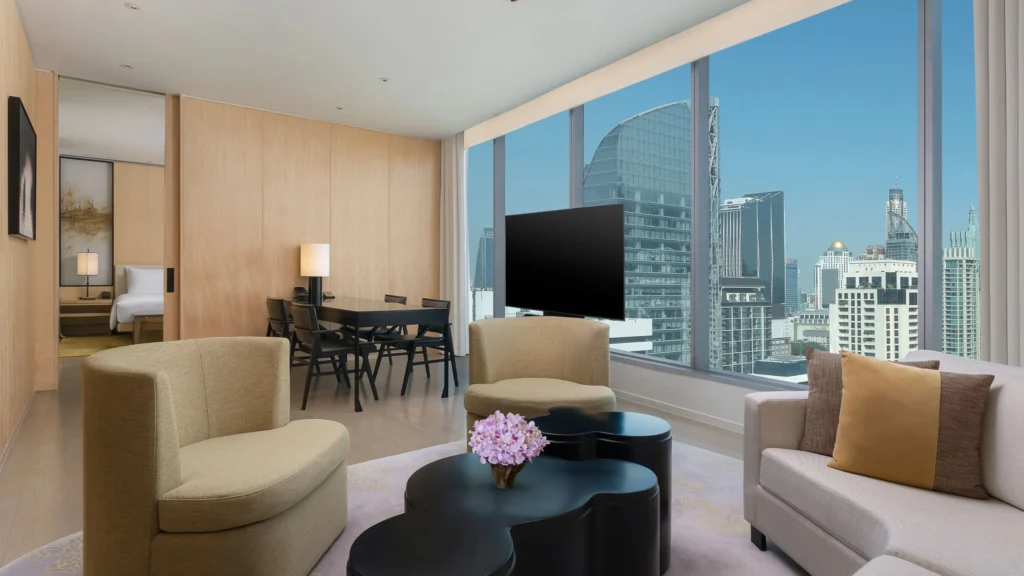
The splurge, no apology necessary. Fifty-two suites — the smallest at 94 square metres — sit inside seven acres of heritage garden in the middle of Lumpini, Jean-Michel Gathy’s interiors doing the rare trick of feeling both monastic and indulgent. The top-floor Aman Suite spans an entire 713-square-metre floor with its own cinema and spa, for the sort of guest who no longer asks the price.
Fairmont Bangkok Sukhumvit
The newest arrival, Fairmont’s first Thailand property, is easily the most talked-about launch of the year. Architecture firm PIA built the hotel around a “blooming stage” concept threaded through Thailand’s botanical history. Seven dining venues are rolling out across 2026, with two rooftop restaurants and an underground cabaret club still to come (more on that in a minute). Expect some construction-dust growing pains before it settles into itself.
MMA Tip: Book The Siam’s river-view rooms over the garden-facing ones — the boat traffic on the Chao Phraya at dusk is better entertainment than anything on the in-room TV.
Where to Imbibe
Asia’s own Sin City has long led the region’s cocktail scene, and for good reason. Here’s where you can tap into that movement for yourself.
Bar Sathorn
Housed inside The House on Sathorn — a mansion that has been a private residence, a hotel and, at one point, the Soviet embassy — this boudoir (below) is currently Asia’s most improved bar by a mile. It climbed 31 spots to No. 17 on Asia’s 50 Best Bars 2026, taking home the Nikka Highest Climber Award in the process. The menu is split into four chapters spanning the building’s own history, and cocktails will run you US$13–14, with the signature worth the trip alone.
BKK Social Club
Inside the Four Seasons on the river, this is Bangkok by way of Mexico City, a Latin-glamour cocktail room that landed at No. 20 on Asia’s 50 Best Bars 2026. The signature La Capilla mixes tequila and mezcal with sea salt and sparkling grapefruit, and the cigar list is long enough to keep you there past last call.
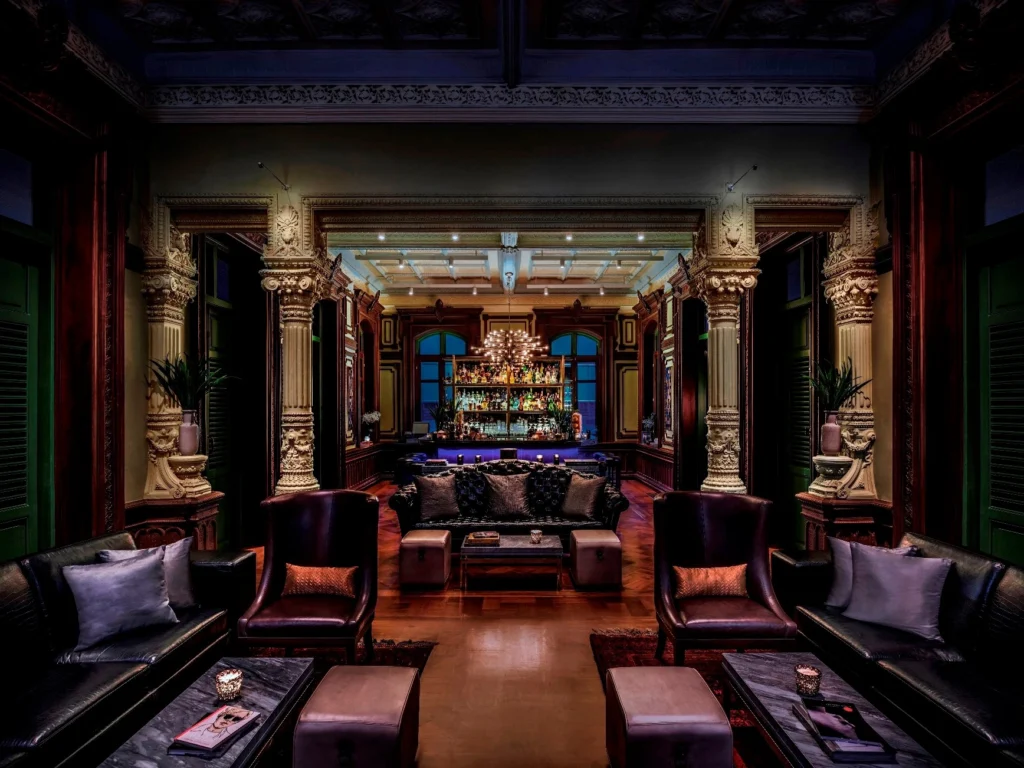
Wiggle Room
Hidden away beneath Fairmont Bangkok Sukhumvit, with its own private street entrance off Soi 18, so guests can arrive without setting foot in the hotel lobby, Wiggle is part supper club, part cabaret, and built around a stage where the performances are the highlight of your trip. You’ll also want to stick your head in at the new AELA Social Bar – here’s why.
Wasteland
Bangkok’s zero-waste cocktail lab recently reopened in a permanent home off Sukhumvit 71 after a string of pop-ups. The “World Wild Waste” menu turns cacao husks, coffee pulp and crab shells into 21 genuinely drinkable cocktails — proof that sustainability doesn’t have to taste like a compromise.
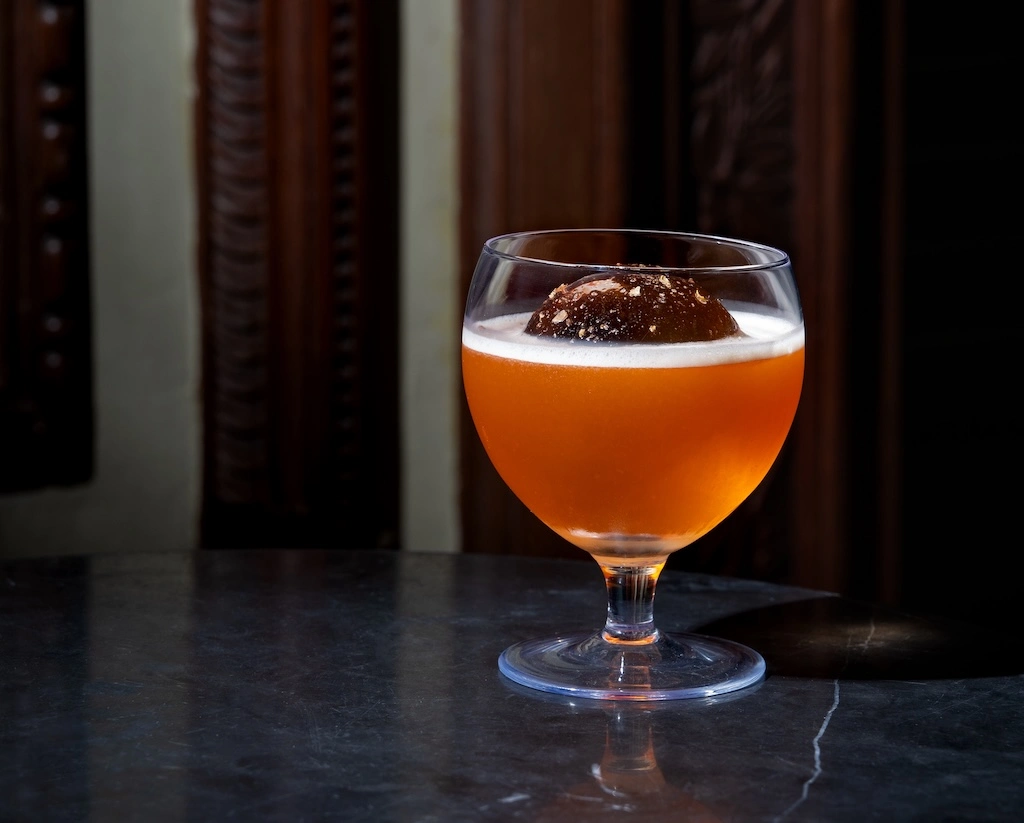
MMA Tip: At Bar Sathorn, skip the classics and order the Bangkok Brunch; featuring mezcal and tequila layered with salted tomato water and pad-kaprao spice, it’s built around a frozen tomato that melts as your ice. It’s the closest thing Bangkok’s bar scene has to a mission statement in a glass.
Where to Star Gaze
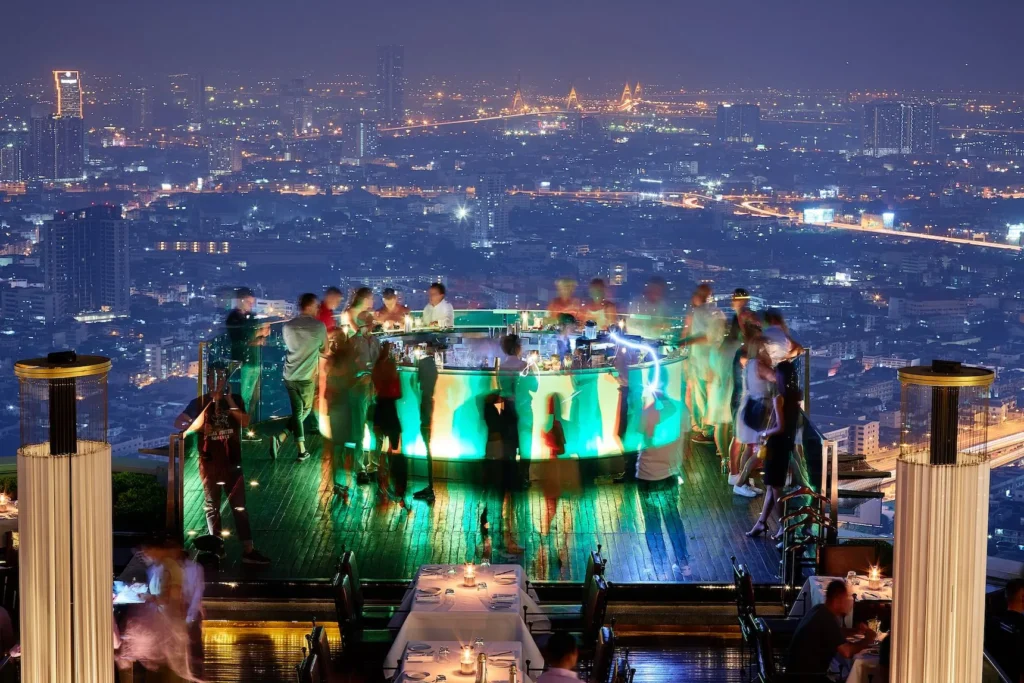
While Bangkok’s mixology scene is world-class, it also excels in something cities like Hong Kong and Singapore don’t – captivating rooftop venues patrolled by the city’s pretty young things. Here are a few of our favourites
Sky Bar at Lebua
The one everyone’s seen in a movie. Perched 820 feet up with an enforced smart-casual dress code, Sky Bar (above) is one of Asia’s best rooftop venues. Book ahead for a table as they get snapped up faster than a redhead on St Partrick’s day, and order the Hangovertini to pair with spectacular views.
Red Sky
Perched on the 55th floor of Centara Grand at CentralWorld, Red Sky is one of Bangkok’s most celebrated open-air rooftop bars. Famous for its curved, colour-shifting Distil Bar and jaw-dropping skyline views, this is where you go for sunset cocktails, dramatic lighting and glass-walled dining that draws in a seductive crowd nightly — book ahead, dress smartly, and arrive before dusk for the best seats.
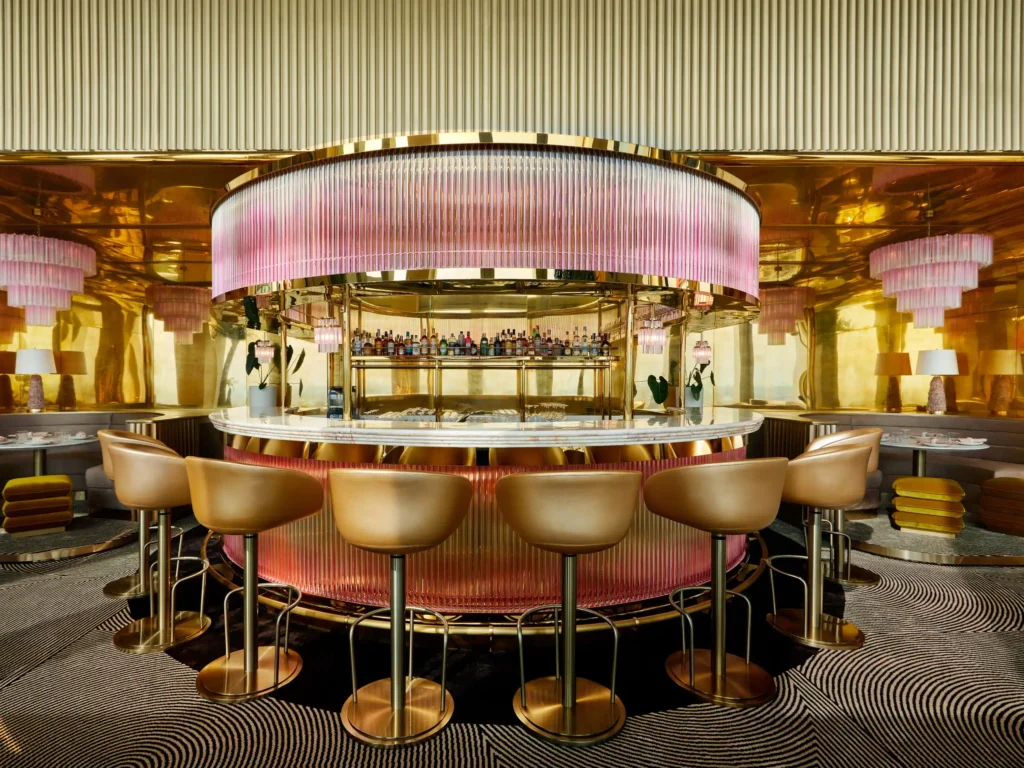
Ojo
Ojo (above) crowns The Standard, Bangkok Mahanakhon on the 76th floor as Thailand’s highest restaurant, with 360 degrees of city views from its jewel-toned dining room and open terrace. Chef Francisco “Paco” Ruano, formerly of Guadalajara’s Alcalde, brings contemporary Mexican technique to Bangkok’s skyline while designer Ou Baholyodhin’s gold-accented interiors nod to ancient Mesoamerican motifs.
Above Eleven
Above Eleven crowns Fraser Suites Sukhumvit’s 33rd floor with Nikkei cooking, with Peruvian ceviches and tiraditos meeting Japanese technique, alongside a serious pisco sour list. Bangkok’s first Peruvian restaurant, it turns from dinner into a late-night scene with rotating DJs, live saxophone Thursday through Sunday, and Wednesday salsa nights under open Sukhumvit skyline views.
Where to Eat Local
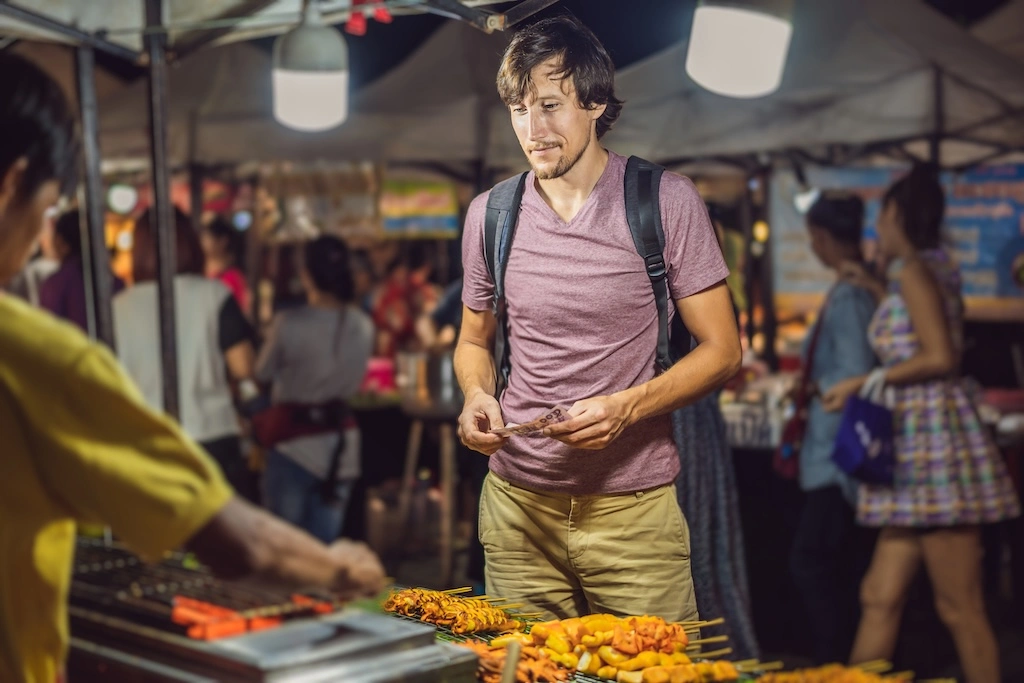
While fine-dining is all well and good, you can’t visit Bangkok without grazing your way through some of the world’s best street food. Here’s where to go.
Pad Thai, at Thip Samai
Fired over charcoal since 1966, this is the Pad Thai every other version in the city is measured against. Order the Pad Thai Hor Kai — the whole dish wrapped in a crisp fried egg omelette, cracked open tableside (it’s also a handy hangover snack). It’s open until 3 am most nights, because Bangkok doesn’t believe fried noodles have a bedtime.
Crab Omelette, at Raan Jay Fai
A single elderly woman in ski goggles, working one wok over an open flame, earned this street stall a Michelin star in 2017 — the first of its kind. The crab omelette runs into four figures in baht, which is steep for street food but worth it anyway; book by email weeks out, because everyone else already has.
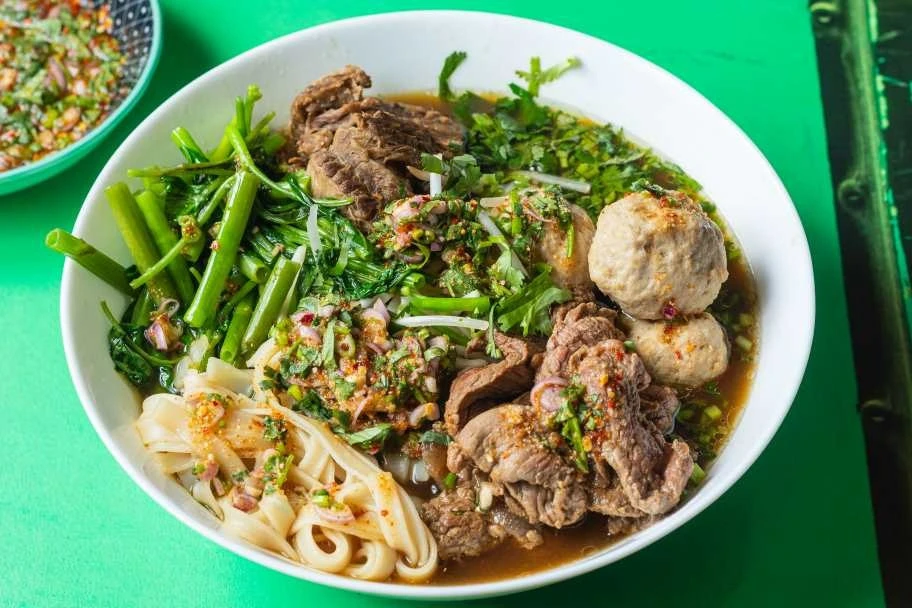
Boat Noodles, at Victory Monument Alley
A cluster of competing stalls — Sud Yod Kuay Teow Reua among the best — serve bowls small enough that you’re meant to order five or six per sitting, traditionally deepened with pork or beef blood in the broth. At under a dollar a bowl, ordering in bulk is the entire point.
Som Tam, at Som Tam Nua
This Isaan institution across from Siam Paragon has kept a queue running for years for good reason: order the tam mua, a green papaya salad tangled with rice noodles and fermented fish sauce, sharp enough to reset your palate mid-meal.
MMA Tip: At Jay Fai, ignore the Instagram fixation on the crab omelette and order the tom yum goong instead — she’s been perfecting that pot longer than most of her fans have been alive.
How to Eat Glam
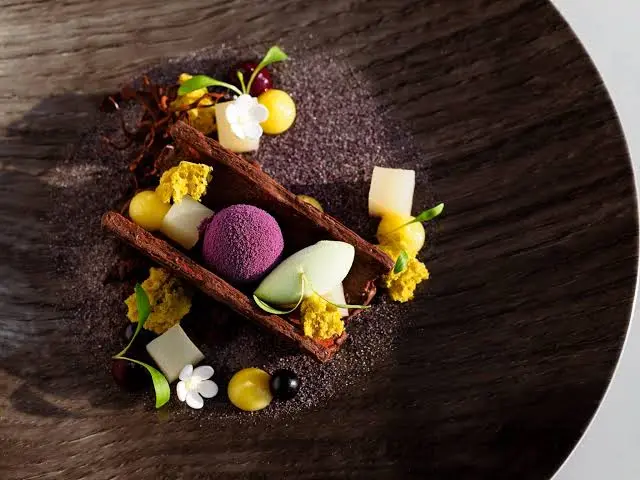
If you’re out to impress or spending the company dime, these world-class tables pack a culinary punch
Anne-Sophie Pic at Le Normandie
For the first time in its 68-year history, Thailand’s original French fine-dining room now carries a chef’s name on the door. Pic — the world’s most Michelin-starred female chef — has reworked the two-star menu around Thai ingredients without losing the room’s colonial-era grandeur overlooking the Chao Phraya. Lunch discovery menus start around US$55, with the full tasting menu climbing considerably higher.
Blue by Alain Ducasse
Tucked into ICONSIAM rather than the address most guides guess, this one-Michelin-star hotspot does contemporary French with river views that rival Le Normandie’s, via two tasting menus that change with the seasons and Ducasse’s usual technical precision. Dress to impress and pick your dining companions carefully, you might be here a while.
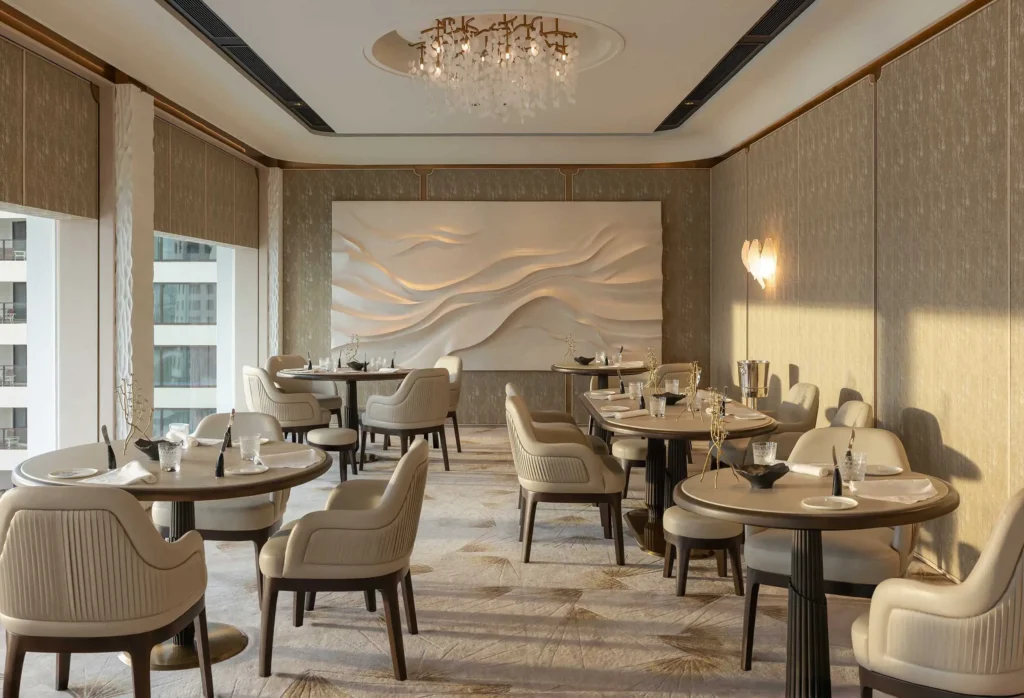
Sorn
This is the reason Thai cuisine finally has a three-Michelin-star restaurant to its name. Chef Supaksorn Jongsiri, self-taught, delivers a spectacular Southern Thai tasting menu crafted around ingredients most diners have never encountered outside the deep south, including Tapi River prawns, Andaman squid, and Phuket lobster. It’s closed Saturdays, and is open for dinner only, but it’s a table at which you’ll forge memories not quickly forgotten.
Burapa by Sri Trat
With a speakeasy downstairs and a train-carriage dining room upstairs, the whole building is styled as a journey to Trat province’s coastline. Eastern Thai cuisine here runs sweeter and gentler than its Isaan cousin, with Cambodian and Laotian threads woven through dishes like Thai-Wagyu short rib curry and marinated jellyfish with peanut brittle. Expect to pay US$60–150 per person.
MMA Tip: Burapa’s ground-floor speakeasy isn’t bookable online, but ask the host directly, and you’ll often skip straight past the wait for a table in the train carriages upstairs.
What to Do
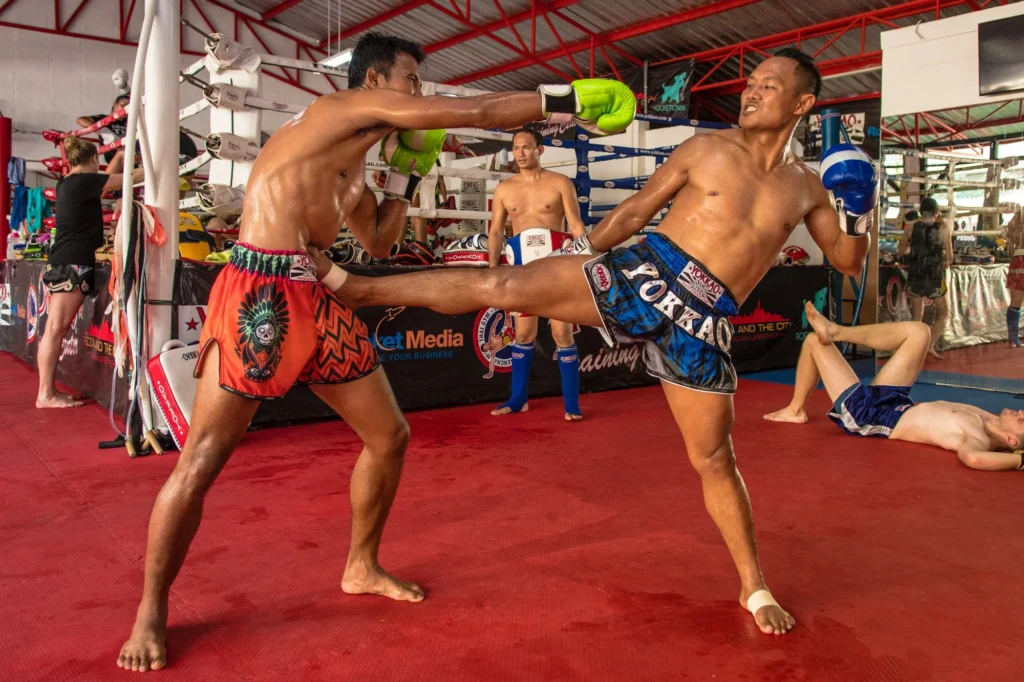
Once you’ve wined and dined yourself into gluttony, it’s time to explore Bangkok’s many unique activities. Here’s what you can’t miss.
Muay Thai at Yokkao
One of the sport’s most recognised gyms, Yokkao has trained names like Saenchai and Superlek. A drop-in intro session runs about US$20, but we’d suggest booking a private hour with a name-brand coach, which will run you around US$250. The one-on-one is worth it if you actually want to learn something rather than just hit a bag for the camera.
Maeklong Railway Market
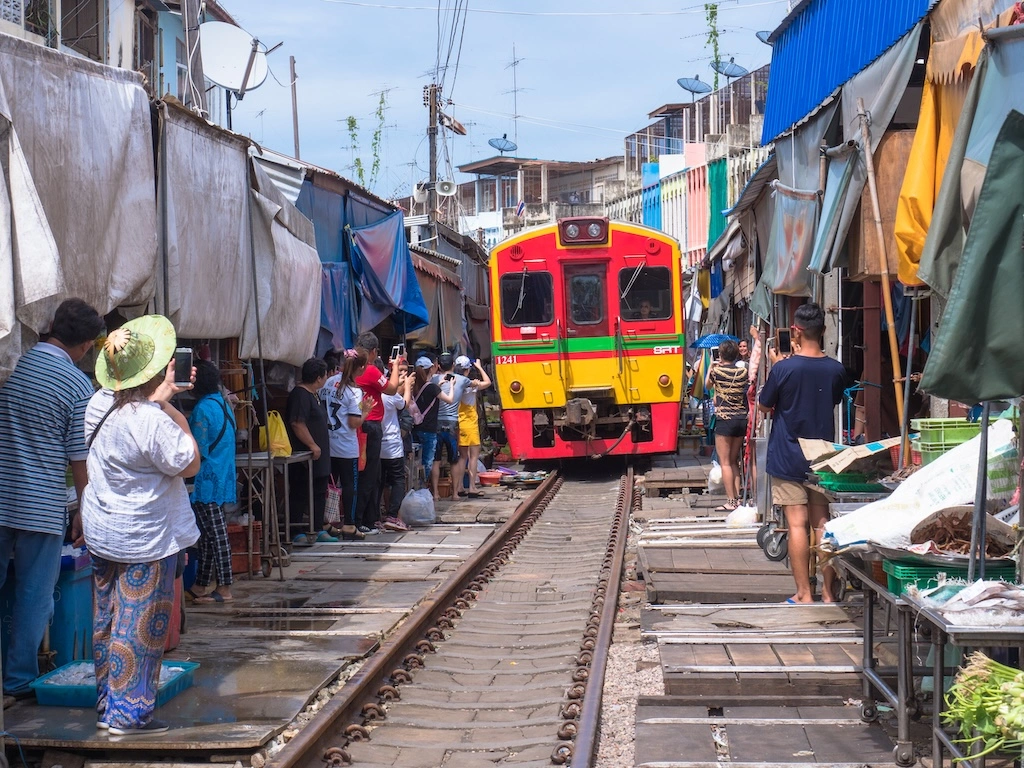
An hour outside the city, here you’ll find market stalls that sit directly on live tracks, and vendors that fold back their umbrellas and baskets seconds before a train slides through at walking pace, resetting within minutes. Time your visit around an actual train arrival rather than wandering in blind — check the same-week schedule, since it shifts, and keep a firm grip on kids and elbows once the crowds build.
Canal Communities by Long-Tail Boat
Mandarin Oriental’s half-day “Resilient Canal Communities” tour (US$220, minimum two guests) threads through Bangkok’s old klong network to Ban Bu, a community of bronze-bowl artisans still working by hand, and a 500-year-old riverside settlement most tour buses never reach.
Tuk-Tuk Street Food Tour with Tuk Me
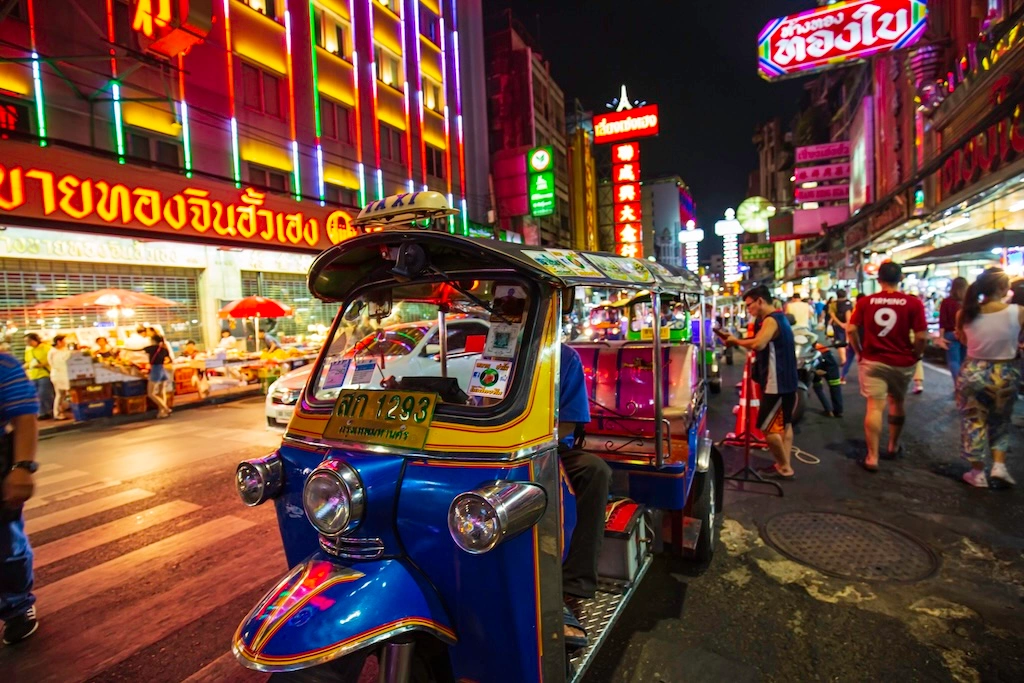
This Chinatown-focused outfit runs a 3.5-hour night tour by tuk-tuk through Yaowarat’s back alleys, capped at five guests, from US$113 with hotel pickup included. Fun and fascinating, it’s the fastest way to eat well in a neighbourhood that rewards knowing someone local.
MMA Tip: Book the earliest Maeklong slot you can find — arrive after the umbrellas have already folded back once, and you’ve missed the entire reason to go.
Know Before You Go
Fast answers to what MMA readers actually ask before booking a Bangkok trip — no fluff, just what you need.
When’s the best time to visit?
November through February. The air is drier, the heat is manageable, and the city’s outdoor bars and rooftops are at their best. April and May run brutally hot; June through October brings the rainy season’s heaviest downpours.
How do I get in from the airport?
The Airport Rail Link from Suvarnabhumi International runs into central Bangkok for US$2–3 in about 40 minutes. A metered taxi costs roughly US$12–17 once tolls and the airport surcharge are added, taking 45–60 minutes depending on traffic. Private transfers run about US$24–45 and are the easiest option after a long-haul flight, although ride-hailing apps like Grab and Bolt also offer a dead-easy way to get to your hotel.
How do I get around once I’m here?
Grab and Bolt both operate reliably across the city and are the simplest option for most trips. Motorbike taxis (motosai) are faster for short hops through traffic, but we suggest always wearing the helmet the driver hands you (Thailand has the world’s highest road fatalities) and confirming the fare before you climb on. Tuk-tuks have no meter, so agree on a price before you get in, and treat any driver’s claim that your destination is “closed today” as a detour toward a commission-paying gem shop, and not a genuine tip.
What’s the best lounge for my flight out?
The Oman Air lounge at Suvarnabhumi (Concourse E, Level 3) is the standout Priority Pass option and delivers a proper buffet, full bar, and showers, and is open around the clock. There are also a handful of pay-in lounges operated by Plaza Premium that will set you back US$35 per person.
Do I need a visa?
Rules changed as of September 15, 2026, and now most nationalities, including the US, UK, Canada and Australia, get 30 days visa-free instead of the previous 60. Everyone still needs to file a Thailand Digital Arrival Card (TDAC) online within 72 hours of arrival — we suggest doing it before you land, not in the (formidable) immigration queues.
Is Bangkok safe for a solo traveller?
Broadly yes, with the usual big-city awareness. The main risks are scams rather than danger — inflated tuk-tuk fares, gem-shop detours, and the odd overpriced bar bill — so agree prices upfront and keep your wits about you after dark in the more tourist-heavy strips.