

Global sperm counts have halved since 1973. Here are 9 science-backed ways Asia’s modern men can protect and boost fertility — starting tonight.
Earlier this month, eight men lined up in Hong Kong for something called the “Sperm Race” — a stunt, yes, but one inspired by a real and uncomfortable statistic. Organisers are already planning a Singapore leg and a “Sperm Race World Cup” for 2026, because the number underneath the joke keeps getting worse.

That number comes from a landmark analysis led by epidemiologist Hagai Levine, who tracked sperm concentration across 53 countries and found it had fallen from roughly 104 million per millilitre in 1973 to about 49 million by 2019 — a drop of more than half. The rate of decline has also accelerated, from around 1.2% a year before 2000 to over 2.6% a year since. What was once framed as a Western problem has since shown up in South America, Africa, and Asia too, according to a 2022 follow-up study that expanded the dataset beyond Europe, North America, and Australia.
Sperm count isn’t just a fertility number, either. Researchers increasingly treat it as a proxy for overall male health, with low counts linked to higher rates of chronic disease and even shorter lifespans. The causes remain debated — plastics, pesticides, processed diets, sedentary living, and heat exposure all show up as suspects — but the response is more settled.
Below are nine changes with real evidence behind them, ranked roughly from easiest to hardest.
1. Get Your Laptop Off Your Lap

Testicles sit outside the body for a reason: sperm production needs a temperature about two degrees cooler than your core. Studies on laptop use have found scrotal temperature rises measurably when a device sits directly on the legs, especially with knees together. And no, a cooling pad underneath doesn’t fully solve the problem.
If you’re working from a café in humid Bangkok or a co-working space in Causeway Bay with a laptop balanced on your knees for eight hours a day, that’s a habit worth breaking. Use a desk or lap tray, and keep sessions short if a surface isn’t available. The fix costs nothing, and the damage isn’t permanent — sperm regenerates roughly every 70 days, so temperature-related dips tend to reverse once the habit changes.
2. Skip the Hot Tub and Sauna Streak

Asia’s hotel spa culture — Onsen weekends in Japan, sauna circuits in Seoul, steam rooms in every serious Hong Kong gym — is genuinely good for recovery and stress. However, it’s less kind to sperm count. Research has linked regular hot tub sessions above roughly 37°C, sustained for 30 minutes a week over a few months, to measurable drops in sperm motility.
This isn’t a reason to swear off the sauna forever; it’s a reason to treat prolonged heat exposure as an occasional indulgence rather than a weekly ritual if you’re actively trying to conceive.
3. Rebuild Your Plate Around Antioxidants

Diets heavy in processed food, refined sugar, and saturated fat correlate with lower sperm counts and poorer motility, largely because they drive oxidative stress that damages sperm cells directly. The counter-move is boringly simple: more colour, less packaging. Instead, load up on leafy greens, berries, walnuts, and oily fish like salmon or mackerel. These are all easy enough to come by across most Asian cuisines, from a Cantonese steamed fish to a Korean banchan spread.
Zinc-rich foods like oysters, beef, and pumpkin seeds matter too, since zinc is directly involved in testosterone production and sperm development. Think of it less as a diet and more as swapping the 9 pm convenience-store meal for something your body actually recognises as food.
4. Train, But Don’t Overtrain

Regular moderate exercise supports healthier testosterone-to-cortisol ratios, reduces oxidative stress, and helps maintain a healthy weight — all of which support sperm production. The catch is that more isn’t always better. Endurance athletes and men who chase high-volume training without adequate recovery often see the opposite effect, as chronically elevated cortisol suppresses testosterone.
If your week currently includes three HIIT classes, a long run, and a five-a-side match with zero rest days, that’s not optimising fertility; it’s working against it. Three to five sessions a week, mixing resistance training with moderate cardio, is a more defensible target than daily maximal effort.
5. Cut Down on Alcohol — Properly

Hong Kong’s happy-hour culture and Singapore’s craft beer scene make this the hardest one on the list for a lot of us, but the evidence is consistent: heavy or regular alcohol intake reduces both sperm count and testosterone. You don’t need to go teetotal — the research generally distinguishes moderate drinking from heavy, regular use — but “a couple of beers most nights” is squarely in the range that shows measurable effects.
If you’re planning to try for a child in the next few months, this is one of the higher-leverage changes on this list, precisely because it’s usually the hardest one to admit to.
6. Quit Smoking and Vaping

This one barely needs debate. Cigarette smoking is consistently associated with lower sperm concentration, reduced motility, and higher rates of DNA damage in sperm. Vaping is newer territory research-wise, but early studies point in the same direction, given nicotine’s effects on blood flow and oxidative stress.
If you’ve been meaning to quit anyway, “sperm count” can be added to the long list of reasons that already includes lungs, wallet, and life expectancy.
7. Fix Your Sleep

Sleep is when testosterone production peaks, and chronically short or poor-quality sleep is linked to lower testosterone and reduced sperm quality. In cities that run on late dinners, later meetings, and a WhatsApp group that never sleeps, six hours has quietly become the default.
However, it’s best to aim for seven to eight, and treat consistency — same wake time, most days — as more important than any single “recovery” weekend of sleeping in. If your Oura ring or Apple Watch has been quietly telling you your deep sleep is thin, this is the data point worth acting on.
8. Manage the Stress You Can’t Train or Sleep Away

Chronic stress raises cortisol, which suppresses the hormonal signalling that drives sperm production. This is a harder lever to pull than diet or alcohol, because for a lot of men in demanding careers, the stress is the job.
Even so, the evidence for structured stress management — regular exercise, meditation, therapy, or simply protecting non-negotiable downtime — shows up consistently in fertility research. It won’t fix a toxic work culture, but a 10-minute breathing practice or a weekly therapy session is a reasonable, evidence-backed place to start.
9. Talk to a Doctor Before You Reach for Supplements

Antioxidant supplements — vitamin C, vitamin E, and coenzyme Q10 in particular — have shown promise in some trials for improving sperm count, motility, and morphology by reducing oxidative stress. Folate and zinc combinations show similar early evidence.
The caveat: supplement quality and dosing vary wildly, and self-prescribing based on a blog post (including this one) isn’t a substitute for a semen analysis. If sperm count is a genuine concern rather than general optimisation, the right first step is a fertility specialist or urologist, who can test actual baseline numbers before recommending anything.
It’s also worth noting that once you’re above roughly 40 million sperm per millilitre, more isn’t meaningfully better, so this is about crossing a health threshold, not chasing a personal best.
The Bottom Line
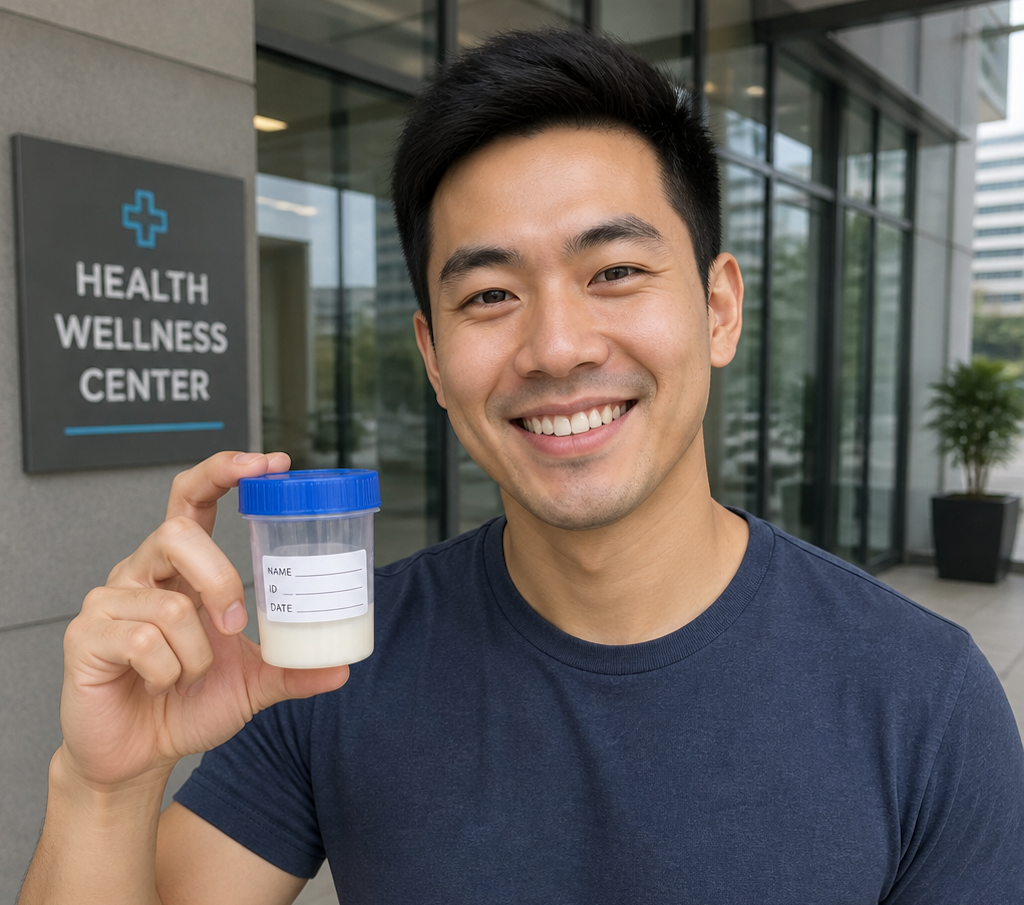
None of this requires a dramatic life overhaul. It requires taking a handful of ordinary habits — where you put your laptop, how much you drink, how well you sleep — and treating them as fertility decisions rather than lifestyle footnotes. Given that a full sperm cycle takes about 74 days, most of these changes start showing up in test results within three to six months.
For a generation of men watching sperm counts fall alongside birth rates across Asia, that’s a fairly short runway to do something about it.
FAQs About Sperm Count & Male Fertility

Still have questions about sperm count and fertility? Here are the most common ones men search for, answered simply and directly.
What is a normal sperm count?
The WHO generally considers a healthy sample to have at least 39 million sperm per ejaculate, or roughly 15–200 million per millilitre of semen. Anything below 15 million per millilitre is classed as oligospermia (low sperm count); below 5 million is considered severe. A full semen analysis — not a guess based on symptoms — is the only reliable way to know where you stand.
Does low sperm count have any symptoms?
Usually not. Low sperm count on its own typically doesn’t affect libido, erections, or ejaculation, which is exactly why it tends to go unnoticed until a couple has been trying to conceive for a while. The exception is when it’s driven by low testosterone, which can show up as reduced sex drive, fatigue, or erectile difficulty — worth flagging to a doctor if you notice it.

Can you actually increase your sperm count, or is it fixed?
It’s not fixed. Sperm is produced continuously, with a full production cycle taking about 74 days, so lifestyle changes — better sleep, less alcohol, cooler testicles, a cleaner diet — typically show measurable effects on a semen analysis within three to six months. Cases tied to genetics or certain medical conditions are harder to shift and need a specialist’s input.
Why are sperm counts falling globally?
No single cause has been proven, but the leading contenders researchers keep returning to are endocrine-disrupting chemicals (found in some plastics and pesticides), rising obesity and sedentary lifestyles, processed diets, smoking and vaping, and increased heat exposure from lifestyle habits. Most experts now treat it as a combination of factors rather than one culprit.

Does age affect male fertility and sperm count?
Yes, though more gradually than for women. Sperm count itself holds up reasonably well with age, but sperm motility, morphology, and DNA integrity tend to decline from the mid-40s onward, which is linked to longer time-to-pregnancy and slightly higher risk of certain conditions in offspring. Age isn’t a wall the way it is in female fertility, but it isn’t irrelevant either.
Do tight underwear or cycling really lower sperm count?
There’s reasonable evidence for tight underwear — briefs versus boxers have been linked to modestly lower sperm concentration in some studies, likely via the same heat mechanism as laptops and hot tubs. Cycling’s link is less about underwear and more about prolonged saddle pressure and heat in serious, high-mileage riders; the odd weekend ride isn’t the concern.

How long should you wait before seeing a fertility specialist?
The standard guidance is to see a doctor after 12 months of regular, unprotected sex without conception — or after 6 months if the female partner is over 35. If you already know you have a risk factor (past testicular injury, undescended testicle as a child, a varicocele, or heavy smoking/drinking history), it’s reasonable to get a baseline semen analysis earlier rather than waiting out the clock.
Can supplements alone fix low sperm count?
Rarely on their own. Antioxidants like vitamin C, vitamin E, and CoQ10, along with zinc and folate, have shown modest benefits in some trials by reducing oxidative stress, but they tend to work best alongside — not instead of — the lifestyle changes above. Supplement quality also varies widely, so it’s worth getting a doctor’s input before spending money on a stack.